







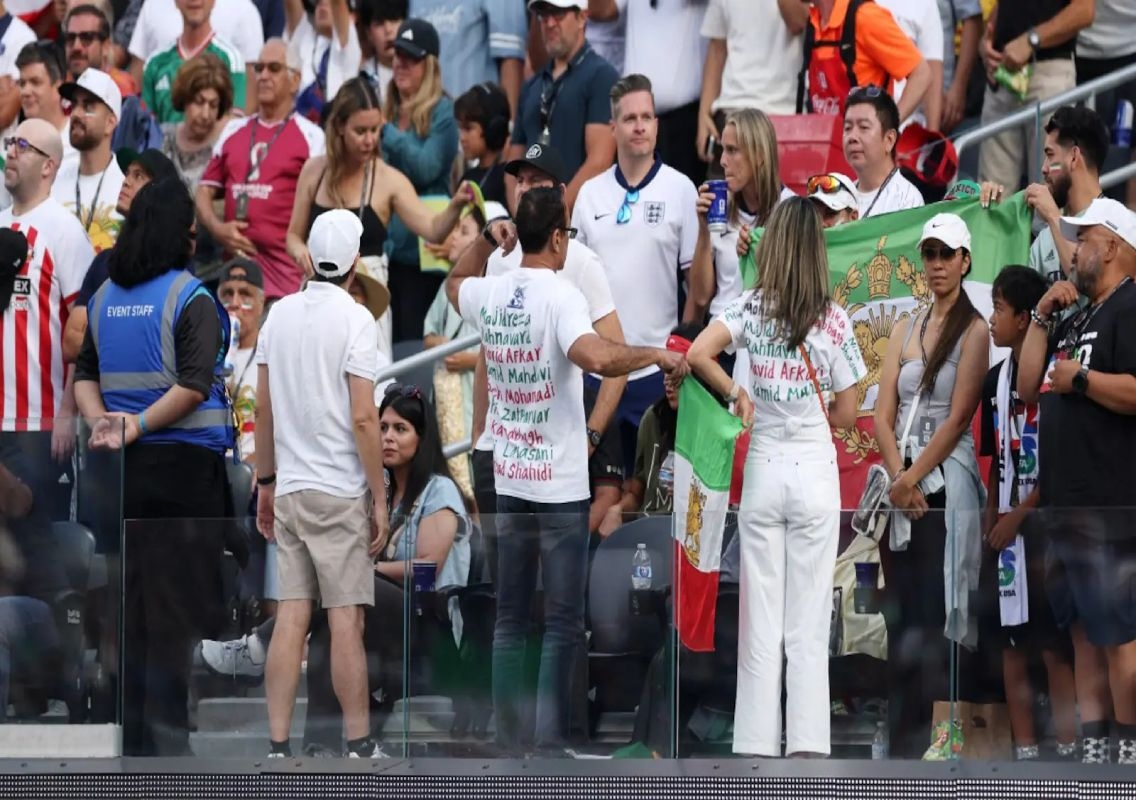


Los Angeles: Iran’s opening match of the FIFA World Cup in the United States was overshadowed by political tensions, as sections of the crowd booed the national anthem and protests erupted outside the stadium. The emotionally charged atmosphere reflected deep divisions within the Iranian diaspora, particularly in Southern California, which hosts the largest Iranian community outside Iran.
Several hundred Iranian Americans gathered outside the Los Angeles stadium on Monday, voicing opposition to the government in Tehran. Protesters waved the pre-revolutionary lion-and-sun flag—banned by FIFA at official matches—and called for political change in Iran. Meanwhile, thousands of fans entered the venue to watch Iran take on New Zealand, with the match ending in a 2-2 draw.
Anthem met with cheers and jeers
Inside the stadium, reactions to Iran’s national anthem were mixed. While some fans stood in support, others booed loudly, underlining the political undertones surrounding the team’s participation. The contrasting responses highlighted the broader conflict among Iranians abroad over whether the national team represents the people or the government.
Despite a court decision upholding FIFA’s ban on the lion-and-sun flag, several spectators displayed it prominently inside the stadium. The flag, associated with Iran before the 1979 Islamic Revolution, has become a symbol for many المعارضة voices in exile.
Protests reflect diaspora divide
Outside the venue, tensions escalated between protesters and fans attending the match. Demonstrators argued that the national team is closely aligned with Iran’s ruling establishment, while many supporters insisted they were attending purely for sport.
In one incident, protesters seized an official Iranian flag from a supporter, tearing and stomping on it. Security personnel and sheriff’s deputies intervened to prevent further clashes as verbal altercations intensified near the stadium entrances.
Many protesters expressed strong sentiments against the Iranian government. Some attendees brought official flags specifically to be desecrated as a form of protest, with passersby joining in acts of defiance.
Fans call for separation of sport and politics
Amid the unrest, several fans emphasised the importance of separating football from political issues. Families and supporters wearing team colours and face paint said they were there to enjoy the World Cup experience rather than engage in political debates.
Some individuals, however, balanced both perspectives. A section of protesters also entered the stadium, concealing banned flags under clothing, stating they intended to represent the voices of people in Iran rather than support the team.
War backdrop intensifies tensions
Iran’s participation in the tournament comes against the backdrop of a recent conflict involving the United States and Israel, which has heightened geopolitical sensitivities. The war, which began on February 28, disrupted global energy markets and led to logistical challenges for the Iranian team.
The squad relocated its training base from Arizona to Mexico, while visa issues prevented some officials from entering the United States. These complications have further contributed to the charged environment surrounding the team.
Adding to the developments, US President Donald Trump announced a deal with Iran to end hostilities and reopen the Strait of Hormuz just a day before the match. While the announcement signalled potential de-escalation, it did little to ease tensions among the diaspora gathered in Los Angeles.
Players appeal for unity
Iranian team captain Mehdi Taremi addressed the situation ahead of the match, urging unity among Iranians worldwide. He stated that the team represents all Iranians, regardless of their political views or location, and aims to bring joy to supporters globally.
Despite the divisions, many fans expressed hope that the team’s performance could provide a moment of happiness for people in Iran. Supporters travelling from across the United States attended the match to cheer for their country of origin, reflecting a complex blend of identity, pride, and concern.
Controversy extends beyond the pitch
The political tensions surrounding Iran’s World Cup campaign are not new. In recent years, Iranian athletes have faced repercussions for expressing dissent. Past incidents, including arrests of former players and exclusion of athletes over social media activity, have contributed to scepticism among sections of the diaspora.
The ongoing dispute over the lion-and-sun flag has also become a focal point, with legal efforts made to challenge FIFA’s restrictions. Although the ban remains in place, its presence inside the stadium demonstrated the persistence of political expression among fans.
Conclusion
Iran’s World Cup opener in Los Angeles highlighted how deeply sport and politics can intertwine, especially in times of conflict. While the match itself delivered an entertaining contest, the surrounding events underscored the divisions within the Iranian community abroad. As the tournament progresses, the team’s journey is likely to remain as much about political symbolism as football, reflecting broader struggles over identity, representation, and national unity.