







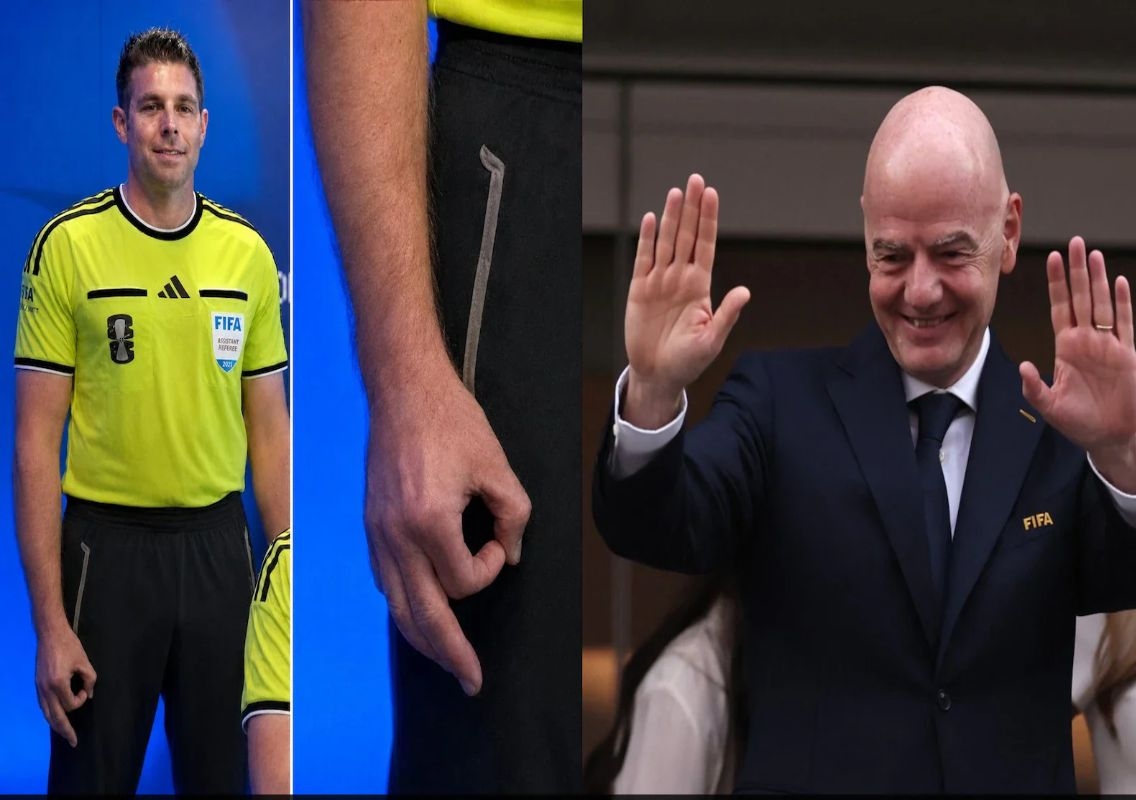


Dallas: FIFA has cleared video review official Shaun Evans of any wrongdoing after he was accused of making a gesture resembling a white supremacist symbol during a World Cup 2026 match involving Germany.
The controversy arose during Germany’s emphatic 7-1 victory over Curaçao, when Evans, serving as an assistant video assistant referee (VAR), was shown on the broadcast making an “OK” hand gesture.
FIFA finds no breach
Following an investigation, FIFA’s independent disciplinary committee concluded that there was no evidence to suggest Evans had violated the organisation’s code of conduct.
“After looking into the matter, the committee found no evidence of breaches of the FIFA disciplinary code,” FIFA said in its official statement, adding that it had also taken into account Evans’ explanation.
Official cites involuntary movement
Evans denied any intentional wrongdoing, stating that the gesture was not meant to communicate any message or affiliation.
“I did not intentionally make a hand gesture or symbol to communicate a message, affiliation, or belief of any kind,” Evans said.
He explained that the movement was likely an involuntary or subconscious twitch, noting that similar motions were visible in later footage during the match while he was holding a pen.
Gesture sparks controversy
The incident drew criticism from anti-discrimination groups, including the Fare network, which monitors racist and discriminatory behaviour in football.
The organisation argued that the gesture resembled a symbol that has been associated with white supremacist groups in recent years and called for Evans to be removed from the tournament.
The “OK” hand sign, while widely used in everyday contexts, has been controversially appropriated in some online extremist circles, leading to debates about its interpretation depending on context.
Background and wider debate
The symbol gained global attention in 2019 when it was linked to hate groups, though experts have consistently emphasised that context is critical in determining intent.
Evans, who is officiating at his second World Cup, said the incident does not reflect his character.
“The coverage following this incident simply does not reflect who I am,” he said. “I regret how the gesture has been interpreted.”
Support from referees’ body
Australia’s Professional Football Referees Association backed Evans following FIFA’s decision, highlighting his track record of professionalism and integrity.
The body reiterated its commitment to diversity and its opposition to racism and discrimination in all forms, while also stressing the importance of fairness and due process.
Conclusion
While the incident sparked significant debate and scrutiny, FIFA’s ruling brings clarity to the situation, allowing Evans to continue his role in the tournament.
The episode also underscores the growing sensitivity around symbols and gestures in global sport, where context, intent and perception can quickly become matters of international attention.