







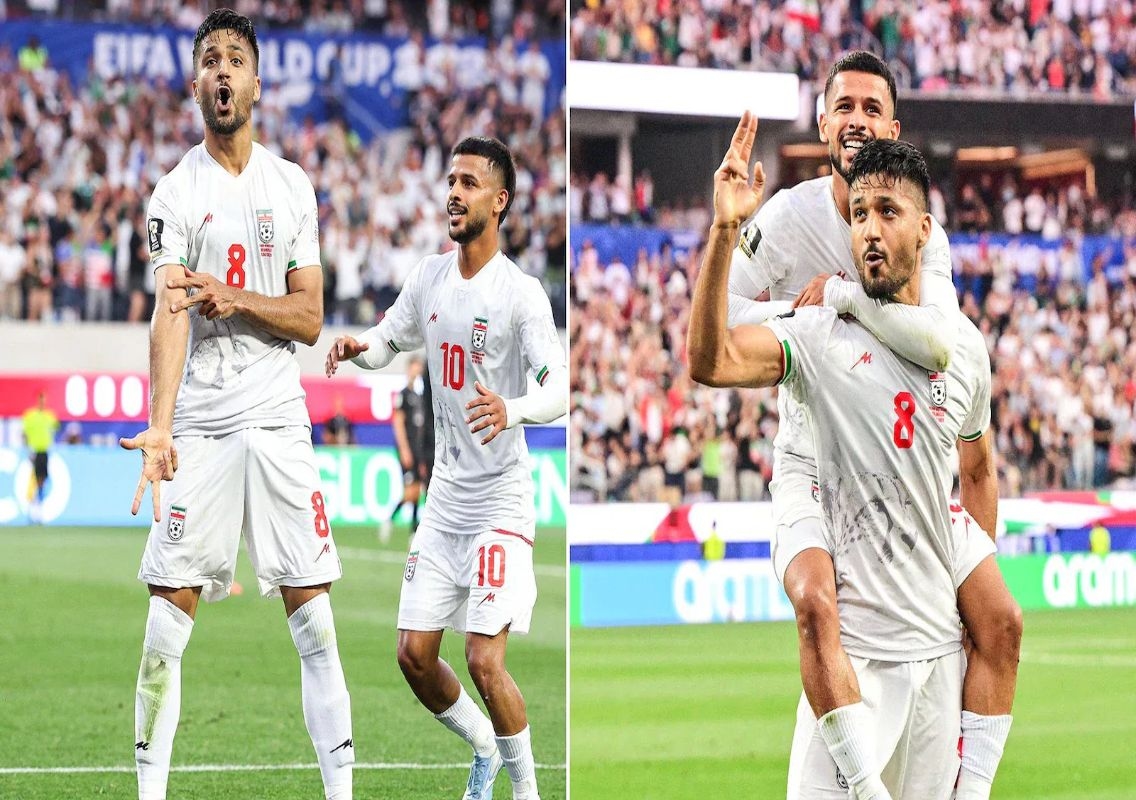


Los Angeles: Iran midfielder Mohammad Mohebi found himself at the centre of controversy during his side’s FIFA World Cup 2026 Group G clash against New Zealand after his goal celebration triggered widespread criticism across social media and beyond.
Mohebi, who scored Iran’s second goal in a dramatic encounter at SoFi Stadium, celebrated with a gesture mimicking gunfire. While the goal itself was a crucial moment that helped Iran secure a 2-2 draw after coming from behind twice, the manner in which he marked the occasion quickly overshadowed his on-field contribution.
Match context and key moment
The game between Iran and New Zealand proved to be an intense and closely fought contest. New Zealand initially took the lead, putting Iran under pressure early in their opening fixture of the tournament. However, Iran showed resilience, equalising before falling behind once again.
Mohebi’s decisive moment came in the second half when he connected with a well-delivered cross and powered a header into the net. The goal brought Iran level for the second time in the match, ensuring they walked away with a valuable point from their opening game.
While the equaliser was celebrated by Iranian fans, attention quickly shifted to Mohebi’s post-goal actions. His gun-firing gesture was immediately picked up by broadcasters and circulated widely online, drawing mixed reactions.
Social media reaction and criticism
The celebration sparked a strong response on social media platforms, with many users criticising the gesture as inappropriate, especially in a global tournament setting. Some fans called for disciplinary action, urging FIFA to take a strict stance against gestures that could be interpreted as promoting violence.
Others defended the player, suggesting that such celebrations are often expressions of emotion rather than deliberate statements. Despite this, the debate intensified, with discussions around cultural interpretation, intent, and responsibility in international sport gaining momentum.
The incident highlights how players’ actions are increasingly scrutinised in real time, particularly during high-profile tournaments like the World Cup, where millions of viewers watch every moment closely.
Politically charged atmosphere
The match itself unfolded in a tense environment, both inside and outside the stadium. Ahead of kick-off, hundreds of demonstrators gathered outside SoFi Stadium to protest against the Iranian government, adding a political dimension to the sporting event.
Inside the venue, several Iranian fans displayed the pre-revolutionary Iranian flag despite restrictions imposed by FIFA. The governing body had earlier issued guidelines limiting political expressions within stadiums, but enforcement appeared inconsistent.
Security measures at the stadium were visibly strict, with fans subjected to thorough checks, including metal detectors and bag inspections. In some instances, spectators wearing clothing featuring the banned flag were asked to remove or conceal them. However, once inside, many supporters continued to display the symbol openly.
Crowd behaviour and symbolic protests
The atmosphere inside the stadium reflected deep divisions among Iranian supporters. While some fans cheered enthusiastically for the team, others used the occasion to express dissent.
During the Iranian national anthem, a section of the crowd turned their backs to the pitch, while others responded with jeers. These actions underscored the broader political tensions that have followed the Iranian team in recent international competitions.
Despite FIFA’s efforts to maintain a politically neutral environment, the match demonstrated the challenges of separating sport from geopolitics, particularly when national teams are involved.
FIFA’s possible response
As of now, FIFA has not issued an official statement regarding Mohebi’s celebration. However, the governing body has historically taken action against players for gestures deemed offensive or inappropriate.
If the incident is reviewed, FIFA could consider factors such as intent, context, and precedent before deciding whether any disciplinary measures are necessary. The organisation has been increasingly vigilant about maintaining decorum and inclusivity during its tournaments.
Conclusion
Mohammad Mohebi’s goal was a pivotal moment in Iran’s World Cup opener, but his celebration has sparked a debate that extends beyond football. The incident reflects the growing sensitivity around player conduct in global sport, where actions on the field can quickly become subjects of international scrutiny.
As the tournament progresses, both players and governing bodies are likely to remain cautious, aware that every gesture can carry significant meaning in a worldwide arena.