




Mount Maunganui: India’s 244-run defeat to New Zealand in the fourth One-Day International (ODI) has brought renewed attention to the team’s batting concerns, with former India wicketkeeper-batter Dinesh Karthik identifying the middle order as an area of vulnerability in the ongoing series.
India were bowled out for just 89 in 26.4 overs while chasing New Zealand’s total of 333 at Bay Oval on Friday, November 13. The defeat was India’s second-biggest in ODI cricket in terms of runs and allowed New Zealand to keep the five-match series alive.
Karthik, speaking on Cricbuzz Live, said India’s middle order had appeared vulnerable across the matches played in the series. He noted that the team had struggled to negotiate the targets set by New Zealand and had depended on favourable circumstances to get through difficult situations.
“We did get blown away, and I don’t think that much could have been done about this game. But in all three ODIs, India’s batting, the middle order, has been a bit vulnerable, and that is something India will look at,” Karthik said.
He added that India had wobbled while chasing the scores set by New Zealand and had been saved by rain in one match. Referring to the opening game, he also pointed out that India had looked comfortable before losing several wickets in quick succession.
India’s batting collapse in the fourth ODI
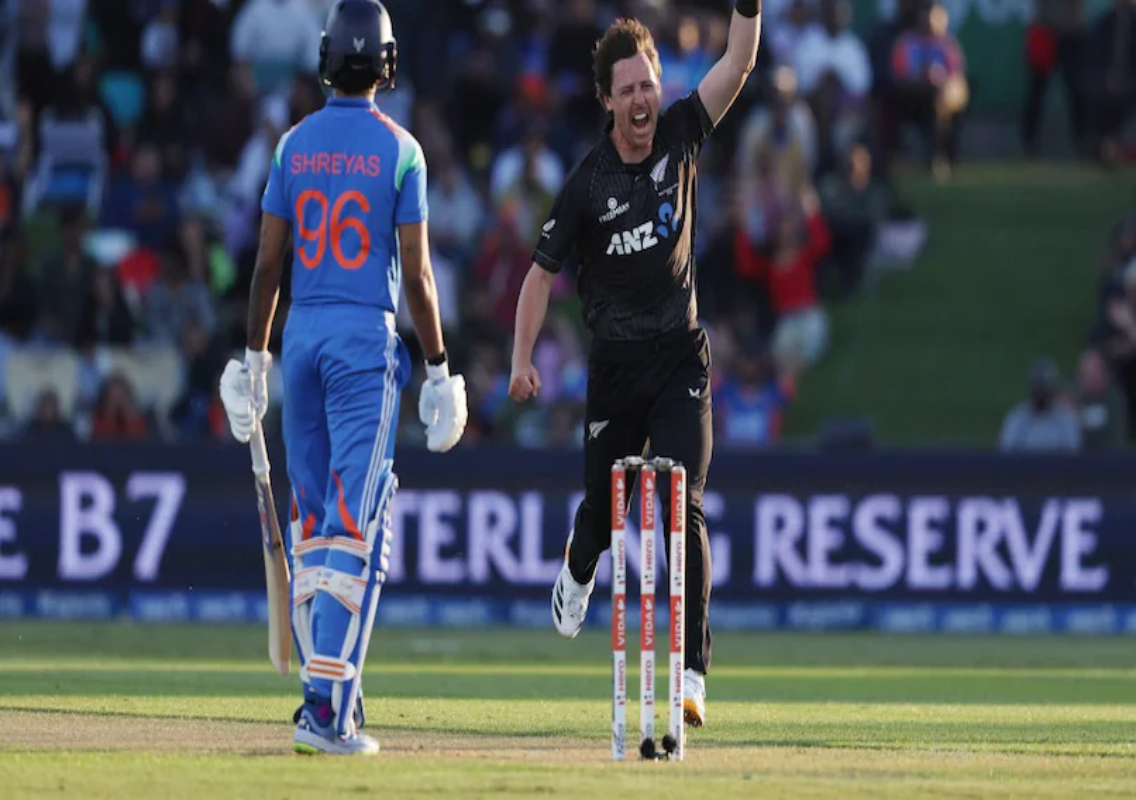
India’s latest defeat exposed the difficulties faced by the batting line-up against New Zealand’s pace attack. Chasing 334, the visitors suffered a disastrous start, losing Rohit Sharma, Virat Kohli and Shreyas Iyer for ducks.
New Zealand fast bowler Matt Henry played a decisive role in the collapse. He dismissed all three senior Indian batters during a devastating opening spell and finished with figures of 6 for 27 in 9.4 overs. His performance earned him the Player of the Match award.
India struggled to recover after the early setbacks. Ishan Kishan top-scored with 27, while Axar Patel and Naman Dhir contributed 21 each. However, the resistance was insufficient to prevent the innings from ending at 89.
Matthew Fisher supported Henry with three wickets, ensuring that India could not build a meaningful partnership or put pressure back on the hosts. The visitors were dismissed with more than 23 overs remaining.
New Zealand post 333 after Will Young’s century
Earlier, New Zealand made full use of the opportunity to bat first after India won the toss and elected to field.
Will Young led the hosts’ innings with an impressive 125 off 108 deliveries, providing the foundation for a total of 333 in 50 overs. Tim Seifert contributed 58 off 48 balls, while Finn Allen added 41 from 30 deliveries.
India’s bowlers managed to take wickets during the innings, but Young’s century and contributions from the other New Zealand batters helped the hosts maintain a strong scoring rate.
The total proved more than sufficient as New Zealand’s fast bowlers exploited the conditions and put India under immediate pressure during the chase.
Middle-order concerns extend beyond one defeat
Karthik’s observation focused on a pattern rather than the outcome of a single match. According to his assessment, India’s middle order had shown signs of vulnerability in the first two ODIs as well.
India won the opening match by five wickets under the Duckworth-Lewis-Stern (DLS) method. However, the team experienced a period of pressure after moving from 114 for one to 136 for five.
The second ODI also went down to a close finish. India eventually secured a four-run victory under the DLS method, despite struggling during the chase and losing wickets in quick succession.
The third ODI in Hamilton was abandoned because of rain, with no play possible. India therefore entered the fourth match with a 2-0 lead in the series.
The heavy defeat at Mount Maunganui has now reduced that advantage, with India leading 2-1 ahead of the final ODI.
Final ODI offers India an opportunity to respond
The fifth and final ODI is scheduled to take place at Bay Oval on Sunday, November 15. India will look to address the batting concerns and secure the series, while New Zealand will aim to level the contest.
Karthik’s comments place particular emphasis on the need for greater stability in the middle order. The fourth ODI demonstrated how quickly India’s innings could unravel when early wickets fell, while the earlier matches had also featured periods of batting uncertainty.
For India, the final match will provide an opportunity to respond after one of their heaviest defeats in the format. The team’s ability to build partnerships and handle New Zealand’s pace attack will be closely watched as the series reaches its conclusion.