







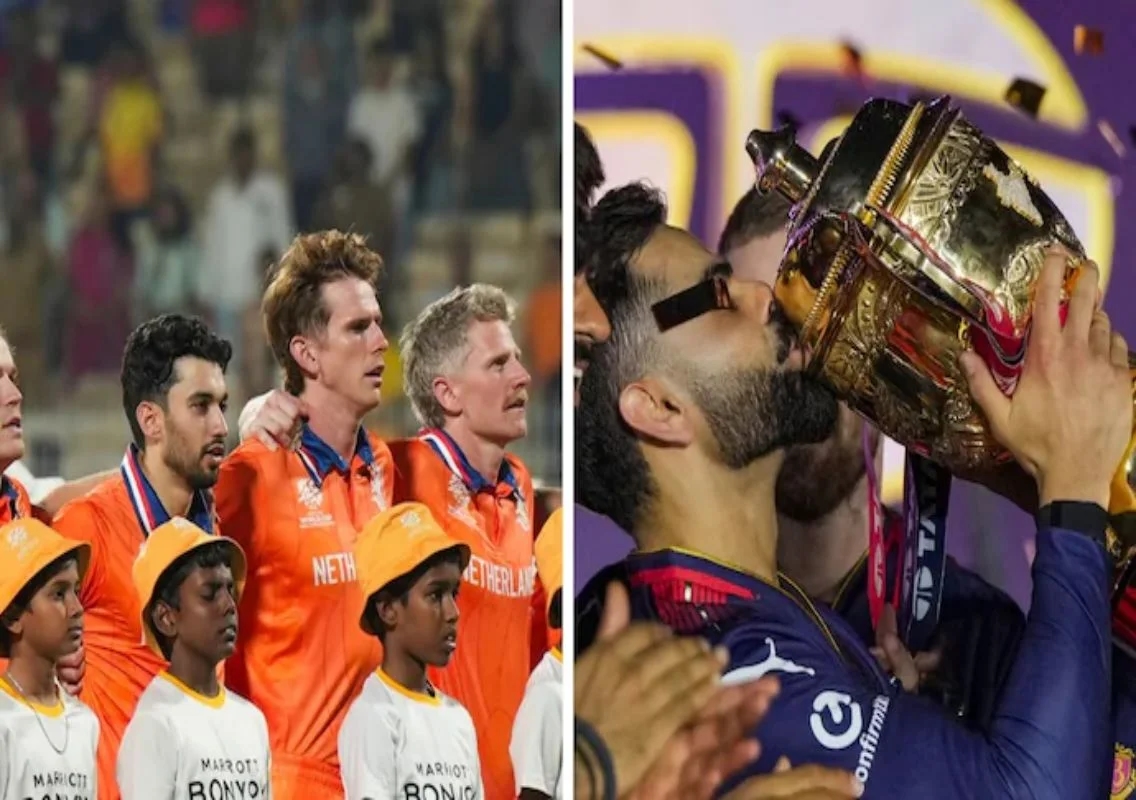


Bengaluru: Netherlands cricketer Paul van Meekeren has sparked a debate on cricket’s financial imbalance after the blockbuster sale of Royal Challengers Bengaluru for a staggering ₹16,660 crore ahead of the Indian Premier League 2026 season.
Reacting to the deal, the Dutch pacer said that even 0.5 per cent of the franchise’s valuation would be enough to significantly uplift cricket in the Netherlands and help associate nations close the gap with full-member teams.
A blunt message on cricket’s financial divide
Taking to social media, van Meekeren made a pointed remark about how a small fraction of the massive investment in franchise cricket could transform the fortunes of smaller cricketing nations.
“If only they could give 0.5% to @KNCBcricket, we could close the gap to full members and make the sport so much more global,” he wrote.
His comment has resonated with ongoing discussions around the disparity in funding and opportunities between established cricketing nations and associate members.
Record-breaking RCB sale
RCB, the reigning IPL champions, were sold to a multi-industry consortium on March 24 for USD 1.78 billion (approximately ₹16,660 crore), underlining the league’s soaring commercial value.
The sale comes after former owners United Spirits Limited, the Indian arm of global liquor giant Diageo, initiated a strategic review of its stake. The franchise was deemed “non-core” to its primary business, prompting the decision to cash in amid rising valuations.
The IPL itself has seen exponential growth, with recent estimates placing its overall valuation at around USD 18.5 billion, driven by lucrative media rights and strong franchise revenues.
Associate nations seek greater support
Van Meekeren’s statement also reflects a broader sentiment among players from associate nations, who have been advocating for more opportunities and financial backing.
The Netherlands recently competed in the 2026 ICC Men’s T20 World Cup, where they impressed despite an early exit. They pushed Pakistan close and put up a competitive performance against India but managed just one win in four matches.
Calls for greater inclusion have grown louder following such performances. Scott Edwards, the Netherlands captain, has urged the International Cricket Council to ensure more consistent fixtures for associate teams beyond global tournaments.
Similarly, Oman skipper Jatinder Singh has highlighted the need for regular exposure against top-tier sides to accelerate development.
How small funding could make a big difference
Van Meekeren’s “0.5 per cent” remark underscores the scale of disparity in world cricket finances.
A fraction of ₹16,660 crore would amount to over ₹80 crore — a figure that could significantly boost infrastructure, grassroots programmes, and player development in countries like the Netherlands.
Such funding could help associate nations improve training facilities, organise more competitive fixtures, and retain emerging talent, thereby strengthening the global cricket ecosystem.
Another big IPL deal adds to trend
The RCB sale was not the only major transaction in the IPL ecosystem. On the same day, Rajasthan Royals were also acquired by a US-based consortium for USD 1.63 billion (approximately ₹15,342 crore).
These deals highlight the growing commercial appeal of the IPL, which continues to attract global investors and expand its financial footprint.
A growing conversation for the future
As the IPL prepares for its 2026 season opener between RCB and Sunrisers Hyderabad on March 28, conversations around the sport’s financial distribution are gaining traction.
While franchise cricket continues to scale new financial heights, voices like van Meekeren’s serve as a reminder of the need for a more balanced global structure.
Conclusion
Van Meekeren’s candid remark may have been brief, but it has highlighted a deeper issue within world cricket — the widening gap between the sport’s richest leagues and its developing nations.
As cricket continues to globalise, addressing this imbalance could play a key role in ensuring the game grows beyond its traditional strongholds and becomes truly inclusive.