







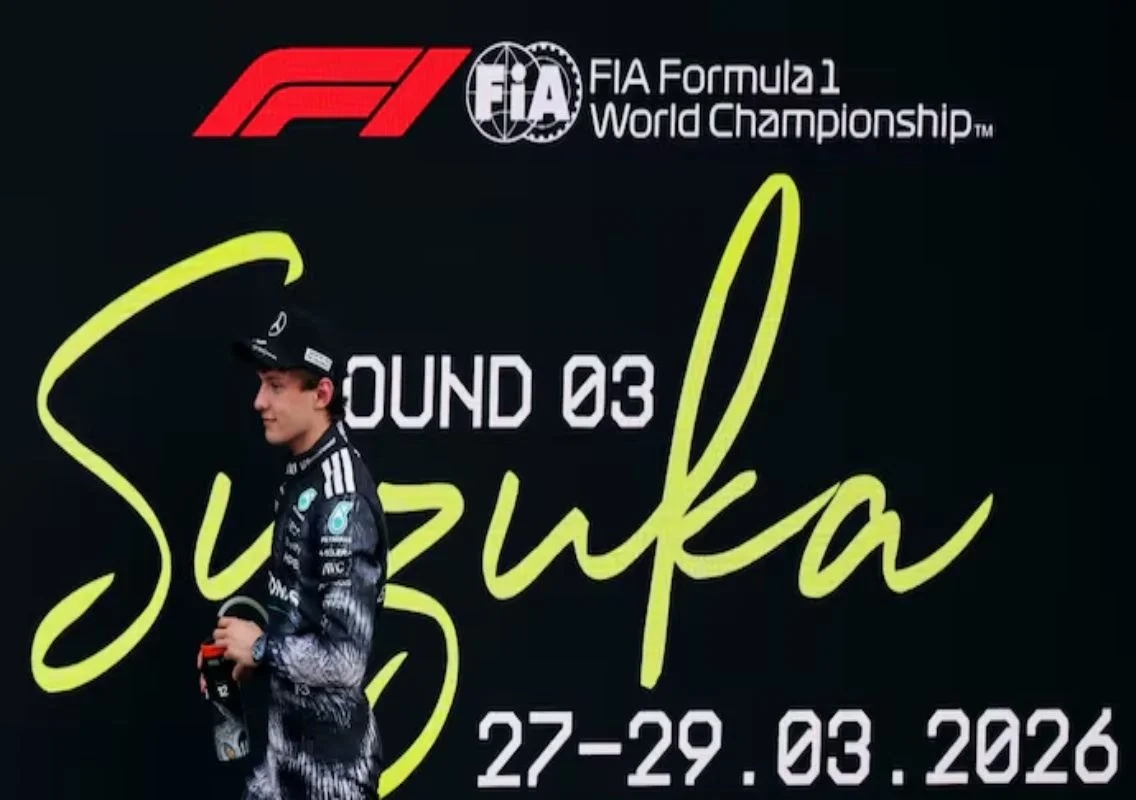


Suzuka: Just three races into the Formula One 2026 season, the Japanese Grand Prix has triggered serious debate about the sport’s direction, exposing early cracks in its new regulatory era.
What was meant to signal progress has instead raised concerns over safety, competitive balance, and driver satisfaction—turning Suzuka into a defining early checkpoint.
Safety concerns take centre stage
The most alarming moment came with Oliver Bearman’s high-impact crash, which registered around 50G and sent shockwaves through the paddock.
The incident, triggered by sudden deceleration linked to energy deployment and aggressive driving from Franco Colapinto, highlighted unintended consequences of the 2026 engine regulations.
While the FIA has indicated it will review safety concerns, questions remain over how much can realistically be altered so early in a regulation cycle designed to attract major manufacturers.
Verstappen’s growing frustration
Few reactions have been as telling as that of Max Verstappen.
The reigning world champion endured a difficult weekend, finishing eighth at a circuit where he has historically dominated. More significantly, his visible frustration has fuelled speculation about his long-term future in the sport.
Comparisons are already being drawn to past champions like Fernando Alonso, who stepped away temporarily before returning. Verstappen’s recent appearances outside F1 have only intensified the narrative of a driver potentially at a crossroads.
Antonelli announces himself
While established stars grappled with uncertainty, Kimi Antonelli delivered a statement performance.
The young Mercedes driver secured back-to-back wins and emerged as the youngest championship leader, signalling a shift within Mercedes-AMG Petronas.
In contrast, teammate George Russell struggled, underlining a changing dynamic where Antonelli is no longer just a rising prospect but a genuine title contender.
McLaren step into contention
Suzuka also marked a turning point for McLaren.
After a quiet start, the team showed strong pace, with Oscar Piastri finishing second. Alongside Lando Norris, McLaren now appear poised to challenge consistently.
For Mercedes and Ferrari, this adds a new layer of pressure in an already tight midfield battle.
Break in calendar offers reset
An unexpected pause in the schedule, following cancellations of races in Bahrain and Saudi Arabia, may prove pivotal.
For struggling teams like Williams and Aston Martin, the break provides a chance to regroup and refine performance.
At the same time, frontrunners will aim to consolidate gains and address weaknesses before the season resumes.
Conclusion
Suzuka has done more than deliver drama—it has exposed fundamental questions about Formula 1’s new era. From safety concerns to shifting team hierarchies, the 2026 season already feels like it is at a crossroads, with the coming races set to define whether these early warning signs evolve into long-term challenges.