







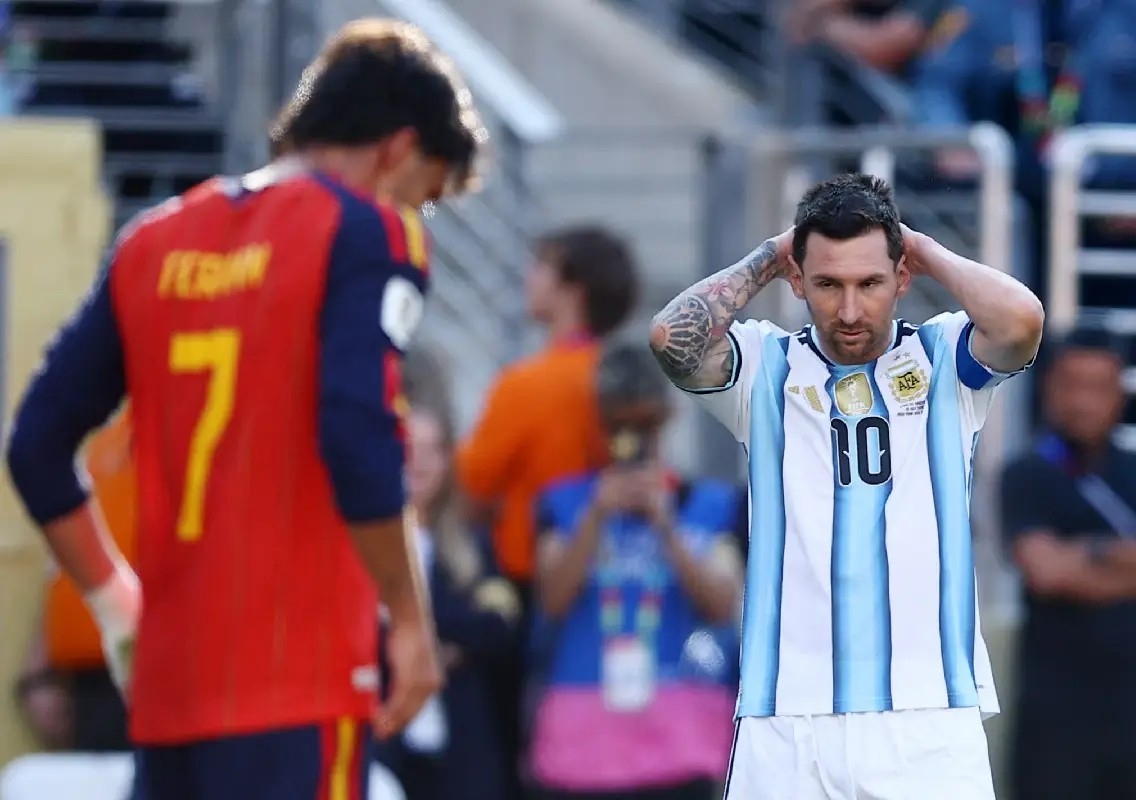


New Jersey: Spain clinched their second FIFA World Cup title with a hard-fought 1-0 extra-time victory over defending champions Argentina in the 2026 final, producing a dominant display that was finally rewarded through Ferran Torres’ decisive goal in the 106th minute.
Although the scoreline remained close until extra time, Spain controlled most of the contest and created far more chances than Lionel Scaloni’s side.
Midfield dominance set the tone
Spain’s midfield dictated possession throughout the final, preventing Argentina from settling into their usual rhythm. Their quick passing, relentless pressing and ball recovery ensured La Roja controlled large spells of the match.
Argentina struggled to build sustained attacks as Spain consistently won possession in dangerous areas.
Messi kept unusually quiet
Argentina captain Lionel Messi, who entered the final as one of the tournament’s top performers, was effectively contained by Spain’s defence.
The veteran forward found little space to influence the game and was unable to produce the decisive moments that had inspired Argentina throughout the tournament.
Red card proved costly
Argentina’s hopes suffered a major setback when Enzo Fernández was sent off late in normal time after receiving a second yellow card.
Reduced to ten men, Argentina found it increasingly difficult to withstand Spain’s pressure, with Ferran Torres eventually capitalising on the numerical advantage in extra time.
Injury and lack of attacking threat
The first-half injury to defender Lisandro Martínez disrupted Argentina’s defensive organisation, forcing an early reshuffle at the back.
At the other end, Argentina struggled to create meaningful chances, while Spain continued to threaten throughout the contest before finally breaking the deadlock.
Spain’s disciplined performance, tactical superiority and relentless attacking intent ultimately secured a deserved victory, ending a 16-year wait for another World Cup title and confirming their return to the summit of world football