







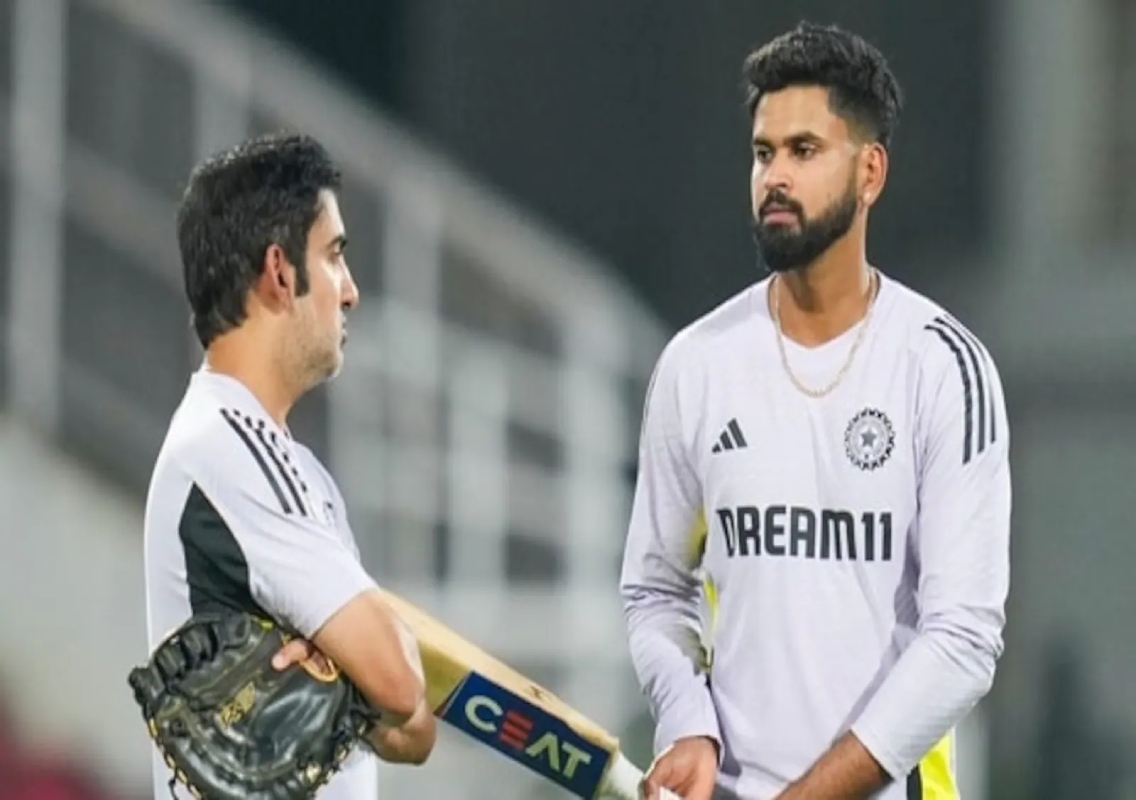


Ranchi: India head coach Gautam Gambhir refused to single out any player or external factor after India failed to defend 249 runs against West Indies in the second T20 International at the JSCA International Stadium Complex on Friday, October 9. Instead, Gambhir acknowledged that India needed to improve their ability to defend big totals against dangerous opponents.
West Indies chased down India’s target of 250, finishing at 252 for four in 18.3 overs to register a six-wicket victory and level the five-match series at 1-1. Captain Shai Hope scored an unbeaten 102 off 45 balls, while Sherfane Rutherford struck 84 off 37 deliveries to lead the visitors to a remarkable win.
The match saw both teams score a combined 502 runs, making it only the second T20 International in which the aggregate total crossed 500 runs. Despite India’s impressive batting effort, the bowlers could not prevent West Indies from completing one of their most memorable run chases against India.
Gambhir refuses to blame individual players
Following the defeat, Gambhir was asked to explain how India had lost a match after scoring 249 for five. Rather than criticising a particular bowler or pointing to the dropped catch, the head coach accepted that the team had failed to execute its plans effectively.
“I don’t blame anyone or anything. The bottom line is that we could not defend 250. They batted extremely well and deserved to win. We still have a lot of work to do,” Gambhir said at the post-match press conference.
His response reflected an emphasis on collective responsibility. India had managed to put a huge total on the board, but their bowling attack was unable to contain the West Indies batters during the chase.
Gambhir also acknowledged that there might not be a universally safe total in modern T20 cricket, particularly on a batting-friendly surface. India had believed 250 would give them a strong chance of winning, especially after taking two early wickets.
However, West Indies recovered from that difficult start and maintained an aggressive scoring rate throughout the innings.
Gautam Gambhir praises Roston Chase’s match-winning spell
Despite the defeat, Gambhir highlighted the importance of West Indies all-rounder Roston Chase’s bowling performance. Chase finished with figures of three wickets for 24 runs, helping restrict India’s progress after the hosts made a flying start.
Chase dismissed Abhishek Sharma, Ishan Kishan and Shivam Dube during the middle overs. His spell interrupted India’s momentum and prevented the hosts from accelerating as freely as they had at the beginning of their innings.
Gambhir praised Chase for changing his lines and varying his approach instead of repeatedly bowling the same length.
“If you look at the context of the game, it (Roston Chase’s spell) was a game-changing, match-winning spell. The way he changed his lines was important on this wicket. But against dangerous teams like West Indies, we need to find a way to defend totals,” Gambhir said.
He explained that bowlers needed to keep batters guessing by changing their lines and lengths. Chase bowled at the batters’ legs, moved the ball wider and used fuller deliveries, making it harder for the Indian batters to settle into a predictable rhythm.
The performance offered a reminder that disciplined variations can make a significant difference even on a surface where batters are scoring quickly.
Shai Hope and Sherfane Rutherford turn the match around
India appeared to have gained control when Mayank Yadav struck twice in the opening over, leaving West Indies under immediate pressure.
However, Hope and Rutherford produced a remarkable partnership to revive the chase. Hope remained unbeaten on 102 off 45 balls, while Rutherford scored 84 from 37 deliveries.
The pair added 120 runs for the fourth wicket in just 54 balls, shifting the momentum decisively towards West Indies. Their aggressive stroke play put the Indian bowlers under sustained pressure and ensured that the required run rate never became insurmountable.
Hope combined controlled batting with powerful hitting, striking six fours and nine sixes. Rutherford added seven fours and seven sixes, repeatedly finding the boundary against both pace and spin.
Their partnership proved decisive as West Indies reached the target with nine balls remaining. Romario Shepherd also contributed 34 off 13 balls during the closing stages, while Hope finished the match with a six.
Gambhir acknowledged that West Indies deserved the victory, recognising the quality of their batting effort rather than attributing the result solely to India’s mistakes.
Dropped catch adds to India’s frustration
India also missed a crucial opportunity when Mayank Yadav dropped Rutherford on 38. The West Indies batter went on to score 84, making the missed chance an important moment in the contest.
Asked about the dropped catch, Gambhir said such mistakes were part of cricket and should not be treated as deliberate failures.
“The toss is not in your hands. Catches get dropped; it has happened in the past and will happen in the future. Nobody drops catches intentionally, so you cannot blame anyone for that,” he said.
The comment reinforced Gambhir’s refusal to assign individual blame. While the dropped catch allowed Rutherford to continue his innings, India still had opportunities to contain the scoring and break the partnership.
The episode also underlined the importance of converting chances in high-scoring matches, where a single missed opportunity can have a major impact on the result.
India’s batting effort goes unrewarded
Earlier, India had posted 249 for five after a powerful batting display led by Sanju Samson, who scored 82. Shreyas Iyer contributed 40, while Tilak Varma remained unbeaten on 44.
Samson’s innings helped India build a strong platform, while Iyer and Tilak accelerated during the closing overs to take the total close to 250.
Despite that effort, India’s bowling attack struggled to defend the score. The result will prompt the team management to review its bowling plans, fielding execution and ability to adapt when the opposition launches a sustained attack.
Gambhir’s comments suggest the focus will remain on finding solutions rather than searching for a scapegoat.
India look to bounce back in Indore
The series is now level at 1-1, with the third T20I scheduled to be played in Indore on Sunday, October 11.
India will aim to improve their bowling performance and regain the lead, while West Indies will look to build on the confidence gained from their successful chase.
The Ranchi match demonstrated the increasing demands of T20 cricket, where even a total of 249 may not guarantee victory. For Gambhir and the Indian team, the immediate task is to learn from the defeat and develop more effective strategies for defending big scores.
Rather than blaming an individual, Gambhir has placed responsibility on the team as a whole. India’s response in Indore will show whether that approach translates into a stronger performance.