







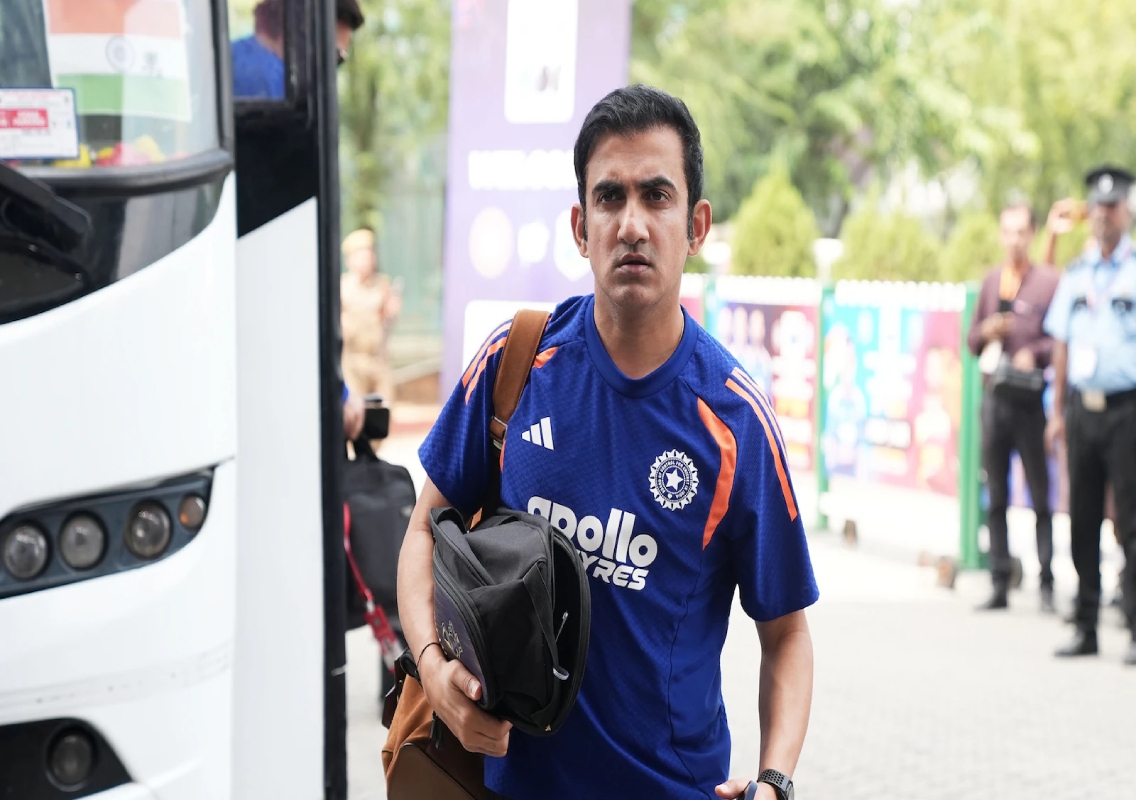


Guwahati: India head coach Gautam Gambhir was pleased with his team’s eight-wicket victory over the West Indies in the second ODI but expressed concern over the lack of contest between bat and ball at the Barsapara Cricket Stadium on Wednesday.
India completed a remarkable chase of 406, reaching 406 for two in just 43.3 overs. Shubman Gill remained unbeaten on a record-breaking 223, while Rohit Sharma scored 101 as India took an unassailable 2-0 lead in the three-match ODI series. However, the extraordinary batting performances were accompanied by an unusually difficult outing for both bowling attacks.
The match produced 811 runs in total, with the West Indies scoring 405 for seven before India chased down the target with 39 balls remaining. While the high-scoring contest produced several individual records, Gambhir said the conditions did not provide enough assistance to bowlers.
‘This is not cricket, this is only batting’
Speaking to the broadcasters after India’s victory, Gambhir called for pitches to offer a more balanced contest between bat and ball.
Gambhir said that when a young bowler is asked to operate on a surface where the opposition can score 400 and the chasing side can also reach the target comfortably, there is little opportunity for bowlers to influence the game.
The India head coach’s comments came after the West Indies amassed 405 for seven in their 50 overs. India then made the target look significantly less challenging, with Gill and Rohit putting together a 255-run opening partnership.
Gambhir’s central concern was not India’s batting performance but the absence of sufficient balance in the contest. The pitch allowed batters from both sides to score heavily, while bowlers struggled to make breakthroughs or contain the scoring rate.
West Indies pile up 405 runs
The West Indies produced their first 400-plus total in men’s ODI cricket as three of their batters registered centuries.
John Campbell led the charge with 101 off 68 balls. Captain Shai Hope contributed 104 from 94 deliveries, while Amir Jangoo smashed 114 off 77 balls.
The three centuries made the West Indies the first team to record three hundreds in an ODI innings against India. Their 405 for seven was also their highest-ever ODI total against India, surpassing their previous best of 333 scored in 1983.
India’s bowling attack struggled to contain the Caribbean batters. The Indian team conceded 405 runs, with the bowlers finding it difficult to generate sustained pressure on the surface.
The West Indies’ total was particularly notable because India had won the opening ODI in Thiruvananthapuram by eight wickets after restricting the visitors to 295 for seven.
Gill and Rohit turn 406 into a routine chase
Despite the daunting target, India’s response was remarkably controlled.
Shubman Gill produced one of the greatest ODI innings by an Indian batter, scoring an unbeaten 223 from 133 balls. He reached his double century in just 117 deliveries, making it the fastest double century in men’s ODI cricket. His innings contained 24 fours and seven sixes.
Rohit Sharma provided the perfect support at the other end, scoring 101. The two openers added 255 runs before Rohit was dismissed.
After Rohit’s departure, India continued without any significant pressure. Virat Kohli and Ruturaj Gaikwad joined Gill and helped take the team across the finish line. India reached 406 for two in 43.3 overs to complete the second-highest successful run chase in ODI history.
The result also secured the ODI series for India with one match still to play.
Gambhir’s concern extends beyond one match
The Guwahati contest has raised questions about the balance between batting and bowling in modern ODI cricket.
India’s fast bowlers endured a particularly difficult evening. The West Indies scored 405 before India’s batters responded with another 406, leaving bowlers from both teams with little opportunity to dictate terms.
Gambhir’s comments therefore focused on the broader challenge of preparing bowlers to perform in different conditions. A pitch that offers limited movement, bounce or grip can make it difficult for inexperienced bowlers to develop the ability to change the course of a match.
India’s bowling attack also had to cope without some of its established options. The team is using the ongoing ODI series as part of its preparations for the 2027 ODI World Cup, making opportunities for players in the bowling group particularly relevant.
India batting coach Sitanshu Kotak also acknowledged after the match that there was not much assistance available for the bowlers. His comments reflected the difficulty experienced by both sides during the record-breaking contest.
A record-filled night in Guwahati
Despite Gambhir’s reservations about the pitch, the second ODI produced several significant milestones.
The West Indies became the first team to score more than 400 against India while also having three centurions in the same ODI innings. India then produced its highest successful ODI run chase.
Gill’s unbeaten 223 became the highest individual score by an Indian batter in a successful ODI chase, while his 117-ball double century established a new record for the fastest ODI double hundred. Rohit’s century added another major contribution to India’s chase.
The match ultimately demonstrated two contrasting sides of modern ODI cricket. The batting performances were exceptional, but the difficulty faced by both bowling attacks prompted Gambhir to call for pitches that provide a more meaningful contest.
India will now move to the third ODI with the series already secured. The final match will provide another opportunity for the team to assess its combination and bowling resources ahead of the 2027 World Cup.