







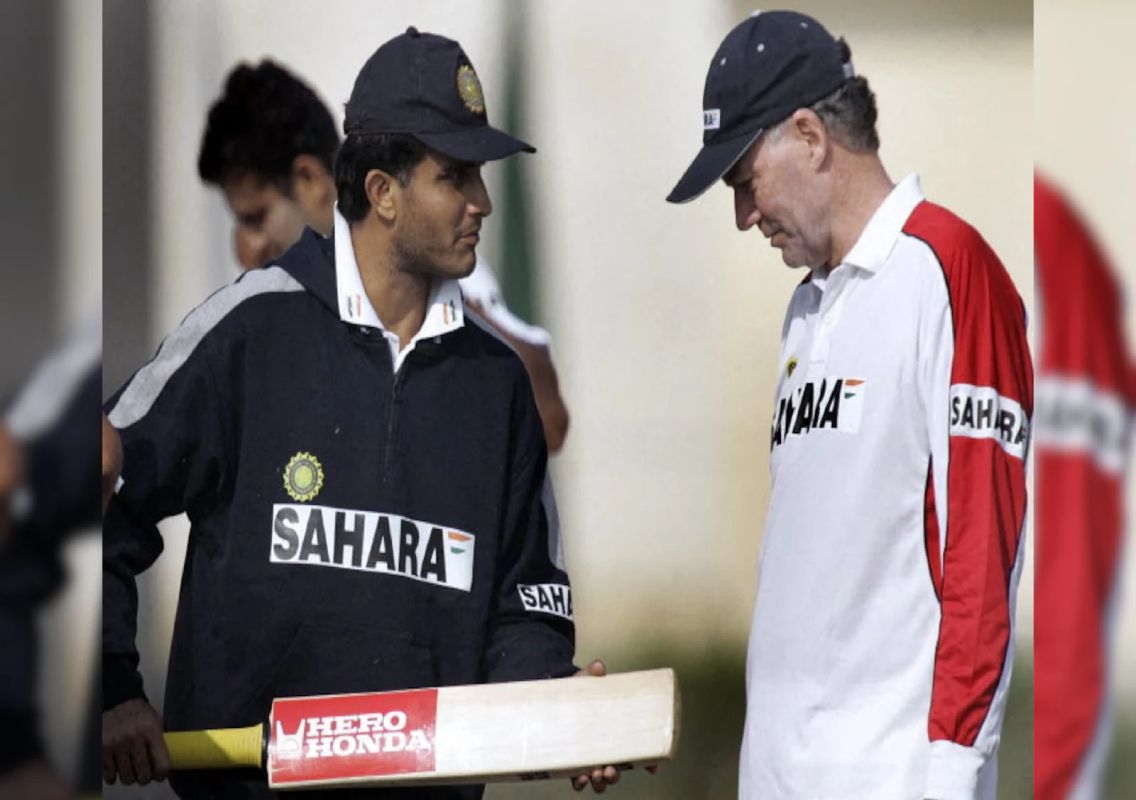


Kolkata: Former India captain Sourav Ganguly has opened up about his decision to ignore an approach from former India head coach Greg Chappell, citing their strained relationship as the primary reason. The revelation has once again brought attention to one of the most controversial chapters in Indian cricket history.
Ganguly stated that he chose not to respond to Chappell’s request to sign a petition addressed to the Pakistan government regarding the welfare of former Pakistan captain Imran Khan, who has reportedly been in custody since 2023 and is facing health concerns. While several cricketing legends, including Sunil Gavaskar and Kapil Dev, along with 12 other international players, extended their support by signing the petition, Ganguly opted to stay away.
Strained ties from the past
The relationship between Ganguly and Chappell dates back to 2005 when the latter was appointed as the head coach of the Indian cricket team. At the time, Ganguly was the captain and had supported Chappell’s appointment. However, their association soon turned sour, leading to one of the most debated episodes in Indian cricket.
Reports at the time suggested that Chappell had written to the Board of Control for Cricket in India (BCCI), expressing concerns over Ganguly’s leadership and questioning his mental and physical fitness to continue as captain. The fallout from this communication was significant, eventually resulting in Ganguly being removed from captaincy and Rahul Dravid taking over the role.
Ganguly was also dropped from the team during that phase, which further intensified the controversy. Chappell’s tenure, however, was short-lived, as he resigned following India’s early exit from the 2007 World Cup in the group stage.
Ganguly’s strong response
Speaking candidly on a podcast, Ganguly made it clear that he does not engage with individuals he perceives as dishonest. He emphasised that while differing opinions are acceptable in professional sport, the manner in which they are communicated matters greatly.
Ganguly remarked that he prefers direct communication and values honesty, even if the feedback is critical. According to him, addressing issues openly and respectfully is far more important than taking indirect or questionable routes to resolve differences.
His remarks underline a principle he has consistently maintained throughout his career — prioritising integrity and straightforwardness in professional relationships.
IPL offer also declined
In addition to the recent petition request, Ganguly also revealed that Chappell had reached out to him in 2011 with a proposal related to the Indian Premier League (IPL). At the time, Ganguly was associated with the Kolkata Knight Riders (KKR) as captain.
Chappell had reportedly expressed interest in becoming the head coach of the franchise, with Ganguly continuing as captain. However, Ganguly declined the proposal, making it clear that he was not willing to revisit a professional association that had previously ended on a sour note.
Using a touch of sarcasm, Ganguly commented that such a combination “would have been brilliant,” before adding that he would not repeat past mistakes. He stated firmly that while he may have made a misjudgement once, he would not do so again.
A chapter that still resonates
The Ganguly-Chappell episode remains one of the most talked-about controversies in Indian cricket. It not only impacted team dynamics at the time but also influenced public discourse around leadership, communication, and management within the sport.
Ganguly eventually made a successful comeback to the Indian team and went on to rebuild his reputation as one of India’s most influential cricketing figures. His later roles, including administrative positions, further cemented his legacy in Indian cricket.
Chappell, on the other hand, has largely remained away from Indian cricket circles since his resignation, though his tenure continues to be analysed and debated by fans and experts alike.
Conclusion
Ganguly’s recent remarks highlight how past experiences continue to shape present decisions. His refusal to engage with Chappell reflects not just a personal stance but also a broader lesson on professional boundaries and trust. As cricket evolves, such incidents serve as reminders of the importance of transparency and mutual respect in maintaining healthy working relationships.