


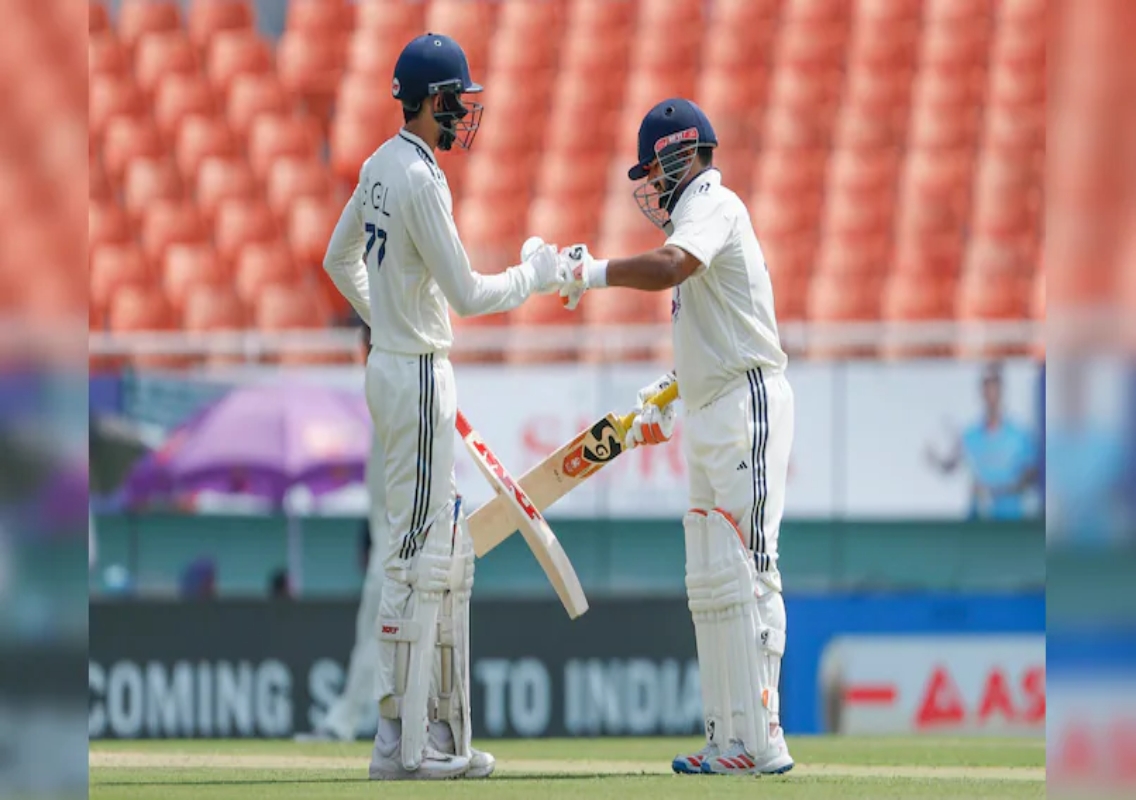


Wellington: India captain Shubman Gill has confirmed that the team will field four fast bowlers in the opening Test against New Zealand, signalling a pace-heavy approach for the two-match series. The first Test begins at the Basin Reserve in Wellington on November 19.
Gill said India were still working on the final playing combination but made it clear that four specialist fast bowlers would form part of the bowling plan. The decision reflects the conditions expected in New Zealand, where seam movement, bounce and the ability to extract assistance from the surface can play an important role.
India have several pace options available, including Jasprit Bumrah, Mohammed Siraj, Akash Deep, Prasidh Krishna, Anshul Kamboj and Gurnoor Brar. The captain’s confirmation has therefore increased interest in which four bowlers will get the nod for the series opener.
The announcement also suggests that India are prepared to prioritise their seam attack over a spin-heavy combination, although the exact playing XI has not yet been announced.
Gill confirms four fast bowlers
Speaking ahead of the opening Test, Gill acknowledged that the selection committee and team management had a difficult decision to make because several fast bowlers had performed well during the recent ODI series.
“We have a good headache… fast bowlers stepped up in ODI series. We are still deciding on final combination. We will play with four fast bowlers,” Gill said.
The captain also explained how India were considering the batting depth while finalising the team. He indicated that the players coming in at positions eight and nine would need to contribute with the bat, rather than being selected solely for their bowling.
“We will have seven batters, 8-9 we have Anshul and Akash who can bat a bit. So still deciding, Nitish can bat,” he said.
Gill added that the team would have to consider how the ball behaves as the innings progresses. He stressed the importance of having a bowler capable of hitting the deck hard when the ball becomes older.
That requirement could influence the selection of the fourth fast bowler. India’s management will have to balance pace, accuracy, bounce and batting contribution while deciding the final combination.
Bumrah expected to lead the pace attack
Jasprit Bumrah is expected to be a key member of India’s bowling attack. His return to the Test squad provides the team with an experienced fast-bowling leader for a challenging overseas assignment.
Bumrah has a strong record in Test cricket and offers India the ability to generate movement and maintain pressure across long spells. His experience will be particularly valuable on surfaces where the ball can move both in the air and off the pitch.
Mohammed Siraj is another experienced option. He has been an important part of India’s pace attack in overseas conditions and is among the leading wicket-takers for the team in the current World Test Championship cycle.
Akash Deep and Prasidh Krishna provide further choices. Akash has demonstrated his ability to bowl disciplined spells, while Prasidh offers extra bounce through his height and bowling action.
Anshul Kamboj and Gurnoor Brar have also strengthened India’s pace resources. Their inclusion gives the team additional options, although the final selection will depend on the conditions and the balance required in the playing XI.
Gurnoor Brar’s inclusion and Kuldeep Yadav’s release
India made an important change to their squad ahead of the Test series by adding fast bowler Gurnoor Brar. The decision came as the team prepared for conditions expected to favour seam bowling.
Brar was included in the squad on November 14, while left-arm wrist-spinner Kuldeep Yadav was released to return to India for domestic cricket.
The move increased the number of specialist fast-bowling options available to Gill. Brar has already represented India in one-day internationals and has also built experience in first-class cricket.
He has taken 71 wickets in 22 first-class matches, including two five-wicket hauls. His performances in the ODI series against New Zealand also strengthened his case for consideration.
Kuldeep’s release, meanwhile, leaves India with Ravindra Jadeja and Washington Sundar as their principal spin-bowling options in the updated squad. Both offer batting depth alongside their ability to bowl spin.
The decision does not necessarily mean India will completely abandon spin in the first Test. Instead, it gives the management the flexibility to select a bowling attack suited to the conditions at the Basin Reserve.
Gill highlights batting depth and bowling balance
Gill’s comments about the batting order provide an indication of the considerations behind India’s team selection.
The captain suggested that India would look to have seven recognised batters, with the players at positions eight and nine offering some additional batting ability. He specifically mentioned Anshul Kamboj and Akash Deep as players capable of contributing with the bat.
Nitish Kumar Reddy is another option because of his all-round ability. He can provide seam bowling while strengthening the lower-order batting.
This flexibility is important in overseas Test cricket, where teams often need contributions beyond the specialist top-order batters. A long tail can make it difficult to recover from a batting collapse or build a competitive first-innings total.
India’s selection will therefore involve more than simply choosing the four fastest bowlers. The management must identify players who can maintain pressure with the ball while ensuring that the batting order has enough depth.
The captain’s reference to having a bowler who can hit the deck hard when the ball gets old is also significant. It indicates that India want a pace attack capable of remaining effective throughout an innings, rather than relying only on early movement with the new ball.
Rishabh Pant receives backing from captain
Gill also expressed confidence in wicketkeeper-batter Rishabh Pant, who has been working his way back from fitness concerns.
Pant was named in India’s squad for the New Zealand series, subject to fitness clearance. He had missed the India A tour of New Zealand after sustaining an injury during the Irani Cup.
Dhruv Jurel is another wicketkeeping option in the squad, giving the team management an alternative if Pant is not considered ready for the opening match.
Gill highlighted Pant’s experience and his ability to score hundreds in different conditions around the world.
“He is one of the most experienced player in the team. He has scored 100s all over the world,” Gill said.
Pant’s availability could influence India’s batting combination. His attacking approach and experience in overseas conditions make him an important player, particularly in a series where the visitors will be looking for substantial contributions from the middle order.
However, the final decision will depend on his fitness and the team’s assessment before the Test begins.
India face a challenging series in New Zealand
Gill acknowledged that the Test series would present a tougher challenge than the recently concluded ODI contest. New Zealand have traditionally been difficult to beat at home, particularly at the Basin Reserve and Hagley Oval.
The first Test will be played in Wellington from November 19 to 23. The second match is scheduled for Christchurch from November 27 to December 1.
Both fixtures are part of the ICC World Test Championship 2025-27 cycle. India will be looking to collect important points as they attempt to strengthen their position in the standings.
The ICC had earlier noted that India were fifth in the championship table, with a points percentage of 51.52 following their previous series against Sri Lanka. The New Zealand tour therefore carries considerable importance for the visitors.
India have not had an easy recent history in New Zealand. The hosts won the two-match Test series during India’s previous tour in 2020, claiming victories in Wellington and Christchurch.
The conditions are expected to test India’s batters, particularly against a New Zealand pace attack familiar with local surfaces. Gill’s decision to use four fast bowlers suggests that India want to meet that challenge with a strong seam-bowling unit of their own.
Final playing XI still awaited
Although Gill has confirmed the four-pacer strategy, he has not announced the complete playing XI. The captain made it clear that discussions over the final combination were continuing.
Bumrah is expected to be central to the pace attack, while Siraj, Akash Deep, Prasidh Krishna, Kamboj and Brar are competing for the remaining positions. Nitish Kumar Reddy could also influence the balance because of his all-round contribution.
The final selection will depend on the pitch, the weather and the team’s assessment of the batting requirements. Pant’s fitness is another factor that could shape the combination.
Gill’s announcement nevertheless provides a clear indication of India’s approach for the Wellington Test. The visitors intend to use four fast bowlers and build an attack capable of exploiting New Zealand conditions. The identity of those four bowlers, however, will only become clear when India announce their playing XI.