







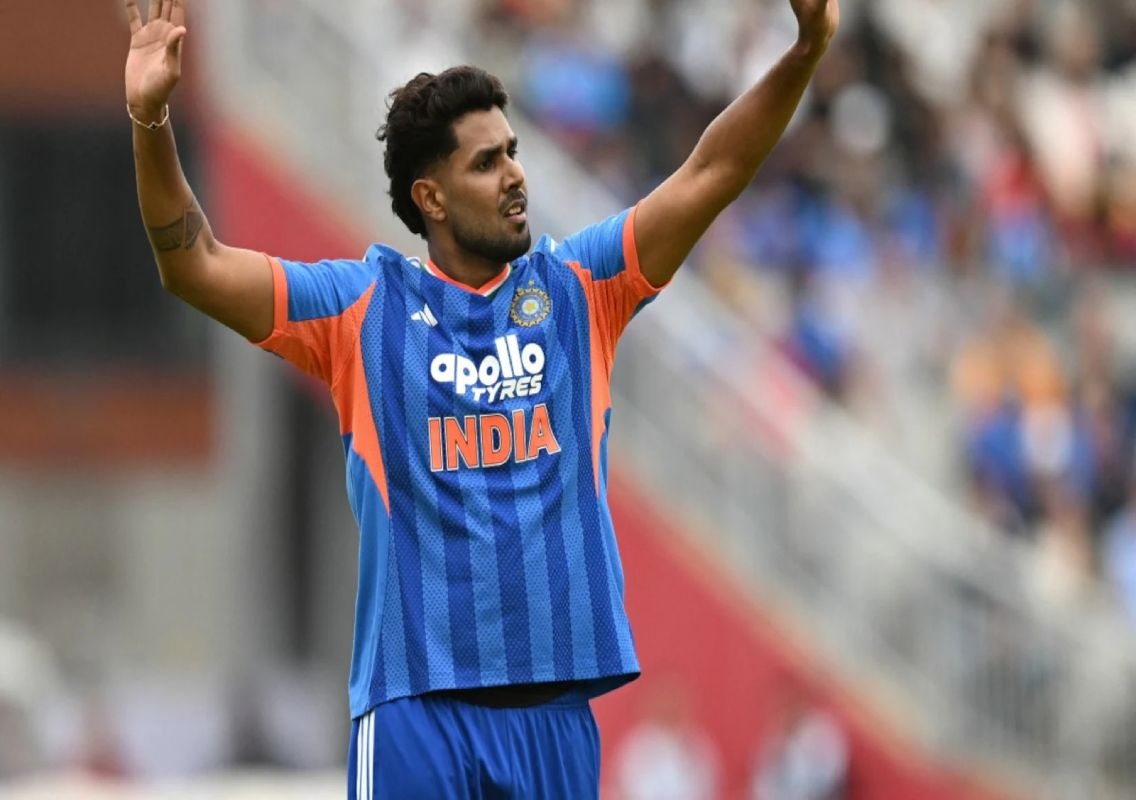


Bengaluru: Harshit Rana’s hamstring injury during India’s recent white-ball tour of the United Kingdom has raised questions over the fast bowler’s fitness management after his return from knee surgery. The 24-year-old pacer was ruled out of the three-match ODI series against England after suffering a Grade 1 hamstring injury during the third T20I at Trent Bridge.
The injury came at a crucial stage of Rana’s career, with the right-arm fast bowler being viewed as an important part of India’s long-term plans ahead of the 2027 ODI World Cup. Reports have suggested that concerns have emerged within the team management and selection committee regarding his fitness levels after he gained weight during his rehabilitation period.
According to sources, Rana was found to be overweight when he joined the Indian squad for the T20I series in England. The additional weight reportedly increased the physical strain on his body, which may have contributed to the hamstring issue.
The Board of Control for Cricket in India (BCCI) had confirmed that Rana experienced sudden discomfort in his right hamstring during the third T20I against England. Medical scans later revealed a Grade 1 injury, forcing him to miss the ODI series where he was expected to play a key role.
Fitness challenges for fast bowlers
Fast bowling is one of the most physically demanding roles in cricket, requiring athletes to maintain exceptional strength, flexibility and body conditioning. Any increase in body weight can place additional stress on muscles, particularly during high-intensity movements such as the bowling run-up, delivery stride and follow-through.
During a fast bowler’s action, the body absorbs significant forces. Experts believe that the landing and braking movements during delivery can generate pressure several times greater than a player’s body weight. Additional kilograms can increase the workload on muscles and joints, raising the risk of injuries.
Rana’s case has highlighted the importance of maintaining fitness levels during long injury breaks. While he successfully completed his rehabilitation programme after knee surgery and received clearance to return, managing body composition and workload remains a major part of an athlete’s recovery process.
A BCCI source stated that Rana is considered a valuable player for India’s future plans because of his ability to bowl at speeds around 140 kilometres per hour and contribute with the bat lower down the order. However, the source also stressed that the fast bowler must remain disciplined with his fitness routine.
Rana is being viewed as a potential all-round option who could strengthen India’s lower order in future tournaments. His ability to contribute in multiple areas makes his fitness an important factor for the team.
Concerns over return-to-play protocols
The injury has also brought attention to the challenges faced by players returning from long injury layoffs. Rehabilitation programmes are designed not only to restore fitness but also to prepare athletes for the demands of competitive cricket.
A player recovering from surgery often faces difficulties balancing strength training, match preparation and weight control. While regaining muscle strength is essential, maintaining an ideal playing weight is equally important, especially for fast bowlers.
Rana’s setback has served as a reminder that returning to international cricket requires more than medical clearance. Players must also ensure they are physically prepared for the intensity of international competition.
Varun Chakravarthy’s injury adds to India’s concerns
Rana’s injury was not the only fitness concern during India’s tour of the United Kingdom. Spinner Varun Chakravarthy also suffered a setback after returning to competitive cricket.
Chakravarthy, who played an important role in India’s build-up to the 2026 T20 World Cup, suffered a Grade 2 hamstring injury during the tour. He had earlier missed matches due to rehabilitation following a fractured toe sustained during the Indian Premier League.
The spinner was ruled out of the upcoming T20I series against Zimbabwe after medical assessments confirmed the extent of the injury.
The situation has raised questions about whether some players are returning to international cricket before reaching complete match fitness. Chakravarthy’s age has also become a factor, as he approaches his mid-30s and India begin planning for future global tournaments.
India’s focus shifts towards long-term fitness planning
With major tournaments ahead, India’s team management will closely monitor player fitness and workload management. Injuries to key players can affect team combinations and preparation, especially when players are being considered for important roles.
For Harshit Rana, the immediate priority will be a complete recovery and a carefully managed return to competitive cricket. His pace, batting ability and potential make him a valuable prospect, but maintaining peak fitness will determine how consistently he can contribute at the highest level.
As India prepare for future challenges, fitness standards are expected to remain a major focus. The team’s success will depend not only on talent but also on the ability of players to remain available and perform consistently throughout demanding international schedules.
Conclusion
Harshit Rana’s hamstring injury has highlighted the challenges fast bowlers face while returning from major injuries. While the setback is not considered a long-term concern, it has underlined the importance of weight management, rehabilitation discipline and fitness monitoring. For India’s future plans, ensuring that promising players remain physically prepared will be as important as developing their cricketing skills.