







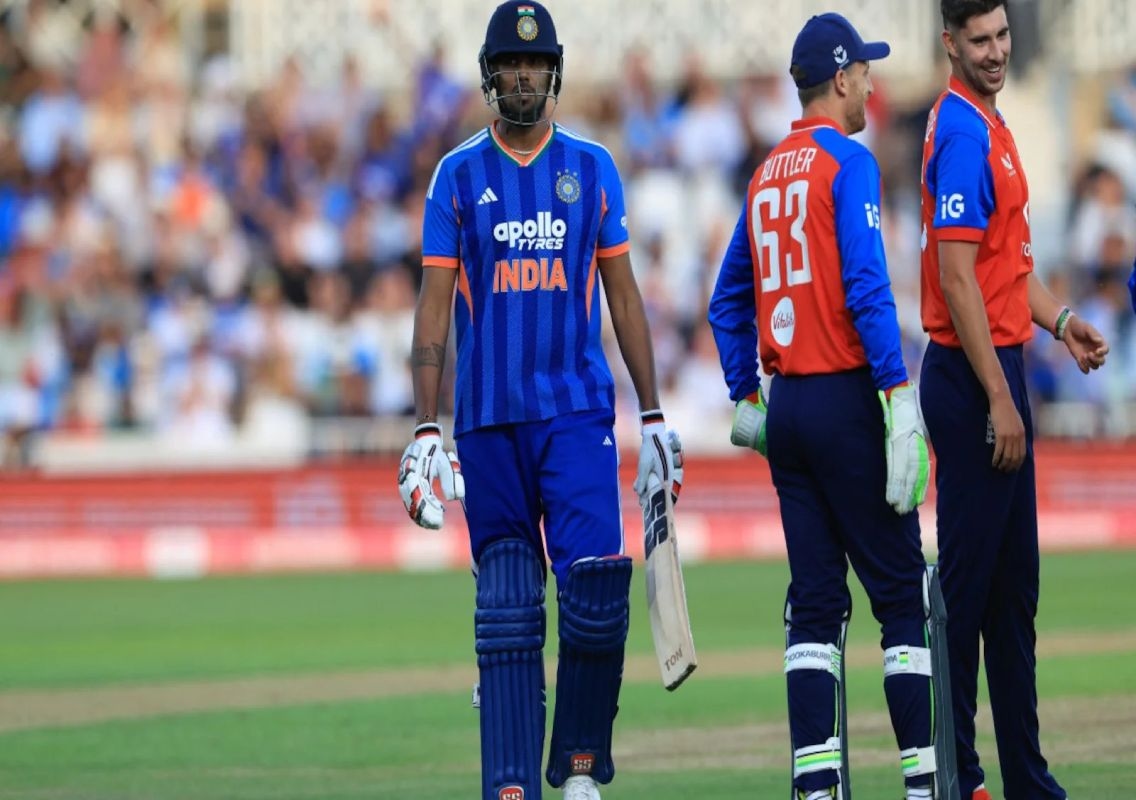


Nottingham: India’s crushing 125-run defeat to England in the third T20I at Trent Bridge has triggered widespread criticism, with a controversial batting order decision becoming the focal point of debate. The call to promote pacer Harshit Rana ahead of established all-rounder Shivam Dube during a tense run chase left fans and experts stunned, including former India wicketkeeper-batter Dinesh Karthik, who openly questioned the move on live commentary.
India were chasing a daunting target of 202 after England posted 201/7, powered by a commanding knock from Phil Salt. However, the visitors’ innings quickly unravelled under relentless pressure from England’s pace attack. At 52/5 in the fifth over, following Axar Patel’s dismissal, the team management decided to send in Harshit Rana instead of Dube, a move that raised eyebrows instantly.
Questionable strategy under pressure
Karthik, who was on commentary duty, did not hold back in expressing his disbelief. “Are you serious? Harshit Rana ahead of Shivam Dube? You can’t be serious,” he remarked, echoing the sentiments of many watching the game. He further questioned whether the decision indicated a lack of trust in Dube’s abilities in high-pressure situations.
The decision proved ineffective as Rana failed to stabilise the innings. By the time Dube eventually came out to bat a couple of overs later, the situation had worsened significantly. Dube, too, could not make an impact, managing just two runs off four balls before being dismissed by England pacer Josh Tongue.
England dominate with bat and ball
Earlier in the match, England showcased a strong batting performance despite a cautious start. Phil Salt overcame early jitters to score a brilliant 70 off 44 balls, anchoring the innings and setting the platform for a competitive total. Contributions from the middle order ensured England crossed the 200-run mark, finishing at 201/7.
India’s bowlers struggled to contain the flow of runs, with only occasional breakthroughs failing to halt England’s momentum. In reply, the batting lineup faltered almost immediately against a fiery pace attack led by Jofra Archer and Josh Tongue.
The English bowlers maintained consistent pressure, striking at regular intervals and leaving no room for partnerships to develop. Archer’s pace and accuracy troubled the Indian top order, while Tongue capitalised with crucial wickets. The visitors were eventually bowled out for just 76 in 11.4 overs, marking one of their most dismal batting performances in recent times.
Record defeat and series implications
The 125-run loss is now India’s heaviest defeat in T20 internationals in terms of runs, surpassing previous records and raising serious concerns about the team’s approach and decision-making. The defeat has handed England a commanding 2-0 lead in the five-match series, with the opening match having been washed out.
With only two matches remaining, India now face a must-win situation to avoid a series defeat. The team management, led by head coach Gautam Gambhir, is likely to come under scrutiny for both tactical decisions and overall strategy.
Need for introspection
The controversial batting order decision has intensified discussions around team planning and adaptability under pressure. While experimentation is often part of team strategy, critics argue that such moves should be made with caution, especially in high-stakes situations where experience can play a crucial role.
India will need to regroup quickly, address their shortcomings, and come back stronger in the remaining matches. A more balanced approach, clarity in roles, and improved execution will be essential if they are to salvage the series and restore confidence within the squad.