







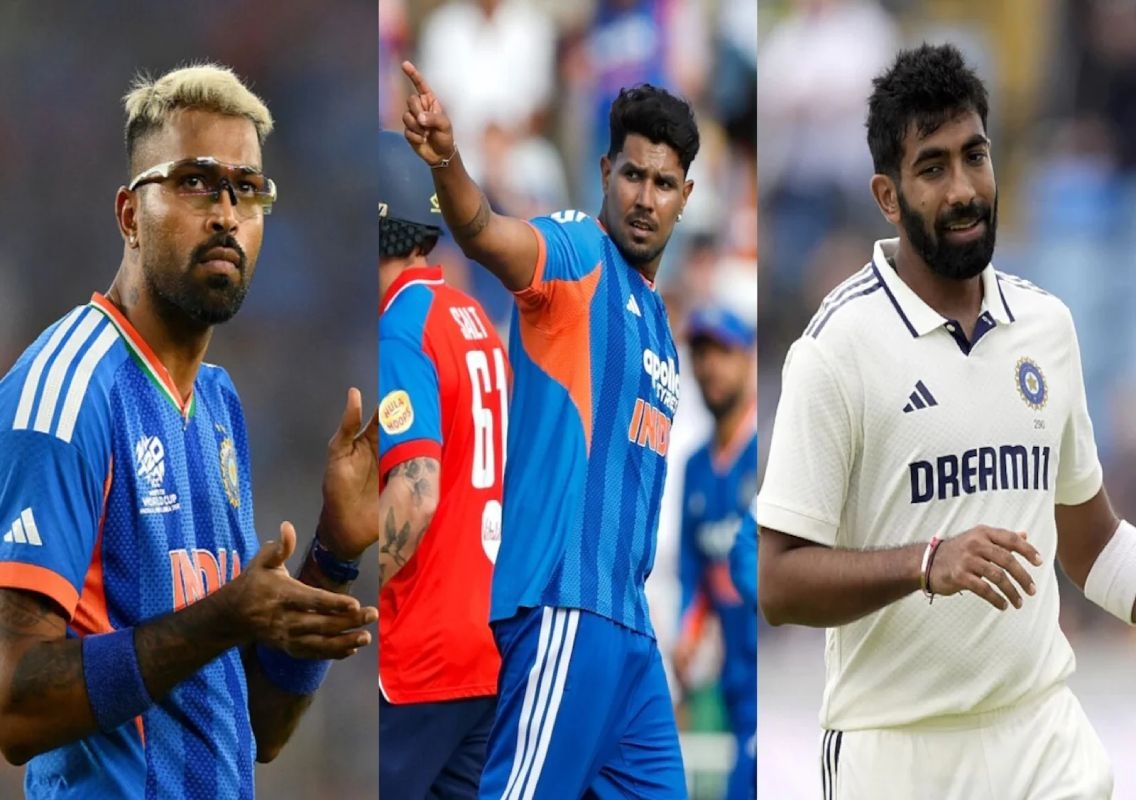


Bengaluru: Indian cricket is currently grappling with one of its most severe injury crises in recent years, with a large pool of first-choice players unavailable due to fitness issues. The situation has escalated to such an extent that nearly an entire playing XI could be formed from injured cricketers, raising serious concerns within the Board of Control for Cricket in India (BCCI).
In response, BCCI secretary Devajit Saikia is scheduled to meet VVS Laxman, the Head of Cricket at the National Cricket Academy (now Centre of Excellence), to review the rehabilitation processes and injury management systems currently in place.
Mounting injuries expose systemic challenges
The current injury list highlights the depth of the problem. Among the most notable absentees is premier fast bowler Jasprit Bumrah, who is dealing with knee swelling. Promising batter Sai Sudharsan is sidelined with a toe injury, while young pacer Harshit Rana is recovering from a hamstring strain.
All-rounder Nitish Kumar Reddy and spin-bowling all-rounder Washington Sundar are also out with hamstring and quadriceps injuries respectively. Meanwhile, pacer Akash Deep has been recovering from a lower back stress fracture for an extended period, dating back to the domestic season.
The injury list extends further with white-ball specialists such as Hardik Pandya, who is nursing a quadriceps issue, alongside spinner Varun Chakravarthy and emerging player Prince Yadav, both dealing with hamstring injuries.
Centre of Excellence under pressure
The injured players are currently undergoing rehabilitation at the BCCI’s Centre of Excellence in Bengaluru. However, reports suggest that the Sports Science and Medical team at the facility has been under significant strain, particularly following the resignation of former head physio Nitin Patel in early 2025.
The absence of a permanent figurehead has reportedly added to the challenges of managing multiple high-profile injuries simultaneously. Concerns have also emerged about coordination between the Centre of Excellence and the national selection committee, particularly regarding decisions on player readiness and return timelines.
There have been suggestions that in some cases, players may have been cleared for selection before fully completing rehabilitation benchmarks, raising questions about risk management and long-term player fitness.
Selection dilemmas and cautious approach
The ongoing injury crisis has forced selectors to adopt a cautious approach. Players like Bumrah and Sudharsan were reportedly considered for selection subject to fitness clearance, but the Centre of Excellence opted to prioritise long-term recovery over immediate returns.
This conservative stance reflects a broader shift in thinking within Indian cricket, where the focus is increasingly on preserving player longevity, especially with major tournaments on the horizon.
However, the large number of injuries has complicated team selection, forcing the management to frequently reshuffle squads and rely on bench strength.
Impact on team performance and planning
The absence of multiple senior and emerging players has had a direct impact on India’s team combinations across formats. With key bowlers and all-rounders unavailable, maintaining balance in the playing XI has become increasingly difficult.
The situation also poses challenges for long-term planning, particularly with important international tournaments approaching. Frequent injuries disrupt continuity, making it harder for players to build form and for the team to establish a stable core.
BCCI steps in for review
Recognising the seriousness of the issue, the BCCI’s decision to conduct a high-level review indicates a proactive approach. The meeting between Saikia and Laxman is expected to focus on strengthening rehabilitation protocols, improving coordination between departments and ensuring that players are only cleared when fully match-fit.
Discussions may also include the need for additional resources or structural changes within the Centre of Excellence to better handle the increasing workload.
Conclusion
India’s current injury crisis has exposed gaps in workload management, rehabilitation processes and coordination between key cricketing bodies. While injuries are an unavoidable part of modern sport, the scale of the problem suggests a need for systemic improvements.
The BCCI’s intervention could prove to be a crucial step in addressing these concerns. Ensuring player fitness and availability will be vital not only for immediate performance but also for sustaining India’s competitiveness on the global stage in the years ahead.