







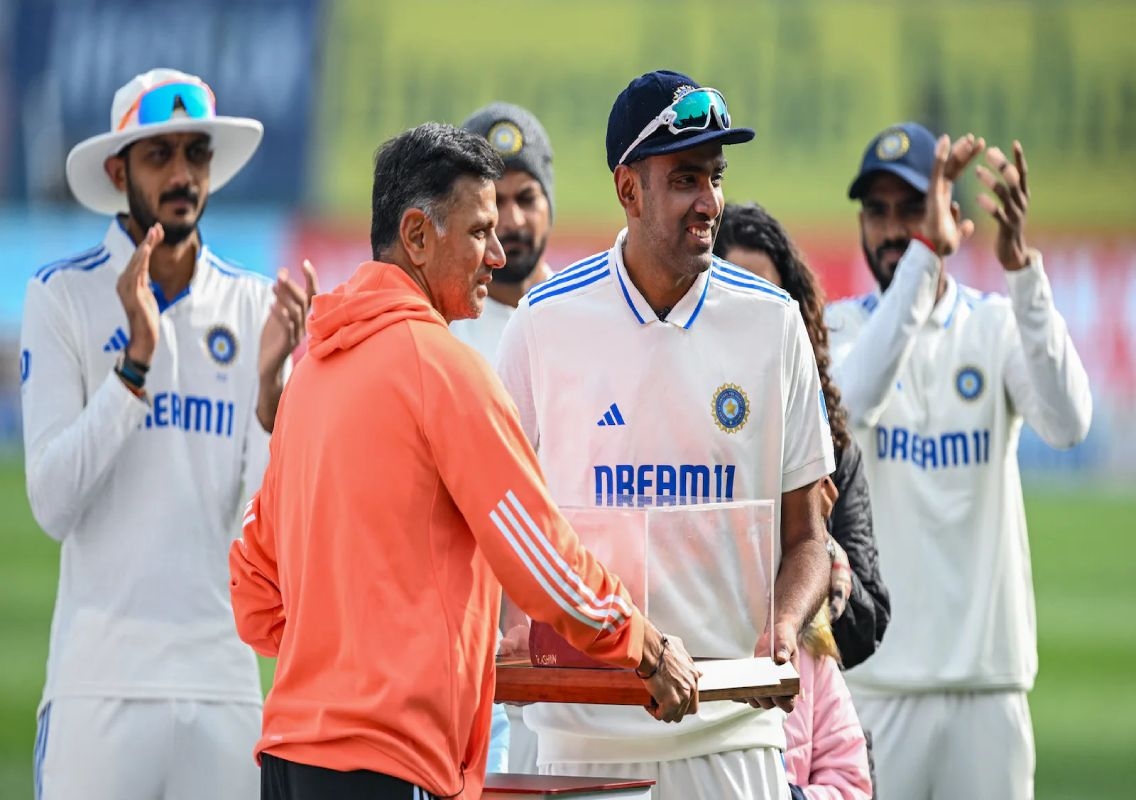


Chennai: India’s approach to One Day International (ODI) cricket is under renewed discussion after Ravichandran Ashwin publicly reflected on the structured planning during Rahul Dravid’s tenure as head coach. His remarks have sparked conversations about whether the Indian team currently lacks a defined roadmap as it builds towards the 2027 ICC Cricket World Cup.
Ashwin, known for his analytical insights into the game, emphasised that Dravid’s time as coach was marked by consistency, patience, and a clearly defined long-term vision. According to him, the Indian team management during that phase prioritised stability over frequent changes, allowing players to grow into their roles with confidence.
Stability and role clarity under Dravid
During Dravid’s tenure, several players were consistently backed despite fluctuations in form. Cricketers like KL Rahul, Shubman Gill, and Kuldeep Yadav were given extended runs in the playing XI, which helped them establish themselves as key contributors. Similarly, all-rounders such as Hardik Pandya and Shardul Thakur were trusted to deliver balance to the side.
Ashwin pointed out that this approach created a sense of security within the dressing room. Players were aware of their roles and responsibilities, reducing uncertainty and enabling them to focus on performance rather than selection pressures.
The emphasis on continuity also helped India build a strong core leading into major tournaments, including the 2023 ICC Cricket World Cup, where the team displayed consistency throughout the campaign.
Questions over current ODI direction
In contrast, Ashwin hinted at a lack of visible long-term planning in the current ODI setup. Since the conclusion of the 2023 World Cup, India has experimented with multiple combinations, particularly in the opening pair and bowling attack. While experimentation is a natural part of team evolution, the absence of a clearly communicated roadmap has raised questions among observers.
The uncertainty surrounding senior players like Rohit Sharma and the transition phase for younger players has further added to the debate. With less than four years remaining for the next World Cup cycle, experts believe that clarity in selection and strategy will be crucial.
Ashwin suggested that the period immediately after a World Cup is ideal for laying the foundation for the next cycle. This includes identifying a core group of players, developing backups, and managing workloads to ensure peak performance during major tournaments.
Importance of system-wide coordination
Another key aspect highlighted by Ashwin was the coordination between different levels of Indian cricket during Dravid’s tenure. The collaboration between Dravid and VVS Laxman, who has been closely associated with the National Cricket Academy (NCA), ensured alignment in player development and team strategy.
This integrated approach allowed players transitioning from domestic cricket or India A to adapt seamlessly to international demands. It also ensured that the team management had a larger pool of prepared players to choose from, reducing the impact of injuries or sudden form slumps.
Ashwin noted that such coordination is vital for sustained success, especially in a cricketing ecosystem as vast as India’s, where talent is abundant but requires structured nurturing.
The road to 2027
With the 2027 ICC Cricket World Cup on the horizon, India faces the challenge of balancing transition with performance. The team management will need to identify a settled core while also integrating emerging talent into the squad.
Experts believe that a clear vision, similar to what was seen during Dravid’s tenure, could be the key to maintaining India’s competitiveness in global tournaments. This includes defining roles for players, sticking with combinations, and building a cohesive unit over time.
Conclusion
Ashwin’s remarks serve as a timely reminder of the importance of long-term planning in international cricket. While experimentation is necessary, it must be guided by a clear strategy and consistent vision. As India prepares for the next ODI cycle, adopting a structured approach could once again position the team as a formidable contender on the world stage.