







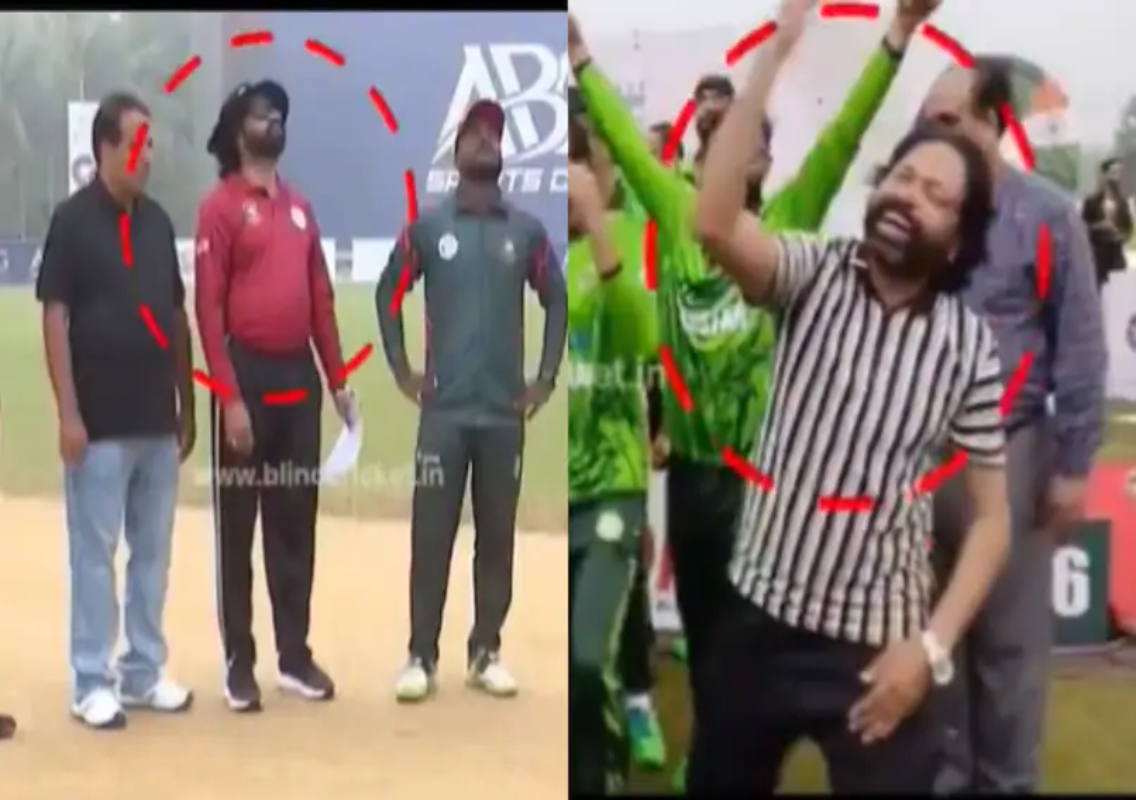


Dhaka: The Cricket Association for the Blind in India (CABI) has questioned the neutrality of a Pakistani umpire after a video appeared to show him celebrating with Pakistan players using gestures that seemed to imitate fighter jets crashing. The incident has added another controversy to the already tense aftermath of the Men’s Asia Cup for the Blind 2026 final in Dhaka.
CABI objected to the official’s conduct, pointing out that he had officiated throughout the tournament and was expected to remain impartial. The association said an umpire should never be seen aligning with either team, regardless of the result of a match.
The latest complaint follows India’s decision to boycott the trophy presentation after Pakistan were declared champions of the rain-abandoned final. The Indian team and its governing association have disputed the decision to award the title on the basis of a superior net run rate, arguing that the teams should have shared the trophy because no reserve day was available.
The dispute has now expanded from the interpretation of tournament rules to questions about the conduct of match officials.
CABI questions umpire’s impartiality
CABI raised the issue after footage circulated on social media showing a Pakistani umpire celebrating alongside Pakistan players. The gestures in the video appeared to mimic aircraft crashing, prompting the Indian association to question whether the official had maintained the neutrality expected of a match official.
In a statement shared on social media, CABI said: “This Pakistani umpire officiated throughout the Asia Cup Cricket for the Blind 2026, yet is seen celebrating with the Pakistan team.”
The association added that an umpire must remain neutral and should not appear to associate with either side.
CABI’s objection is centred on the principle that match officials must maintain professional distance from competing teams. The video has prompted questions about whether the official’s conduct was appropriate, particularly given the sensitive circumstances surrounding the final.
The association has not merely raised an objection to a celebration. It has connected the incident to the broader concerns about officiating and the administration of the tournament.
Why the India-Pakistan blind cricket final became controversial
The Men’s Asia Cup for the Blind final between India and Pakistan in Dhaka was abandoned without a ball being bowled because of rain.
Pakistan were subsequently declared champions on the basis of their superior net run rate during the tournament. India objected to the decision, maintaining that a final should not be decided using a statistic generally associated with league-stage qualification.
CABI argued that the absence of a reserve day meant the two teams should have been declared joint winners. It also questioned the process through which the final result was decided.
The controversy intensified after the World Blind Cricket Council (WBCC) Technical Committee reportedly recommended that India and Pakistan share the title. However, WBCC president Sultan Shah, who also heads the Pakistan Blind Cricket Council, reportedly overruled that recommendation. The match referee was then directed to announce Pakistan as champions.
CABI has alleged that the decision was influenced by Pakistan’s position within the governing structure. These are allegations made by the Indian association; the complete decision-making record and an independent response from the WBCC would be needed to establish the circumstances conclusively.
Indian players stayed away from the trophy presentation ceremony in protest.
CABI secretary strongly criticises the decision
CABI general secretary Shailendra Yadav criticised the decision to award Pakistan the title without the final being played.
He alleged that Pakistan had used its influence to secure the trophy and questioned the authority behind the decision. Yadav also argued that net run rate should not have been used to determine the winner of a final.
His position was that the tournament should have followed the applicable playing conditions and the WBCC Technical Committee’s recommendation. He maintained that the absence of a reserve day should have resulted in a shared title or another outcome permitted by the regulations.
CABI also questioned whether the relevant playing conditions had been properly communicated to the teams. A match official reportedly raised concerns about how the rules were framed and whether the possibility of using net run rate to decide a rain-abandoned final had been clearly explained before the tournament.
These questions have made transparency over the tournament’s regulations and decision-making process central to the dispute.
India threatens to boycott future matches against Pakistan
The fallout could extend beyond the 2026 tournament. CABI has threatened that India’s blind cricket team may refuse to play Pakistan in future until the dispute is resolved.
Yadav told India Today that the team would not participate in future matches against Pakistan until the issue was addressed. The association’s objection is not limited to the trophy decision; it also concerns what it considers a failure to respect tournament regulations and sporting ethics.
India entered the competition as defending champions, having won the previous edition in 2016. Pakistan, meanwhile, defeated India by one wicket in their group-stage meeting and finished at the top of the table. India reached the final after defeating Bangladesh.
The two teams therefore arrived at the final through different routes, but the rain meant that the title match itself could not take place. The decision to use the group-stage net run rate to award the championship became the central point of disagreement.
A future boycott would affect players who depend on international tournaments for competitive opportunities and recognition. CABI’s position is that the governing body must address the concerns before normal cricketing ties can resume.
Haris Rauf controversy resurfaces amid jet-crash gestures
The latest video has also brought back memories of Pakistan fast bowler Haris Rauf’s gestures during the Asia Cup in September 2025.
During the Super Four match against India in Dubai, Rauf made gestures that appeared to depict fighter jets being shot down. He also displayed six fingers, which were widely interpreted as a reference to Pakistan’s claims during the military conflict between the two countries.
Those celebrations attracted criticism and became a major talking point after the match. The latest footage involving the blind cricket umpire has revived scrutiny of gestures with military connotations in India-Pakistan sporting contests.
However, the two incidents involve different individuals and circumstances. CABI’s current complaint is specifically about an umpire’s expected neutrality and his apparent participation in celebrations with one of the competing teams.
Governing body faces questions over tournament administration
The controversy presents a challenge for the World Blind Cricket Council, which oversees international blind cricket. The organisation may need to clarify how the final’s playing conditions were interpreted, why the Technical Committee’s reported recommendation was not followed and what standards apply to officials after matches.
The dispute also highlights the importance of clear rules for rain-affected finals. Tournament regulations should specify whether a reserve day is available and how a championship is decided when the final cannot begin. Clear communication before a competition can help prevent disagreements when weather disrupts a decisive match.
The umpire controversy adds another issue that requires an explanation. Match officials are expected to maintain impartiality throughout a tournament, including during post-match ceremonies and celebrations.
For now, CABI has made its objection public, while the dispute over Pakistan’s title and the umpire’s conduct remains unresolved. A transparent explanation from the governing body could be important in restoring confidence and preventing the controversy from affecting future blind cricket competitions between India and Pakistan.