


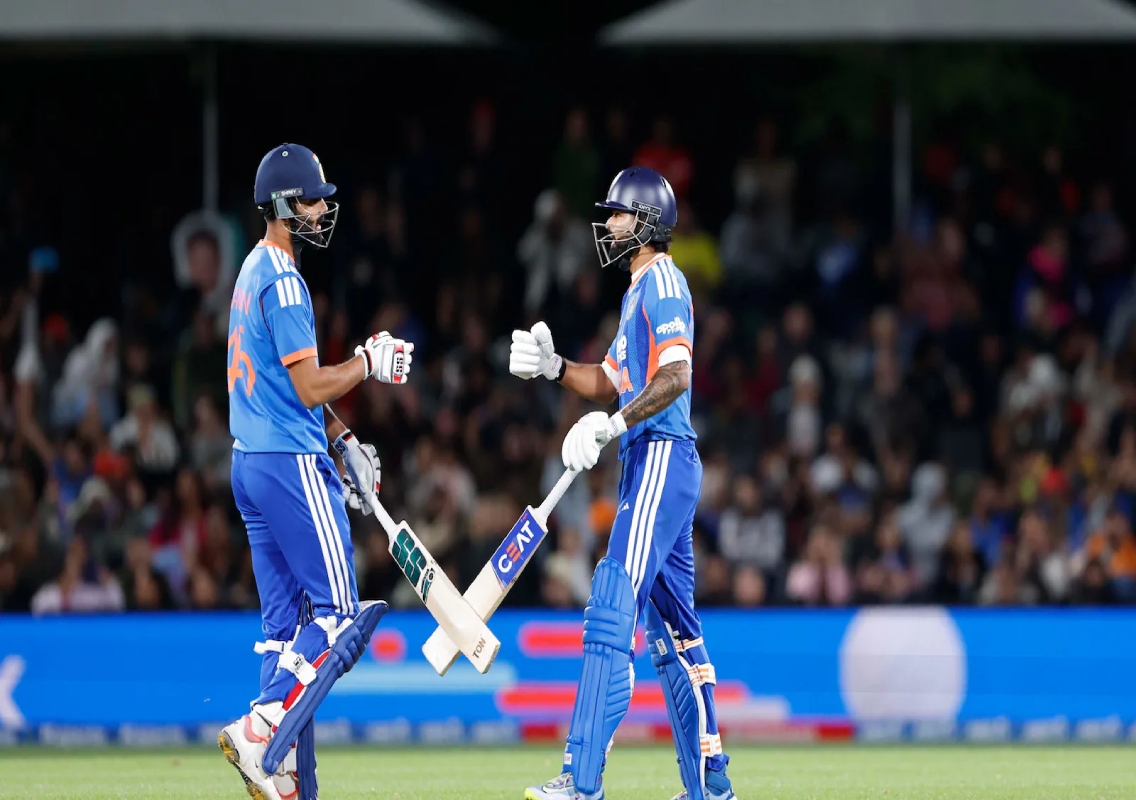


Christchurch: India created history in the opening T20 International against New Zealand, chasing a daunting target of 226 runs to register their highest successful run chase in men’s T20I cricket. Sanju Samson’s explosive half-century and Naman Dhir’s late fireworks powered India to a four-wicket victory at Hagley Oval on October 22, 2026.
India reached 230 for six in 19.4 overs after New Zealand posted 225 for four. The victory gave India a 1-0 lead in the five-match series and placed the team among the leading sides to complete a successful chase of more than 225 runs in T20Is.
India break their own T20I chasing record
India’s successful chase of 226 surpassed their previous best of 209 runs, a target they had chased against Australia in Visakhapatnam in 2023 and against New Zealand in Raipur in 2026.
The Christchurch result also became India’s highest successful T20I chase outside their home conditions, surpassing the previous mark of 204 against New Zealand in Auckland in 2020.
The chase underlined India’s batting depth. Although the team lost wickets in the middle overs and the contest became tense, the lower order managed to finish the job with two balls remaining.
Sanju Samson leads India’s explosive start
Chasing 226, India made an aggressive start through openers Sanju Samson and Abhishek Sharma. The pair added 93 runs for the first wicket, putting New Zealand’s bowlers under immediate pressure.
Samson scored 67 off 33 deliveries, striking boundaries regularly and keeping India’s required run rate under control. Abhishek contributed 29 from just 12 balls before being dismissed in the sixth over.
India reached 94 for one at the end of the powerplay, giving themselves an excellent platform in pursuit of the imposing target. Samson’s innings proved crucial in ensuring that the chase remained achievable despite the wickets that followed. He was later named Player of the Match.
New Zealand fight back through spin
India’s early momentum slowed after the powerplay. New Zealand’s spinners capitalised on the change in conditions, picking up important wickets and restricting the scoring rate.
Michael Bracewell and Mitchell Santner claimed two wickets each, helping the hosts bring the contest back into balance. India lost Tilak Varma, Ishan Kishan and other middle-order batters during a difficult phase, and the required rate climbed.
At 167 for five after 14.3 overs, India still needed a strong finish. Shreyas Iyer played an important role in keeping the chase alive, scoring 42 off 28 balls. Axar Patel added 24 off 14 deliveries before his dismissal left India needing further contributions from the lower order.
Naman Dhir produces a record-breaking finish
Naman Dhir delivered the decisive late assault, remaining unbeaten on 42 off just 15 balls. His innings included five fours and two sixes, giving him a strike rate of 280.
Dhir also set a new Indian record for the highest individual score by a batter coming in at No. 7 or lower in a successful T20I chase. He surpassed the previous mark of 33 not out, scored by Irfan Pathan against Sri Lanka in Colombo in 2009.
Dhir’s ability to score quickly helped India overcome the pressure created by New Zealand’s middle-over wickets. He attacked the bowling at a critical stage and reduced the equation to a manageable target in the final overs.
India needed eight runs in the last over. Dhir struck a boundary before finishing the match with a six, taking India to victory with two deliveries remaining.
Glenn Phillips powers New Zealand to 225
Earlier, New Zealand had posted 225 for four after being asked to bat first. Glenn Phillips led the innings with an unbeaten 82 off 40 balls, hitting eight fours and three sixes at a strike rate of 205.
Finn Allen contributed 45 off 24 deliveries, while Bevon Jacobs added 31 from 16 balls. Their aggressive batting ensured New Zealand maintained a high scoring rate through the innings.
India’s bowlers struggled to contain the hosts on a surface that rewarded attacking shots. Bhuvneshwar Kumar conceded 49 runs in four overs, while Axar Patel gave away 51. Arshdeep Singh and Mayank Yadav took one wicket each, but New Zealand still finished with a formidable total.
Despite the strong platform provided by Phillips and the other batters, New Zealand were unable to defend their score against India’s powerful chase.
More records from India’s historic chase
The Christchurch contest produced several statistical milestones beyond India’s highest successful T20I chase.
- India’s highest T20I chase: The target of 226 surpassed the team’s previous best of 209.
- Naman Dhir’s lower-order record: His unbeaten 42 became India’s highest individual score from No. 7 or lower in a successful T20I chase.
- India’s powerful powerplay: The team scored 94 for one in the first six overs, putting the chase on course early.
- A major target against New Zealand: India’s successful pursuit became the second-highest successful T20I chase against New Zealand, behind Australia’s chase of 245 in Auckland in 2018.
India take momentum into the second T20I
The win gives India an early advantage in the five-match series, but the performance also offers lessons for both sides. India’s top order showed its ability to attack from the outset, while Dhir’s finishing skills demonstrated the value of lower-order power hitting.
New Zealand, meanwhile, will look to improve their defence of large totals after allowing India to recover from a middle-order collapse. The hosts had taken wickets at crucial moments but could not stop Dhir’s late charge.
The second T20I is scheduled to take place in Christchurch on October 24. India will aim to extend their lead, while New Zealand will seek a response after seeing a total of 225 overhauled in a historic contest.