


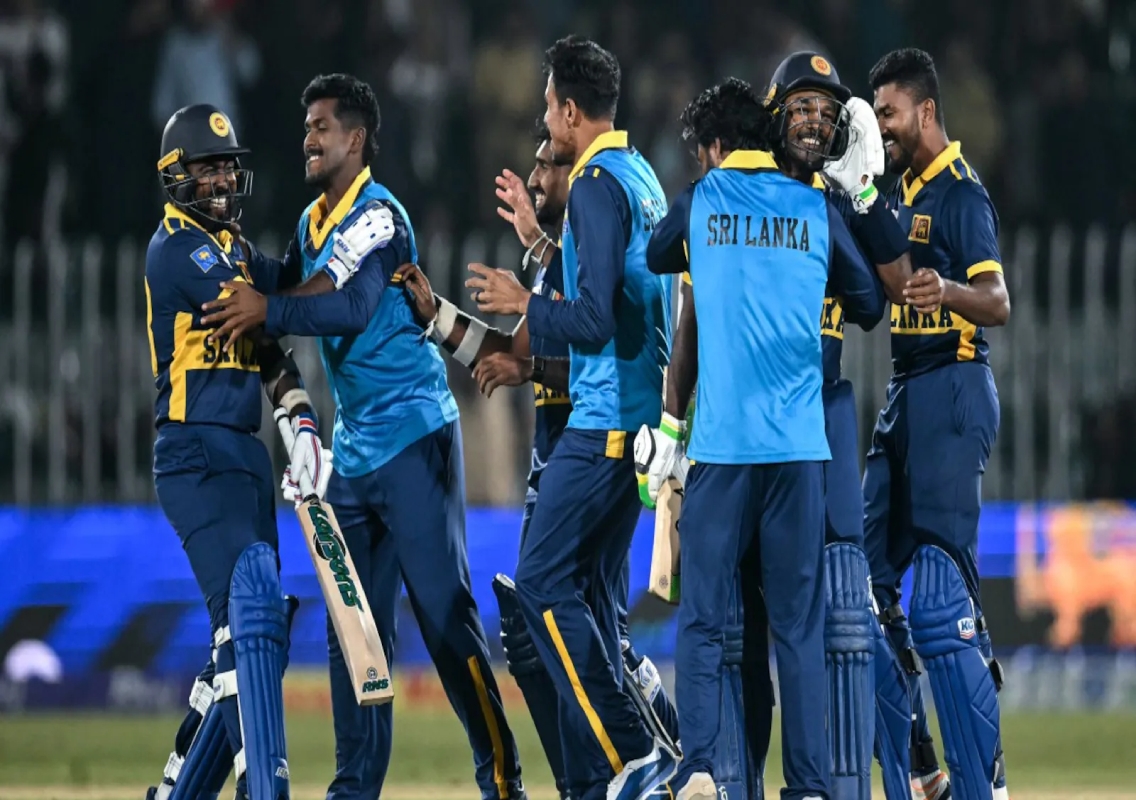


Rawalpindi: Sri Lanka scripted a remarkable chapter in men’s One Day International (ODI) cricket by chasing down 430 runs against England, recording the second-highest successful run chase in the format’s history. The thrilling two-wicket victory in the Pakistan ODI Tri-Series on October 22, 2026, came despite England captain Harry Brook scoring a record-breaking double century.
Sri Lanka reached 430 for eight in 49.5 overs, surpassing England’s imposing total of 429 for four at Rawalpindi. The result placed Sri Lanka behind only South Africa’s historic pursuit of 435 against Australia in Johannesburg in 2006.
Highest successful run chases in men’s ODIs
Sri Lanka’s achievement places the team among a select group of sides that have successfully chased targets above 400 in men’s ODI cricket. The result also highlights how batting conditions and aggressive approaches have changed the possibilities in the 50-over format.
The leading successful ODI chases are:
- South Africa – 438/9 against Australia, Johannesburg, 2006
- Sri Lanka – 430/8 against England, Rawalpindi, 2026
- India – 406/2 against West Indies, Guwahati, 2026
- Netherlands – 374/6 against Scotland, Dundee, 2025
- South Africa – 372/6 against Australia, Durban, 2016
Sri Lanka’s chase is particularly notable because England had scored nearly 430 runs, a total that would ordinarily place enormous pressure on the chasing side. The visitors nevertheless found a way to recover from early setbacks and finish the match with one ball remaining.
Harry Brook’s record double century goes in vain
England’s innings was led by Brook, who scored 202 runs off 116 balls. He became the first English batter to score a double century in men’s ODI cricket and registered the fastest double century in the format, surpassing the previous 117-ball mark held by India’s Shubman Gill.
Brook’s innings included 21 fours and 10 sixes. Joe Root contributed 69 off 66 balls, while Will Jacks provided a powerful finish with an unbeaten 66 off just 30 deliveries. England’s total of 429 for four appeared formidable, but Sri Lanka’s batting response ensured that Brook’s individual milestone did not translate into victory.
Pavan Rathnayake anchors Sri Lanka’s recovery
Sri Lanka’s chase began poorly, with the team losing two wickets early and slipping to 24 for two. The situation demanded a substantial partnership, and Avishka Fernando and Pavan Rathnayake delivered exactly that.
Fernando scored 97 off 83 balls, while Rathnayake made 130 off 106 deliveries. Their 166-run partnership for the third wicket restored Sri Lanka’s hopes and laid the foundation for the chase.
Rathnayake’s century was central to the recovery. He maintained the scoring rate while ensuring Sri Lanka did not lose further momentum after the early dismissals. Fernando’s innings also proved valuable, even though he narrowly missed out on a century.
Their partnership changed the direction of the match and gave the lower order a realistic opportunity to complete the demanding chase.
Shanaka and Liyanage deliver the finishing assault
Dasun Shanaka then produced a blistering innings of 97 off 50 balls, including eight sixes. His aggressive batting brought Sri Lanka closer to the target, although he was dismissed just three runs short of a century.
Janith Liyanage took charge in the closing stages, scoring an unbeaten 61 off 27 balls. His contribution ensured that Sri Lanka continued to attack despite the pressure of the required run rate and the loss of wickets.
The contest went down to the final over, with Sri Lanka needing eight runs. England’s Josh Tongue took two wickets in the over, briefly raising the prospect of an unlikely comeback. Liyanage, however, held his nerve and struck a six off the penultimate delivery to seal the victory.
Sri Lanka’s final score of 430 for eight completed the second-highest successful run chase in ODI history and their highest successful chase in the format.
A high-scoring match enters ODI history
The contest was remarkable not only for the successful chase but also for the extraordinary volume of runs scored by both teams. England’s 429 for four and Sri Lanka’s 430 for eight produced a combined total of 859 runs, placing the match among the highest-scoring ODIs on record.
The result also underlined the importance of partnerships and finishing ability in modern one-day cricket. England had the standout individual innings through Brook, but Sri Lanka countered with contributions from several batters at crucial stages.
For Sri Lanka, the victory was a landmark achievement built on resilience after an early collapse and an aggressive finish under pressure. For England, the defeat demonstrated that even a record-breaking batting performance and a total close to 430 cannot guarantee success when the opposition sustains its chase.
Sri Lanka’s remarkable pursuit will be remembered as one of the defining ODI results of 2026, while South Africa’s 438-run chase against Australia remains the benchmark for teams attempting to overhaul the biggest targets in the format.