







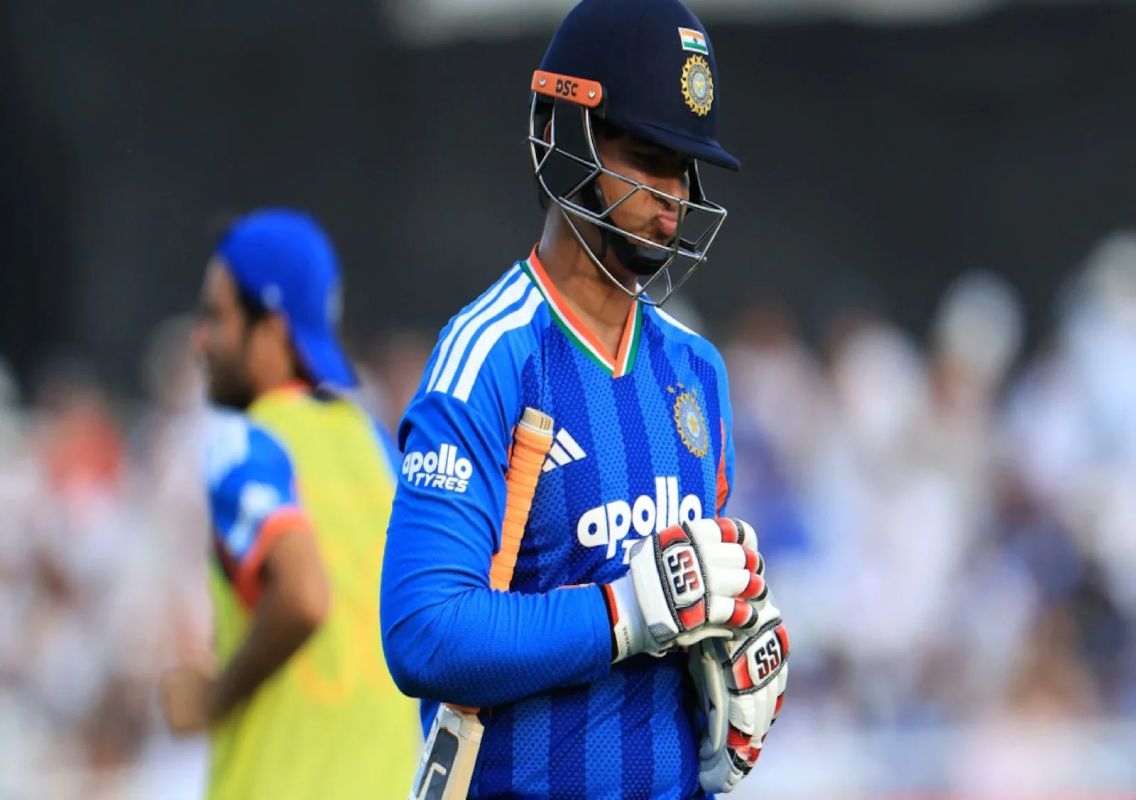


Nottingham: India endured their heaviest defeat in T20 International history as England registered a crushing 125-run victory in the third match of the five-game series at Trent Bridge. The defeat handed England a commanding 2-0 lead, with the opening game having been abandoned, and exposed serious concerns in India’s batting and overall team performance.
Chasing a formidable target of 202, India’s batting line-up collapsed dramatically, managing just 76 runs in 11.4 overs. It marked one of the most dismal performances in recent times, with only four batters reaching double digits. The defeat also extended captain Shreyas Iyer’s winless streak to five matches, intensifying pressure on the team management led by head coach Gautam Gambhir.
England’s pace attack proves decisive
The foundation of England’s emphatic victory was laid by their fiery pace duo, Jofra Archer and Josh Tongue. Bowling with pace, accuracy, and aggression, Archer (3/29) and Tongue (4/28) dismantled India’s top order within the Powerplay, leaving the visitors reeling early in the chase.
India’s innings never recovered from the early blows. By the end of the fifth over, the scoreboard read a worrying 52/5, effectively ending the contest. The English bowlers maintained relentless pressure, exploiting poor shot selection and lack of application from the Indian batters.
Youngster Vaibhav Sooryavanshi showed brief glimpses of promise, striking a couple of sixes during his short stay. However, his innings of 13 runs came to an end quickly as he mistimed a hook shot off a sharp bouncer from Archer, resulting in a catch behind.
Batting collapse raises concerns
India’s batting performance was marked by reckless stroke play and an inability to adapt to conditions. Abhishek Sharma fell to a lofted shot, while Ishan Kishan, despite hitting a six, could not convert his start. Captain Shreyas Iyer also failed to steady the innings, falling cheaply in an attempt to counter the pace attack.
The decision to promote Harshit Rana ahead of Shivam Dube during the collapse drew criticism, as the move failed to yield results and further highlighted the lack of clarity in India’s batting approach.
Axar Patel and other middle-order batters also failed to contribute meaningfully, with wickets falling in quick succession. The innings ended without any resistance, underlining a lack of composure under pressure.
England post competitive total
Earlier, England posted a strong total of 201/7 after being put in to bat. Opener Phil Salt anchored the innings with a well-compiled 70 off 44 balls, while Sam Curran provided a late surge with an unbeaten 41 off 24 deliveries.
Jos Buttler contributed 36 runs at the top, helping England recover from a cautious start. Despite a few breakthroughs by India’s bowlers, including Harshit Rana and Prince Yadav, England accelerated in the latter stages.
The final eight overs yielded 89 runs, with Curran’s aggressive batting proving crucial in pushing the total beyond the 200-run mark. India’s spinners, particularly Axar Patel and Varun Chakravarthy, struggled to contain the scoring, conceding runs at a high rate.
Series implications and team outlook
The comprehensive victory has put England in a dominant position in the series, needing just one more win to seal it. For India, the loss raises serious questions about team balance, strategy, and execution.
The team’s inability to adapt to English conditions has been a recurring issue, as highlighted by their recent performances against both Ireland and England. With four consecutive losses, the need for introspection and course correction has become urgent.
Conclusion
India’s record defeat in Nottingham serves as a wake-up call for the team management and players alike. While England executed their plans to perfection, India’s lack of discipline and cohesion proved costly. With the series slipping away, India must regroup quickly and address their shortcomings to remain competitive in the remaining matches.