







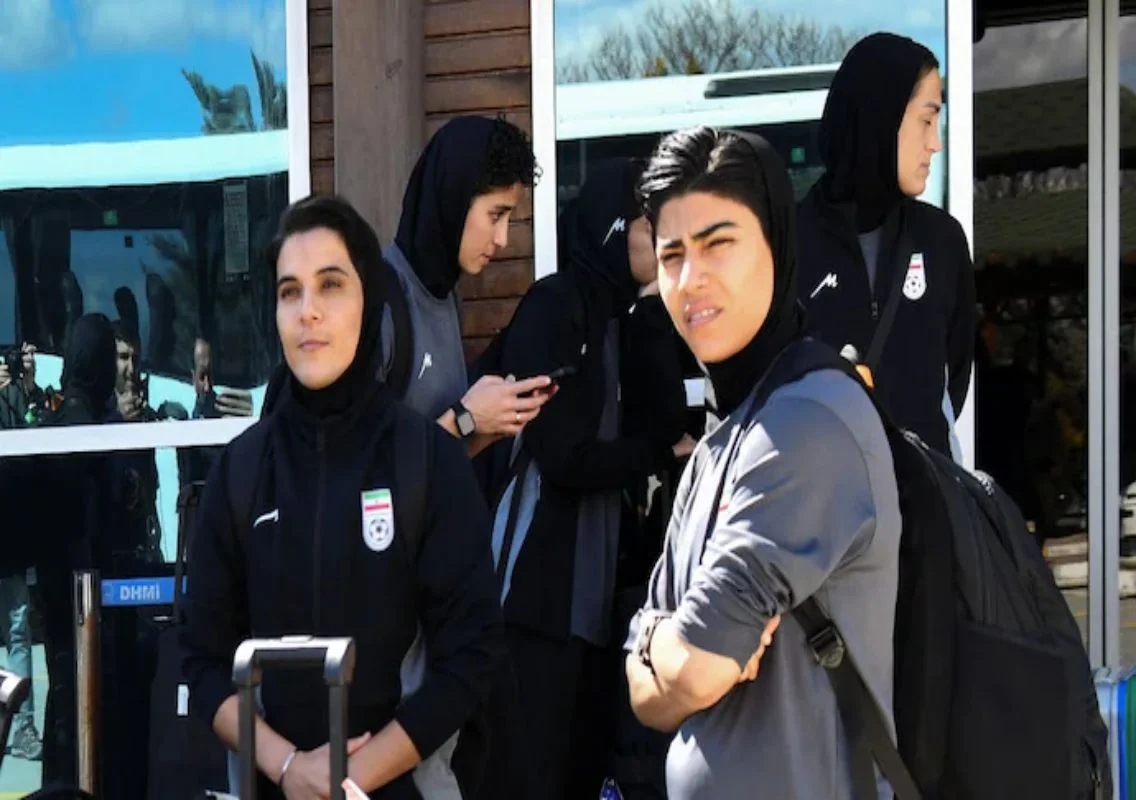


Tehran: The Iran women’s national football team has returned home after a tense and closely watched journey from Australia, days after several members had sought asylum on humanitarian grounds amid rising geopolitical tensions.
The squad crossed back into Iran via the Turkish border on Wednesday, bringing an end to a period of uncertainty that had drawn international attention.
Asylum claims and sudden reversal
The situation escalated when six players and one support staff member applied for humanitarian visas in Australia, citing fears of possible persecution if they returned home. Australian authorities granted the visas, allowing them to remain temporarily.
However, five of those who initially sought asylum later withdrew their applications. Reports indicate that the reversal came earlier this week, with the players subsequently rejoining the rest of the squad in Kuala Lumpur, where the team had regrouped after leaving Sydney.
According to the Football Federation of the Islamic Republic of Iran (FFIRI), the players who withdrew their claims chose to return home with the team and reunite with their families.
Tensions linked to geopolitical developments
Concerns over the players’ safety emerged during the AFC Women’s Asian Cup, where the team’s campaign coincided with heightened tensions in West Asia.
The situation intensified after reports of military strikes by the United States and Israel on Iran, which reportedly resulted in the death of Supreme Leader Ali Khamenei.
During one of their matches, several Iranian players did not sing the national anthem, an act that drew criticism back home. Iranian state media reportedly labelled them “wartime traitors”, fuelling concerns about potential repercussions upon their return.
Journey back through Turkey
The team’s return journey was carefully coordinated. After flying into Istanbul on Tuesday, the players travelled to Igdir on Wednesday morning.
Visuals showed players arriving at the airport with luggage before boarding a bus to the Gurbulak Border Gate. Following a journey of approximately two hours, the team cleared passport control and crossed into Iran.
The return marked the end of a tense episode that had seen the players caught between international competition and geopolitical uncertainty.
Two players remain in Australia
While most of the squad has returned, two players are reported to have stayed back in Australia. According to media reports, they have begun training with a local A-League club, suggesting they may continue their careers abroad, at least in the short term.
Their decision highlights the personal dilemmas faced by athletes during times of political tension, where sporting commitments intersect with broader concerns about safety and freedom.
Conclusion
The return of the Iranian women’s football team closes a complex chapter marked by fear, uncertainty, and difficult choices. While the majority have chosen to return home, the episode underscores the growing impact of geopolitical conflicts on sport and athletes.
As the team reunites with their families, questions remain about the long-term implications of the incident—for the players, the federation, and the future of women’s football in Iran.