







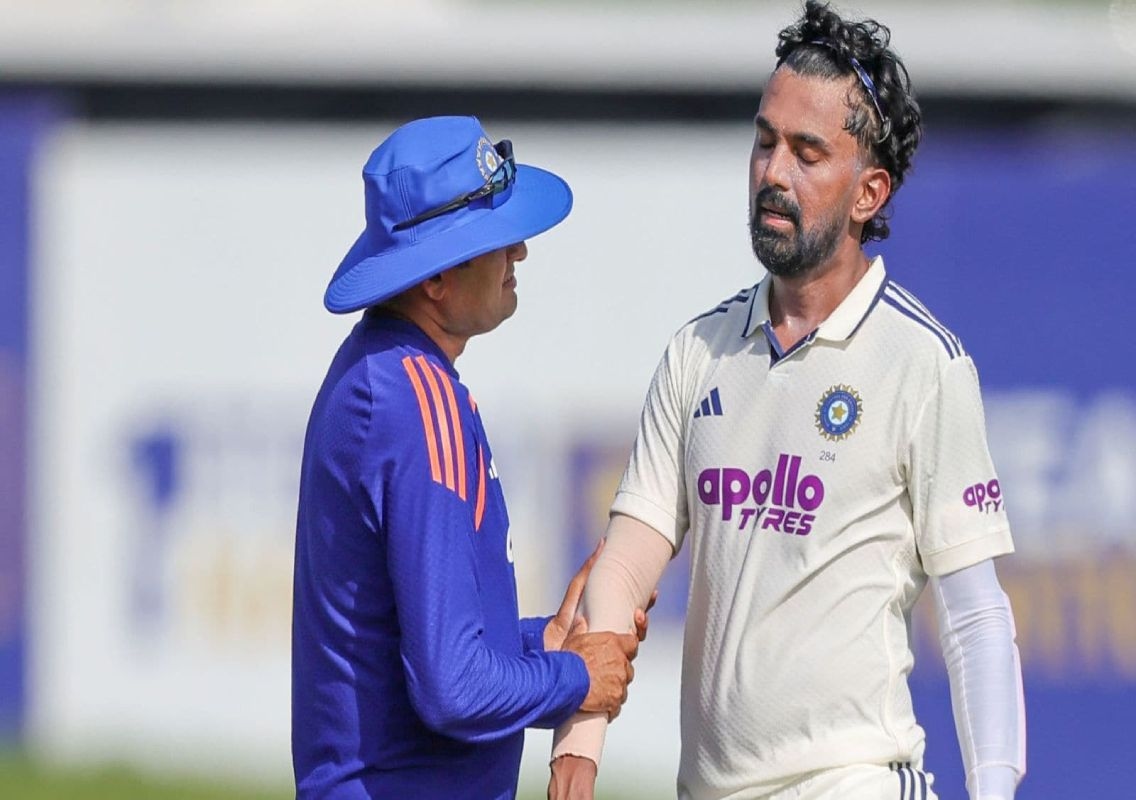


Rahul was named India’s vice-captain for the two-Test tour of Sri Lanka, with Shubman Gill leading the side. The decision has attracted attention because India are in the process of building a new leadership group following a major transition in Test cricket.
According to NDTV Sports, former India stars have offered a blunt assessment of Rahul’s elevation, arguing that the vice-captaincy should perhaps have gone to a younger player who is viewed as part of India’s long-term leadership succession.
The discussion comes at an important time for Indian Test cricket. Gill is leading the side in the current World Test Championship cycle, while the selectors and team management are expected to identify the players who can eventually form the core of India’s next generation of leaders.
Rahul’s experience makes him a natural candidate
Rahul’s selection as vice-captain is not difficult to understand.
The Karnataka batter has been part of India’s Test setup for several years and has experience of international cricket across formats. He has also previously held leadership responsibilities, including captaining India in the absence of regular leaders.
His experience in high-pressure situations makes him a valuable member of the squad.
Rahul has also played an important role during India’s transition in recent years. His ability to bat in different positions and adapt to different match situations has made him a versatile member of the Test team.
However, the question raised by the former players is not necessarily about Rahul’s ability as a cricketer. Instead, it concerns whether he should be regarded as the next-in-line leader behind Gill.
Why the vice-captaincy has become a talking point
India’s Test leadership structure has changed significantly.
With Shubman Gill taking over as captain, the team management has an opportunity to establish a leadership group that could remain in place for several years.
That makes the choice of vice-captain particularly significant.
A vice-captain is not simply a deputy who takes over when the captain is unavailable. The role can also provide leadership experience and prepare a player for a potential future captaincy position.
Former India stars have therefore questioned whether Rahul’s appointment represents India’s long-term thinking or whether it is primarily based on his current experience and seniority.
Former players point towards the next generation
The criticism reportedly centres on the idea that India should look beyond seniority when selecting its leadership group.
Rahul is one of the more experienced players in the current Test squad, but India also have several younger players who could potentially occupy leadership positions in the future.
Gill himself is an example of that approach.
The 26-year-old has been handed the responsibility of leading India at a relatively early stage of his Test career. His appointment signals the selectors’ willingness to invest in younger players.
The debate over Rahul’s vice-captaincy therefore raises a broader question: should India’s deputy captain also be someone who is likely to remain at the centre of the Test setup for the next five to 10 years?
Rahul remains important to India’s Test plans
Despite the debate surrounding the vice-captaincy, Rahul remains an important part of India’s Test plans.
His batting experience and versatility provide the team with considerable flexibility.
He has the ability to open the innings and has also demonstrated that he can bat in the middle order when required. That adaptability is especially valuable in Test cricket, where team combinations can change depending on conditions and opposition.
Rahul’s experience of playing overseas is another significant asset.
India have often relied on senior batters to provide stability in difficult conditions, and Rahul’s technique has made him a useful option when facing high-quality pace attacks.
India lead Sri Lanka after Galle victory
The vice-captaincy debate comes as India prepare for the second Test against Sri Lanka.
India won the opening Test in Galle by 165 runs, taking a 1-0 lead in the two-match series.
The victory was powered by a strong all-round performance, with left-arm spinner Manav Suthar claiming a maiden 10-wicket haul.
Suthar took 6/55 in Sri Lanka’s second innings and finished the match with 10 wickets for 131 runs.
Devdutt Padikkal was another major contributor, scoring 167 in India’s first innings.
India will now attempt to complete a 2-0 series victory in the second Test in Colombo.
Shubman Gill’s leadership will be closely watched
Gill’s captaincy is another important factor in the discussion surrounding India’s leadership succession.
The young batter has been entrusted with the Test captaincy during a period of transition.
His leadership style and ability to manage the team will be closely observed over the course of the current World Test Championship cycle.
Having an experienced vice-captain such as Rahul could provide Gill with valuable support.
At the same time, if the team’s long-term objective is to develop a younger leadership group, the selectors may eventually look towards players closer to Gill’s age.
The leadership transition comes at a crucial stage
India are attempting to rebuild their Test team after several senior players moved out of the format.
The retirement of some of India’s established Test stars has created space for younger players to establish themselves.
Gill’s appointment represents one part of that transition.
The next step will be identifying the players who can support him and potentially take over leadership responsibilities in the future.
That is why Rahul’s vice-captaincy has attracted attention despite his obvious experience.
The debate is ultimately about succession planning rather than Rahul’s immediate cricketing value.
Rahul’s previous leadership experience
Rahul has already experienced the responsibilities that come with captaincy.
He has led India on previous occasions and has also captained at the domestic and franchise levels.
That experience could be one of the reasons the team management selected him as Gill’s deputy.
A vice-captain with international leadership experience can help the captain during tactical discussions and provide another perspective on match situations.
For a relatively young captain, having a senior player to turn to can be particularly useful.
Should seniority decide India’s next captain?
The debate also highlights a longstanding question in Indian cricket: should leadership positions be based primarily on seniority and experience, or should they be used to groom the next generation?
There is no straightforward answer.
Experience can be invaluable in pressure situations, while younger players may offer continuity and a longer-term solution.
Gill’s appointment indicates that India have already embraced youth at the top of the leadership structure.
The decision regarding his deputy may therefore become increasingly important as the current WTC cycle progresses.
What it means for Rahul
For Rahul, the focus will ultimately remain on his performances.
A strong series against Sri Lanka would reinforce his importance to the team and potentially silence some of the criticism surrounding his leadership role.
His position in the batting order and his contribution with the bat will be more important in determining his future than the title of vice-captain alone.
If he continues to produce important performances while supporting Gill, the current arrangement could prove effective.
If India’s selectors eventually decide to build a younger leadership group, however, Rahul’s role could change.
Conclusion
KL Rahul’s appointment as India’s vice-captain has opened a debate about the country’s long-term Test leadership strategy.
Former India stars have reportedly questioned whether Rahul should be viewed as the natural next-in-line captain, rather than challenging his value as an experienced international batter.
With Shubman Gill leading India and the team entering a new phase of Test cricket, the management will need to balance experience with succession planning.
For now, Rahul remains an important part of India’s setup, while the team’s immediate objective is clear: beat Sri Lanka again in Colombo and complete a 2-0 series victory.
The performances of Gill, Rahul and India’s emerging players during the current WTC cycle could ultimately determine who becomes the next generation of Indian Test leaders.