


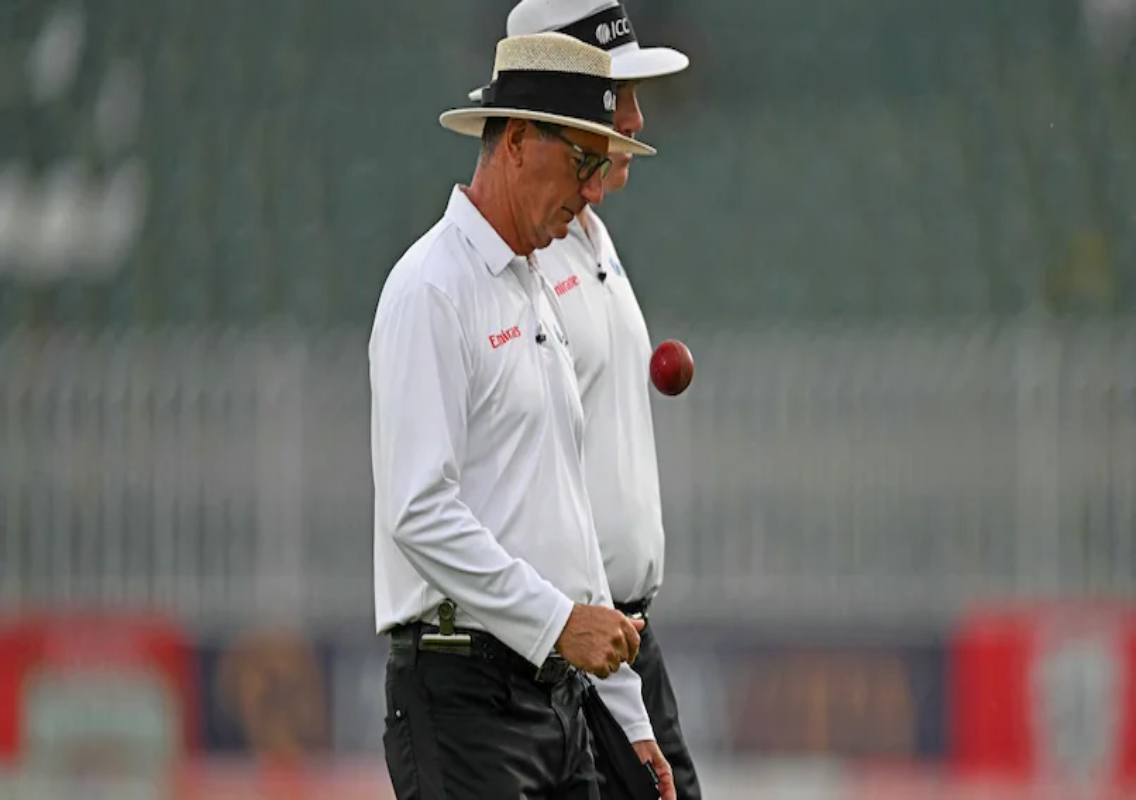


Rawalpindi: Pakistan head coach Mike Hesson has urged the Pakistan Cricket Board (PCB) to seriously consider introducing pink-ball cricket in daytime Test matches at home, following the disruption caused by rain and poor light during the opening Test against Sri Lanka.
The first Test in Rawalpindi ended in a draw on Friday, November 13, after almost 141 overs were lost over five days. Only three innings of cricket were possible, with fading light repeatedly forcing players off the field and rain affecting the fourth day.
Hesson believes the use of the pink ball could help Pakistan deal with the challenges of playing Test cricket during the winter months, when shorter daylight hours, fog and smog can affect the schedule.
“It is certainly something that needs to be talked about for the future series. It is going to be a challenge to play Test matches in this time of the year regardless of where in Pakistan. As the ICC have now allowed that to be an option, this is something that seriously needs to be considered before the series,” Hesson said after the match, as quoted by ESPNcricinfo.
His comments came after the International Cricket Council (ICC) approved the use of pink balls in day Tests as an option to address the loss of playing time because of poor light.
Babar Azam also supports exploring the option
Pakistan captain Babar Azam was also open to the possibility of using the pink ball in future home Tests. However, he stressed that teams would need adequate preparation before making the transition from the traditional red ball.
Babar pointed out that a couple of days would not be sufficient for players to adjust to the different characteristics and conditions associated with pink-ball cricket.
“You will need to prepare for it as we usually play with the red ball. A couple of days are not enough to prepare to play a Test with the pink ball. It is good that we have it as an option, but the preparation for a pink-ball Test demands more time,” Babar said during the post-match presentation.
The comments suggest that while Pakistan’s team management is willing to explore alternatives, a change in the format would require advance planning and coordination between the teams and cricket boards.
Rawalpindi Test loses almost 141 overs
The opening Test against Sri Lanka underlined the difficulties of scheduling traditional red-ball cricket in Pakistan during the winter season.
Poor light affected the evening sessions on several days, with play repeatedly interrupted as conditions became unsuitable for continuing with the red ball. Rain also disrupted the fourth day’s proceedings.
Pakistan had little opportunity to force a result when play resumed on the final day. The hosts held a lead of only 45 runs with one wicket down, leaving them with limited scope to set Sri Lanka a challenging target.
Pakistan batted through much of the final day before the umpires called off play at 4.18 pm, almost two hours before the scheduled close. Saud Shakeel was dismissed in the 90s for the second time in the match.
The result meant the teams had to settle for a draw after losing a substantial amount of playing time to weather and light conditions.
Second Test unlikely to switch to pink ball
Despite the discussion, the second and final Test against Sri Lanka is not expected to be played with the pink ball.
The match was moved from Lahore to Rawalpindi because of hazardous levels of smog in Lahore. With only three days between the two Tests, there was insufficient time for players to prepare for the change in ball and playing conditions.
The decision reflects the practical challenges of introducing a different format at short notice, even when both teams are open to the idea.
A pink-ball Test would require players to adjust their batting, bowling and fielding approaches. Teams would also need time to train with the ball and understand how it behaves under different lighting conditions.
Winter scheduling remains a challenge for PCB
Pakistan has faced recurring weather-related interruptions during home Tests in November and December. Early sunsets, fading light, dense fog and smog can make several venues difficult to use during this period.
The PCB had already scheduled the Rawalpindi Test to begin at 9.30 am, half an hour earlier than the usual start time, in an effort to recover some of the playing time likely to be lost in the evening.
However, starting earlier also has limitations. Overnight dew and moisture in the morning make it difficult to bring the start time forward significantly.
Lahore and Multan are particularly challenging venues during the winter months because of fog and smog. Karachi offers an alternative with fewer of these weather-related concerns, but the National Stadium has been unavailable during its renovation.
Rawalpindi has also experienced similar interruptions in previous international matches. Pakistan’s 2019 Test against Sri Lanka and England’s 2022 tour both featured periods when poor light affected play at the venue.
The ICC’s approval of pink balls for day Tests could give the PCB another option when planning future home series. Hesson’s remarks indicate that Pakistan’s team management wants the possibility examined before upcoming winter fixtures are scheduled.
However, any change will depend on sufficient preparation and agreement between the cricket boards involved. For now, the first Test against Sri Lanka has renewed the debate over how Pakistan can protect playing time and make its winter Test schedule more practical.