


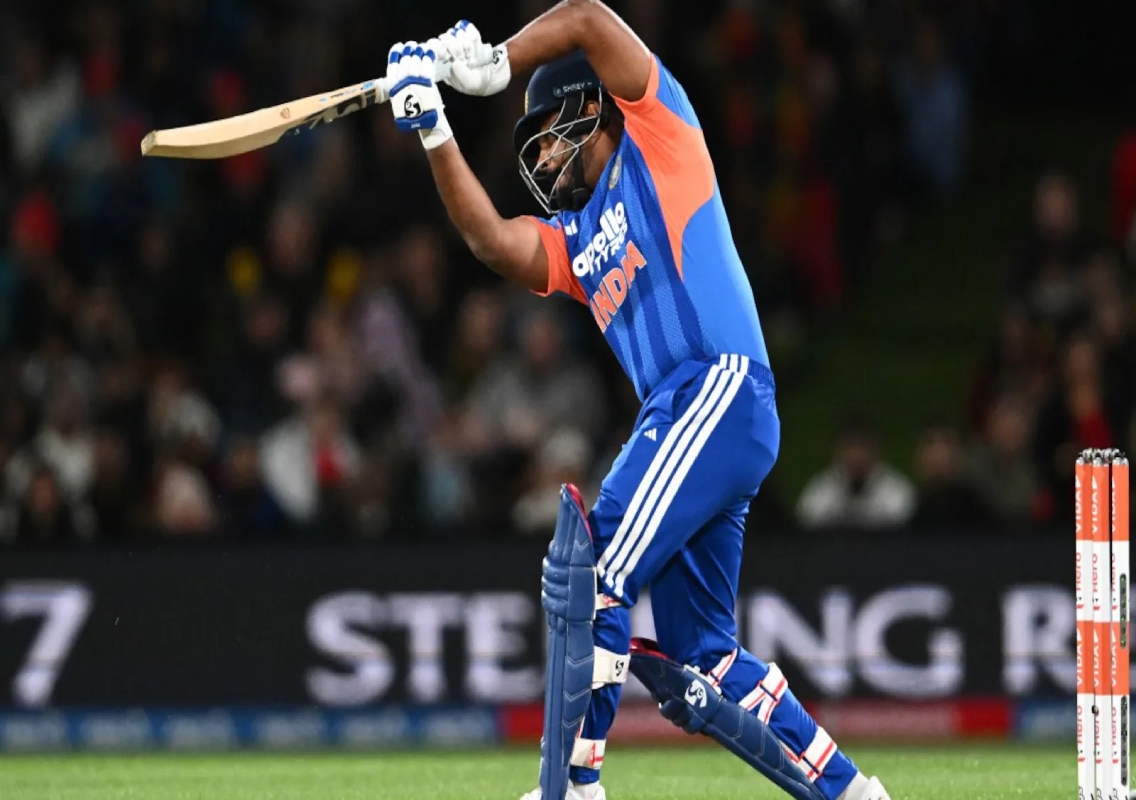


Christchurch: India wicketkeeper-batter Sanju Samson has revealed the simple approach behind his explosive opening partnership with Abhishek Sharma, which helped India chase down a target of 226 runs against New Zealand in the first T20 International at Hagley Oval on October 22.
Samson said the duo did not rely on complicated strategies while batting together. Instead, they focused on watching the ball closely and hitting it hard whenever an opportunity presented itself. Their positive approach produced a 93-run opening partnership and laid the foundation for India’s four-wicket victory.
India reached 230 for six in 19.4 overs, recording their highest successful run chase in men’s T20 International cricket. The win also gave India a 1-0 lead in the five-match series. Samson was named Player of the Match for his outstanding contribution at the top of the order.
‘We just watch the ball and hit hard’
Explaining his understanding with Abhishek, Samson said the pair often communicate while batting, but their approach remains straightforward.
“We do have a lot of conversations happening in the middle, but nothing makes sense actually. We just watch the ball and hit hard,” Samson said after the match.
He added that the attacking partnership had been working well and that he enjoyed opening the innings alongside Abhishek.
The comments reflected India’s intent to take the initiative rather than allow the conditions or the required run rate to dictate their approach. With a target above 225, a strong start was essential, and the opening pair delivered by putting New Zealand’s bowlers under pressure from the beginning.
Their partnership gave India the momentum needed to stay ahead of the asking rate during the early stages of the chase.
Samson explains the powerplay strategy
Samson acknowledged that the ball was swinging during the match but said the surface allowed the batters to play their shots once they settled in.
He explained that he and Abhishek focused on maintaining their batting shape and adopting positive intent during the powerplay instead of becoming overly cautious.
“The ball was swinging around a lot,” Samson said, adding that it was coming on to the bat nicely off the surface.
The openers made the most of those conditions. Samson scored 67 off 33 balls, including eight fours and four sixes, while Abhishek contributed 29 from just 12 deliveries.
Their 93-run partnership helped India reach 94 for one at the end of the six-over powerplay. The rapid start put the visitors in a strong position in a chase that required sustained attacking cricket.
Fast start gave India confidence
Samson said the opening pair began to believe India could complete the chase quickly after their strong start.
“Once we got off to a flying start, we felt the match could be finished in the first half as well,” he said, describing the powerplay score as an excellent beginning.
The aggressive start was especially important because New Zealand had posted 225 for four after batting first. Glenn Phillips led the hosts with an unbeaten 82 off 40 balls, while Finn Allen scored 45 off 24 deliveries.
India needed to maintain a high scoring rate to keep the target within reach. Samson and Abhishek’s early assault ensured the required rate did not become overwhelming, even though New Zealand later fought back with wickets in the middle overs.
Samson was dismissed after his half-century, and India subsequently lost several wickets in quick succession. The match became competitive again, but the early runs gave the middle order room to recover.
Shreyas Iyer and Naman Dhir complete the chase
After the openers departed, India needed contributions from the middle and lower order to avoid surrendering their advantage.
Captain Shreyas Iyer scored 42 off 28 balls, helping steady the innings during a difficult phase. Axar Patel added 24, while Naman Dhir produced the decisive finish with an unbeaten 42 off just 15 deliveries.
Dhir’s late assault ensured India did not fall short despite the middle-order collapse. He struck a boundary and a six in the closing stages before hitting the winning six in the final over.
India reached the target with two balls remaining, completing a historic chase and taking the opening match of the series by four wickets. Dhir’s finishing effort also set a new Indian record for the highest individual score by a batter coming in at No. 7 or lower in a successful T20I chase.
Samson credits the entire team
While his 67 was central to India’s strong start, Samson described the victory as a collective effort rather than an individual achievement.
He said it felt good to finish on the winning side and emphasised that contributions from different players had helped India secure the result.
His remarks acknowledged the work done by the middle order after New Zealand fought back. Iyer’s innings helped stabilise the chase, while Dhir’s power hitting ensured India finished the job.
The match demonstrated how a successful T20 chase often depends on different players contributing at different stages. The openers established the momentum, the middle order kept India in contention, and the lower order delivered under pressure.
India look to build on their winning start
The victory provides India with confidence at the beginning of the five-match series, particularly after chasing a target of 226 in challenging conditions.
Samson’s explanation also offers an insight into the opening partnership’s philosophy: clear intent, trust in their natural game and the willingness to attack when the ball presents an opportunity.
New Zealand will look to adjust their bowling plans after conceding a rapid powerplay, while India will hope their top order can maintain its form in the remaining matches.
For Samson, the innings was another significant contribution in T20 cricket. More importantly, his partnership with Abhishek gave India the platform to achieve a record chase and begin the series with a memorable win.