







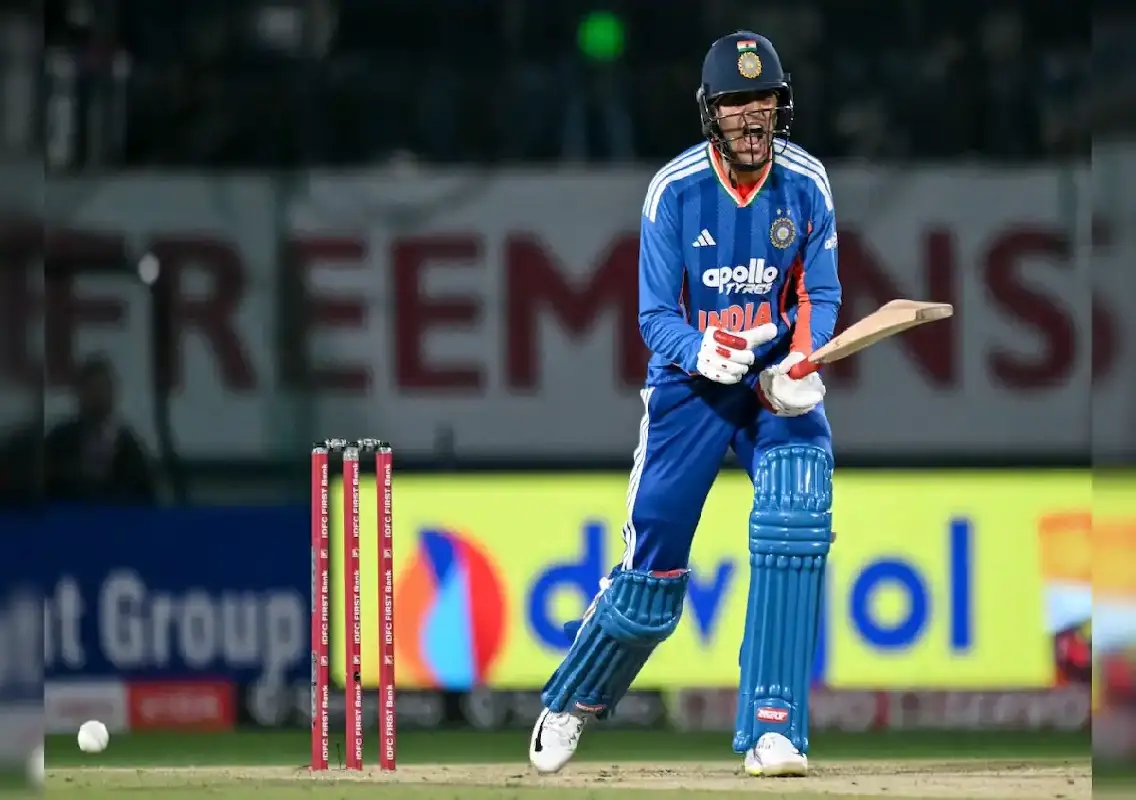


New Delhi: Former India cricketer and T20 World Cup winner Robin Uthappa has offered a blunt assessment of Shubman Gill’s recent struggles in T20 International cricket, describing the young batter’s approach in the shortest format as “a bit confusing” amid a prolonged lean patch.
Gill’s numbers raise concerns ahead of World Cup
Shubman Gill, who made his return to India’s T20I setup after a gap of nearly a year, has found it difficult to rediscover his best form. Since his comeback, the 26-year-old has managed only 291 runs across 15 T20I matches, averaging 24.25. These figures have raised questions, especially given Gill’s stature as a key all-format player and his appointment as vice-captain of the T20I side ahead of the Asia Cup earlier this year.
The team management showed considerable faith in Gill by reshuffling the batting order, pushing Sanju Samson down from the opening slot to accommodate him. However, the move has not paid dividends so far, with Gill failing to provide consistent starts at the top of the order.
Uthappa questions Gill’s clarity of role
Speaking during a discussion on JioStar, Robin Uthappa highlighted what he sees as a lack of clarity in Gill’s batting approach in T20 cricket. While analysing the aggressive style of India’s current opener Abhishek Sharma, Uthappa questioned whether Gill’s presence at the other end was complementing or complicating the dynamic.
“I think with a player like Abhishek Sharma, you need to give him the freedom to play the way he wants,” Uthappa said. “Now, does someone like Shubman Gill at the other end help him do that, or does someone like Sanju Samson, with whom he has had a strong opening partnership, allow that freedom?”
Uthappa was quick to underline Gill’s immense talent, calling him a “phenomenal, once-in-a-generation, three-format player”. However, he added that Gill’s recent decision-making in T20s has not worked in his favour.
“The way he has been approaching T20 cricket lately has been a bit confusing and hasn’t really served him well,” Uthappa remarked.
Struggles stem from shot selection
A recurring theme in Gill’s dismissals during this phase has been his tendency to lose his wicket while attempting big shots early in his innings. Unlike his composed and classical approach in Tests and ODIs, Gill has appeared caught between playing an anchor role and trying to be an aggressor from ball one.
This indecision, according to experts, has prevented him from settling into innings and playing to his strengths. In several matches, Gill got starts but failed to convert them into impactful scores, putting additional pressure on India’s middle order.
Suggested anchor role like Kohli or Markram
Uthappa believes the solution lies in Gill embracing a clearly defined role rather than trying to force an ultra-aggressive game that does not come naturally to him. He suggested that Gill could thrive as an anchor, similar to the roles played by Virat Kohli for India and Aiden Markram for South Africa.
“There is a method to how he scores runs,” Uthappa said. “He can play a role similar to what Aiden Markram or Virat Kohli did for India in the 2024 T20 World Cup – batting at a strike rate of around 140 to 150, playing proper cricket, a template that has worked for him in the IPL and T20Is.”
Such an approach, Uthappa argued, would allow aggressive players at the other end to express themselves freely while ensuring stability during the Powerplay and middle overs.
Team management faces selection dilemmas
Gill’s dip in form comes at a challenging time for the Indian team management. After the ongoing T20I series against South Africa, India are left with only five matches in the format before the next T20 World Cup. With limited opportunities to experiment, the pressure is mounting to finalise the batting combination and roles.
Sanju Samson, who was moved down the order to make way for Gill, has shown better returns as an opener in recent months. Abhishek Sharma, meanwhile, has impressed with his fearless strokeplay, strengthening his case as a long-term option at the top.
The selectors now face a tough call: persist with Gill in the hope that his class will eventually shine through, or rethink the combination to maximise short-term results ahead of the global tournament.
Gill’s pedigree still inspires confidence
Despite the criticism, there is widespread belief that Gill has the ability to turn things around quickly. His record in other formats, along with his success in the Indian Premier League, underlines his adaptability and temperament. Former players and coaches have often emphasised that T20 cricket is as much about clarity of role as it is about skill.
Conclusion
Robin Uthappa’s comments reflect a broader debate within Indian cricket about optimising roles in the T20 setup. For Shubman Gill, the message is clear: simplify the approach, trust his strengths, and play a defined role that benefits both himself and the team. With the T20 World Cup looming, how Gill responds to this phase could play a decisive role in shaping India’s batting blueprint for the future.