







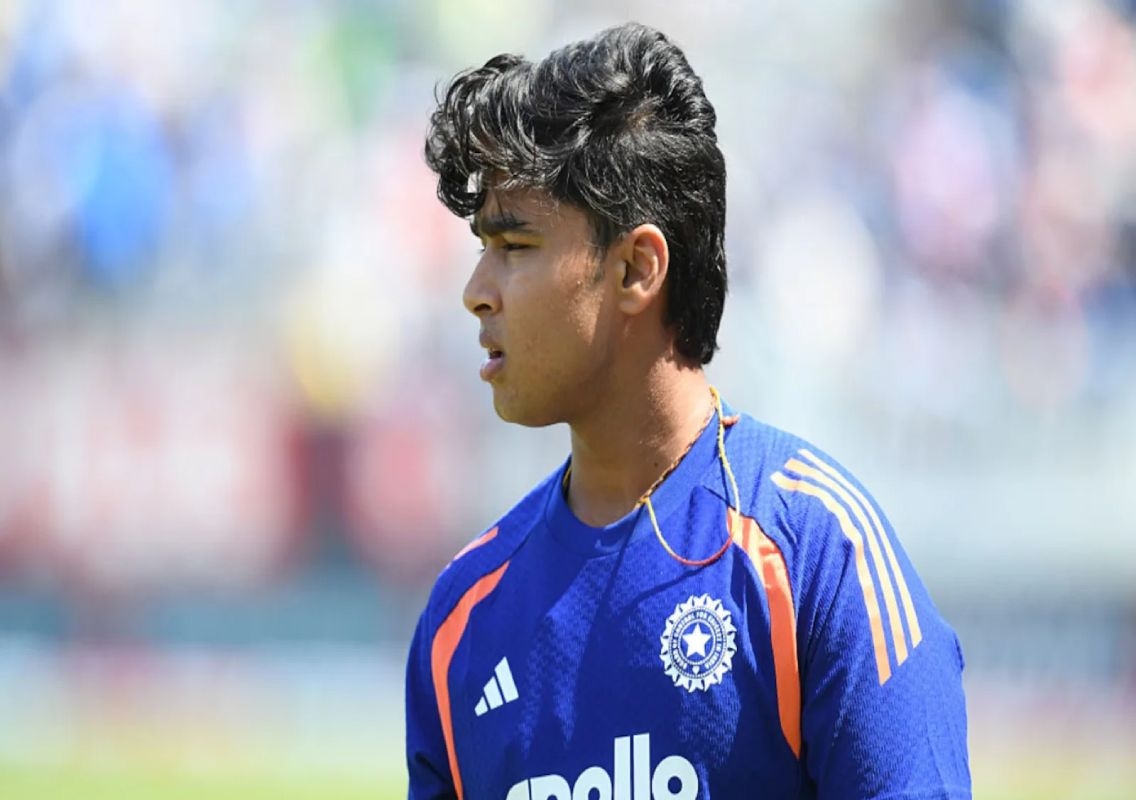


Mumbai: India’s team management, led by Gautam Gambhir, has come under intense scrutiny following the omission of teenage sensation Vaibhav Sooryavanshi from the playing XI in the recently concluded T20I series against Ireland.
Despite strong expectations that the youngster would make his international debut, Sooryavanshi did not feature in either of the two matches. India went on to lose the series 2-0 — marking their first-ever bilateral T20I series defeat to Ireland — a result that has intensified criticism of the team’s selection decisions.
Strong IPL form raises expectations
Sooryavanshi’s exclusion raised eyebrows, particularly after his exceptional performance in the Indian Premier League. The young batter amassed an impressive 776 runs at a striking rate of 237.30, earning the Orange Cap and establishing himself as one of the most exciting emerging talents in Indian cricket.
Given such form, many expected the team management to give him an opportunity, especially in a relatively low-pressure bilateral series. However, India’s batting coach Sitanshu Kotak had clarified before the series that Sooryavanshi would have to wait, backing the established opening duo of Abhishek Sharma and Sanju Samson.
Questions over selection consistency
The decision came under further criticism when both Abhishek and Samson failed to deliver consistently during the series. This prompted former India batter Mohammed Kaif to openly question the team management’s approach.
Speaking in a video shared on social media, Kaif labelled the decision-making process as inconsistent and hypocritical.
“If the logic is to stick with a World Cup-winning XI, then that consistency should apply everywhere,” Kaif said. “Vaibhav Sooryavanshi deserved a place based on his current form, yet he was asked to wait.”
Kaif emphasised that selection policies should be uniform, especially when justified on the basis of continuity and stability within the squad.
Comparisons with past decisions
Kaif further highlighted previous instances where the same logic was not applied. He pointed to the case of Rohit Sharma, who was removed from captaincy after leading India to a ICC Champions Trophy triumph. At that time, the management had cited a shift towards grooming younger leadership.
Similarly, Kaif mentioned Suryakumar Yadav, who was relieved of captaincy and dropped from the side despite guiding India to a T20 World Cup title earlier in the year.
“These decisions suggest a different approach when it comes to established players versus emerging talent,” Kaif noted, questioning whether the management’s long-term vision is being applied consistently.
Focus on future vs present performance
The debate has now shifted towards a broader question: should team selection prioritise proven combinations or reward current form?
Supporters of the management argue that continuity is crucial, especially after a successful World Cup campaign. However, critics believe that ignoring a high-performing young player like Sooryavanshi sends the wrong message about merit and opportunity in the national setup.
The issue becomes more significant considering Sooryavanshi’s age and potential. Many see him as a long-term asset who could benefit from early exposure at the international level.
Conclusion
India’s loss to Ireland has not only raised concerns about on-field performance but has also brought selection policies under the spotlight. The exclusion of Vaibhav Sooryavanshi, despite his outstanding domestic form, has triggered a wider debate on consistency, transparency, and the balance between experience and youth.
As India prepares for upcoming international assignments, the team management will face increasing pressure to justify its decisions and ensure that promising talents are given fair opportunities to prove themselves.