







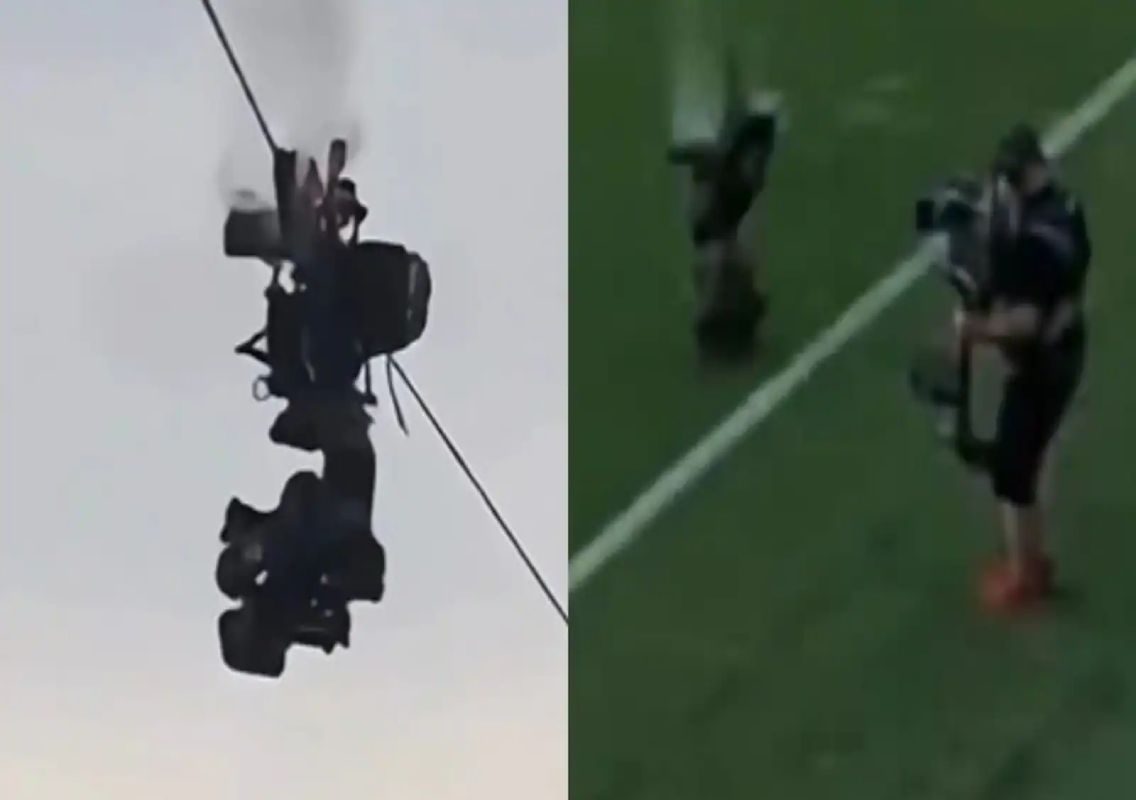


Debrecen: A potentially dangerous incident was narrowly averted during an international friendly match between Hungary and Kazakhstan when a spidercam caught fire and crashed onto the pitch at the Nagyerdei Stadium. The incident caused panic among spectators, though fortunately no injuries were reported.
The dramatic episode unfolded while the match was in progress, with fans in the stands first noticing sparks and flames emerging from the spidercam system suspended several metres above the field. Despite visible signs of malfunction, match officials appeared unaware of the situation as play continued.
Cameraman and players escape unharmed
The situation escalated when the malfunctioning spidercam suddenly lost control and plummeted onto the pitch. A cameraman stationed near the touchline had a narrow escape, as the equipment landed just a couple of metres away from his position.
Players on the field were also at risk, though quick reactions and sheer luck ensured that no one was struck by the falling device. Eyewitness videos shared by fans on social media showed sparks and smoke trailing the camera moments before it came crashing down.
The incident has raised concerns regarding safety protocols and equipment maintenance during high-profile football matches, especially with increasing reliance on advanced broadcast technology.
Match resumes after brief disruption
Following the incident, the match was briefly halted as officials assessed the situation and ensured that the pitch was safe for players and staff. After clearance, play resumed without further interruptions.
Hungary went on to secure a 3-1 victory over Kazakhstan in the friendly encounter. Captain Dominik Szoboszlai led from the front, contributing to the scoreline alongside goals from Andras Schafer and Rajmund Toth.
Despite the alarming mid-game disruption, both teams completed the fixture professionally, shifting focus back to football once safety was confirmed.
Teams miss out on World Cup qualification
Neither Hungary nor Kazakhstan have qualified for the FIFA World Cup 2026, which is set to be jointly hosted by the United States, Canada and Mexico starting June 11. The friendly match was part of preparations and international fixtures scheduled outside the World Cup competition.
While the result held limited competitive significance, the incident has overshadowed the sporting aspect of the game and drawn attention from the global football community.
Separate controversy over referee entry denial
In a separate development linked to the upcoming World Cup, Somali referee Omar Artan has been denied entry into the United States, leading to his removal from the tournament’s officiating panel.
Artan, who was set to become the first referee from Somalia to officiate at a FIFA World Cup, had earned his place after being named Africa’s best male referee in 2025. He was part of FIFA’s final list of match officials announced earlier this year.
However, upon arrival at Miami International Airport, he was denied entry by U.S. Customs and Border Protection due to unspecified “vetting concerns.” Although Artan had reportedly been issued a visa shortly before travel, authorities declined to provide further details regarding the decision.
Andrew Giuliani, executive director of the White House FIFA Task Force, stated that the denial was for “very good reason,” but did not elaborate further.
Safety concerns take centre stage
The spidercam incident has once again highlighted the importance of strict safety measures during sporting events. With modern football increasingly dependent on advanced technology for broadcasting and fan engagement, ensuring the reliability and safety of such equipment is critical.
Organisers and governing bodies may now face increased scrutiny to review protocols and prevent similar occurrences in future matches, especially during major international tournaments where stakes are significantly higher.
Conclusion
Debrecen: While Hungary’s 3-1 win over Kazakhstan added a routine result to the international calendar, the match will be remembered for the frightening spidercam malfunction that could have resulted in serious injury.
The close call serves as a reminder of the unpredictable risks associated with live sporting events and the need for constant vigilance. As football continues to evolve with technology, ensuring player and staff safety must remain a top priority for organisers worldwide