







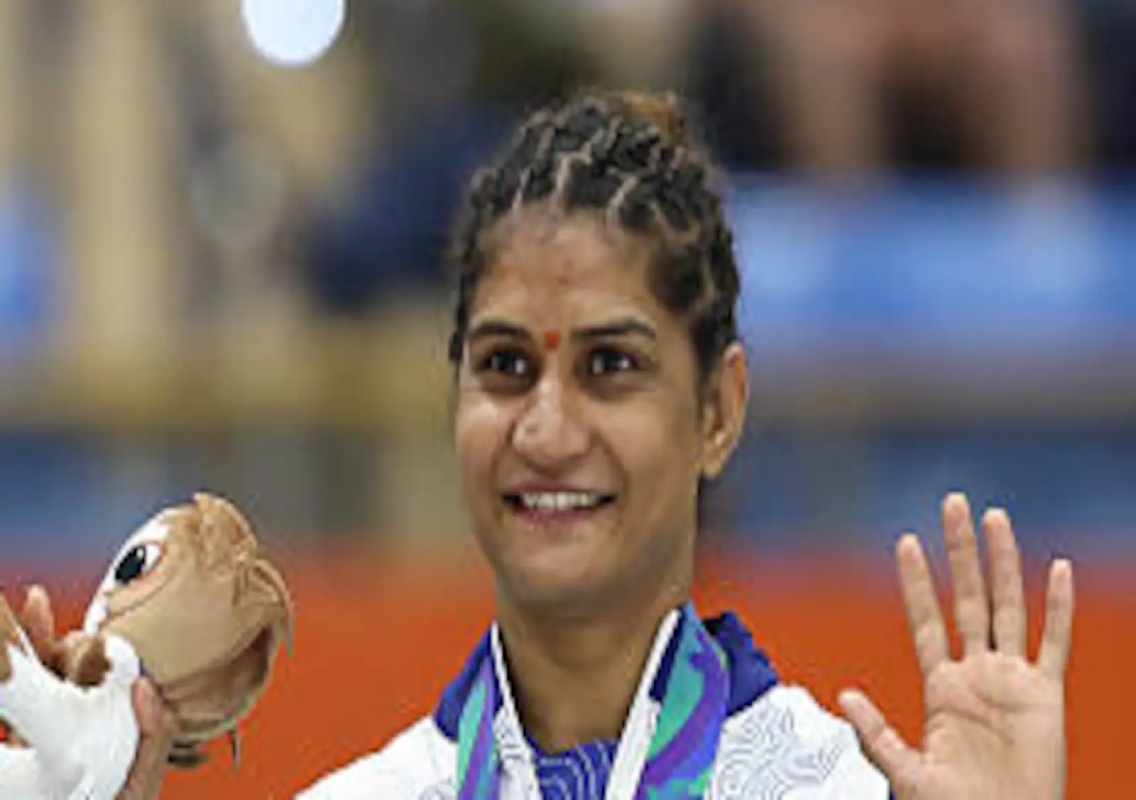


Nagoya: Indian mixed martial arts athlete Suchika Tariyal has encouraged young people to take up sports and pursue their ambitions after making history with a bronze medal at the Asian Games 2026 in Aichi-Nagoya, Japan. Her achievement gave India its first-ever Asian Games medal in mixed martial arts, while her comments have also highlighted the need for greater support for young athletes pursuing sporting careers.
The 36-year-old secured the historic bronze in the women’s traditional 60kg category as MMA made its debut at the Asian Games. Although her campaign ended in the semi-finals, Tariyal’s podium finish marked an important moment for Indian combat sports.
Speaking after her achievement, Tariyal stressed that talented youngsters should receive greater encouragement and support to pursue sport. She pointed to financial pressures and the lack of job security as factors that can make it difficult for young athletes to continue competing at a high level.
Historic first for Indian MMA
Tariyal’s bronze medal was India’s maiden medal in MMA at the Asian Games. She entered the semi-finals after defeating Mongolia’s Altanchimeg Baigalmaa 2-0 in the quarter-final, guaranteeing India a place on the podium.
The achievement was particularly significant because MMA was being introduced to the Asian Games programme at the Aichi-Nagoya edition. Tariyal therefore became the first Indian athlete to win an Asian Games medal in the discipline.
The milestone also capped a career spanning several combat sports. Before turning to MMA, Tariyal competed in judo and represented India at the 2022 Commonwealth Games. She later competed in kurash at the 2023 Asian Games and won a world title in fighting Jiu-Jitsu in 2024.
Her transition to MMA came relatively late in her career. Tariyal has said that Indian UFC fighter Pooja Tomar encouraged her to try MMA, a decision that eventually led to her historic Asian Games medal.
Tariyal highlights challenges for young athletes
While celebrating the medal, Tariyal also used her experience to draw attention to the challenges faced by young athletes.
She said India has considerable talent across sports, including MMA, but young athletes may hesitate to pursue sport professionally when there is uncertainty about income and employment. According to Tariyal, athletes often have to bear the financial burden of training and competition themselves.
She expressed hope that her medal would encourage greater backing for different sporting disciplines and create more opportunities for youngsters.
Tariyal also spoke about the importance of job security alongside sporting careers. In her view, providing athletes with employment opportunities can reduce the financial pressure associated with choosing sport as a profession.
Her comments come at a time when Indian sport is increasingly expanding beyond traditional medal-winning disciplines. The success of athletes in emerging sports has also brought attention to the importance of grassroots development, coaching and sustained financial support.
A difficult road to the bronze
Tariyal’s route to the podium was not straightforward. After defeating Baigalmaa in the quarter-finals, she faced Singapore’s Hui Hoon Teo in the semi-final.
The contest was closely fought and went into overtime. Following a challenge from the Indian side, the bout was reviewed and eventually classified as a draw. The competition’s tie-break rule then came into play, with the lighter fighter declared the winner. Teo was around 700 grams lighter than Tariyal at the relevant weigh-in and was therefore awarded the victory.
As a result, Tariyal missed out on a place in the final and had to settle for bronze.
The decision was an emotional moment for the Indian fighter. She was visibly upset after the result, but the medal still represented a landmark achievement for both Tariyal and Indian MMA.
From judo to MMA
Tariyal’s sporting journey has been marked by changes in discipline and a determination to remain competitive.
She began judo at the age of 12 and eventually represented India at the Commonwealth Games. After competing in other combat disciplines, she moved into MMA only a few years ago.
Tariyal has explained that she had once considered her competitive sporting career largely over after taking up a coaching position in the Haryana Sports Department. Her move into MMA provided another opportunity to compete at the highest level.
The transition required her to adapt skills developed over years of training in other combat sports. Her experience in judo and other disciplines provided a foundation for competing in MMA, where grappling, takedowns and ground techniques form important parts of traditional MMA competition.
Her success in Japan demonstrates how experience across multiple disciplines can contribute to an athlete’s development, particularly in emerging sports.
Call for greater support for sport
Tariyal’s comments have also placed the spotlight on the broader ecosystem required to develop athletes.
She has argued that young athletes need more than encouragement to remain in sport. Financial support, employment opportunities, coaching and competition exposure can all influence whether an athlete is able to continue a sporting career.
Her remarks echo calls from other Indian MMA athletes for greater institutional support. Varun Sanyal, who was also part of India’s MMA contingent, has called for government funding and formal recognition for the Mixed Martial Arts Sports Federation of India (MMASFI). He said stronger institutional support could help build grassroots programmes, develop young talent and retain quality coaches.
Such discussions have become more prominent after India’s first Asian Games medal in MMA. The historic result provides a new reference point for the sport and could contribute to increased interest among aspiring athletes.
A medal with a message for the next generation
Tariyal’s bronze has given Indian MMA a historic first, but the athlete has indicated that the achievement should also have a wider impact.
Her message to young people is closely linked to her own sporting journey. She continued competing despite changes in discipline and the challenges associated with building a career in sport. Her Asian Games medal eventually came at the age of 36.
The achievement also demonstrates that athletes can find new opportunities even after moving away from their original discipline. Tariyal’s transition from judo and other combat sports to MMA ultimately produced India’s first Asian Games medal in the sport.
For young athletes considering a sporting career, her experience highlights both the possibilities and the practical challenges involved. Tariyal’s call for stronger financial and employment support reflects her view that talented youngsters should not have to abandon sport simply because sustaining a career becomes financially difficult.
Conclusion
Suchika Tariyal’s bronze medal at the Asian Games 2026 has created a landmark moment for Indian MMA. As the country’s first Asian Games medallist in the discipline, her achievement has brought greater attention to a sport making its debut at the continental event.
Beyond the medal, Tariyal has urged India to create stronger pathways for young athletes, including financial assistance and job security. Her own journey from judo to MMA and her historic podium finish underline the potential of athletes who receive opportunities to compete and develop.
Her message is clear: sporting talent needs sustained support if young Indians are to pursue their ambitions and build long-term careers in sport.