


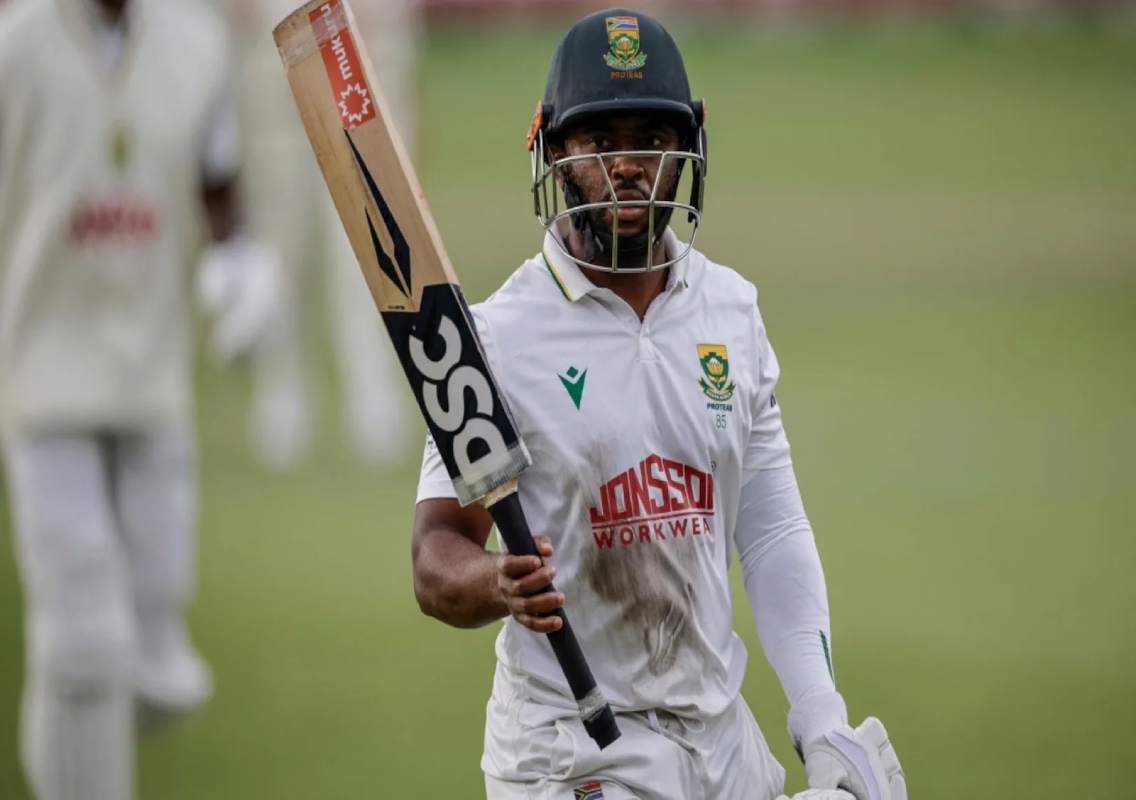


Gqeberha: South Africa captain Temba Bavuma produced a career-best innings of 179 runs against Australia in the second Test at Gqeberha, rewriting the record books and helping his team recover from a difficult position. His performance also saw him surpass an Indian cricket great’s long-standing record, ending a 76-year wait for a rare achievement in Test cricket.
Bavuma’s innings came at a crucial stage of the match, with South Africa under pressure after losing early wickets. The captain combined patience with attacking stroke play to help his side post 425 for nine before declaring on the third day of the Test. His contribution gave South Africa renewed control after the team had struggled at the start of its innings.
Bavuma delivers a career-best Test innings
Bavuma scored 179 runs from 334 deliveries, striking 18 fours and one six. The innings surpassed his previous highest Test score of 172, which he had made against the West Indies in 2023.
South Africa had been in trouble at 97 for five when the captain continued his innings on the third day. The situation worsened as the team lost another wicket, leaving the hosts in danger of being dismissed for a modest total.
Bavuma responded by building partnerships with the lower-order batters, helping South Africa recover from 110 for six and eventually reach 425 for nine before declaring. His innings provided the foundation for the hosts to put Australia under pressure in the match.
The knock was significant not only because it was the highest score of Bavuma’s Test career, but also because of the circumstances in which it was made. With wickets falling around him, he remained at the crease and guided the innings through two important partnerships.
Record-breaking partnership with Marco Jansen
One of the most important stands of the innings came between Bavuma and all-rounder Marco Jansen. The pair added 132 runs for the seventh wicket, establishing a new South African seventh-wicket partnership record at St George’s Park.
Their stand helped shift the momentum after South Africa had lost six wickets. Jansen provided attacking support, while Bavuma continued to build his innings and keep the scoreboard moving.
The partnership was particularly valuable because South Africa needed substantial runs from its lower order to remain competitive against Australia. It also demonstrated how the home side recovered through contributions from players batting outside the top order.
Jansen’s dismissal ended the partnership, but Bavuma continued to lead the recovery with Simon Harmer.
Bavuma and Harmer add another historic stand
Bavuma and Harmer extended South Africa’s recovery with an 183-run partnership for the eighth wicket. The stand established a new South African record for an eighth-wicket partnership in Test cricket.
Harmer played an important supporting role as Bavuma moved towards his career-best score. Their partnership frustrated Australia’s bowlers and helped South Africa turn a precarious position into a strong first-innings total.
Harmer was eventually dismissed while attempting to reach his maiden Test century. Bavuma followed soon afterwards, caught behind off Mitchell Starc for 179.
South Africa declared at 425 for nine, giving the innings a strong finish after the team had appeared vulnerable earlier in the day. The two lower-order partnerships were central to the turnaround and placed the visitors under pressure as they began their reply.
How Bavuma surpassed an Indian great’s record
Bavuma’s innings also attracted attention for a rare captaincy milestone that brought an Indian cricket great into the record discussion. The South African captain became the oldest captain to score a century against Australia in the ICC World Test Championship, surpassing Rohit Sharma’s previous mark.
Rohit had scored 120 against Australia in Nagpur in February 2023, aged 35 years and 285 days. Bavuma’s century in Gqeberha came at the age of 36 years and 154 days, moving him ahead of the Indian captain in this particular record list.
The milestone highlights Bavuma’s achievement as an experienced captain who delivered a major innings under pressure. While his overall score of 179 was the most prominent feature of his performance, the age-related record added another historic dimension to the knock.
The achievement is specific to centuries by captains against Australia in World Test Championship matches. It should not be confused with records for the oldest players to score centuries in all Test cricket, which cover a much wider category.
South Africa put Australia under pressure
South Africa’s recovery gave the hosts an opportunity to change the course of the second Test. Australia had entered the match after winning the first Test in Durban by 214 runs, leaving South Africa needing a strong response to remain competitive in the series.
After the declaration, Australia lost an early wicket in its reply. South Africa’s Kagiso Rabada, returning after a lengthy absence, dismissed opener Nic Maddinson in the opening over of the innings. Australia finished the day at three for one, with limited time available before the close of play.
Bavuma’s performance was therefore important beyond the individual records. His innings helped South Africa post a substantial total and created an opportunity for the bowlers to put Australia under pressure.
The match also demonstrated the value of partnerships in Test cricket. South Africa’s top order had failed to build a strong platform, but the stands involving Bavuma, Jansen and Harmer allowed the team to recover and declare with a competitive score.
A defining innings for Bavuma
The 179 against Australia was the highest Test score of Bavuma’s career and one of the most important innings of his captaincy. He combined resistance with calculated scoring, remaining at the crease while South Africa rebuilt its innings after losing six wickets.
The two record partnerships helped transform the match situation, while his century brought a notable World Test Championship record previously held by Rohit Sharma. Together, these achievements made the innings a significant moment in Bavuma’s international career.
For South Africa, the immediate priority remained converting the first-innings recovery into a strong performance with the ball. For Bavuma, however, the knock had already secured a place among the defining performances of his Test career.