







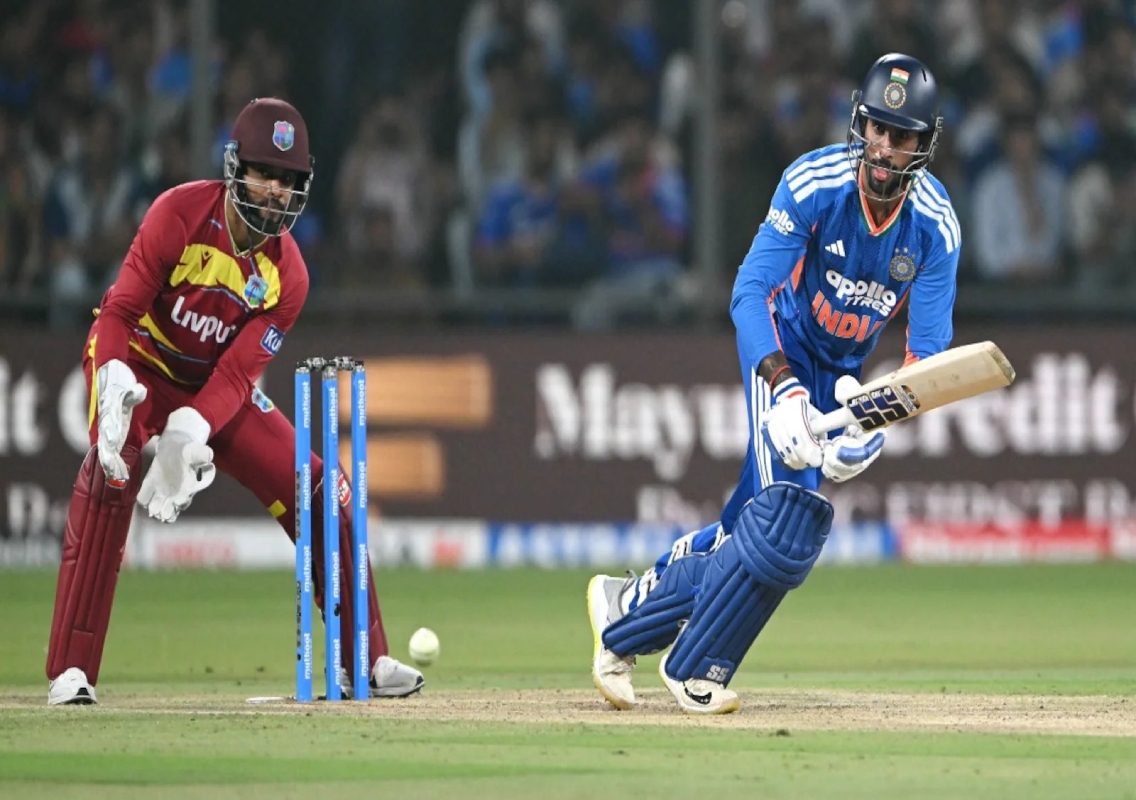


Indore: India batter Tilak Varma has faced criticism from former India opener Sadagoppan Ramesh after an unusual run-out during the third T20 International against the West Indies at the Holkar Stadium on October 11. Ramesh compared Varma’s casual movement between the wickets to someone “taking a walk on the beach”, questioning the batter’s awareness during a crucial moment in India’s innings.
The incident occurred in the 17th over when Varma and Axar Patel mistakenly believed a shot had reached the boundary. While the two Indian batters relaxed in the middle of the pitch, West Indies fielder Kamil Pooran had actually stopped the ball from crossing the rope. The fielding side reacted quickly, and Varma was eventually run out for 28 runs off 16 deliveries.
The dismissal attracted attention because Varma had been scoring quickly and appeared well placed to help India finish strongly. Instead, a lapse in concentration ended his innings in an unusual fashion, prompting criticism from former players and debate among cricket followers over awareness and running between the wickets.
Despite the setback, India recovered to post 223 runs and defeated the West Indies by 14 runs, taking a 2-1 lead in the five-match series.
How Tilak Varma’s unusual run-out happened
The incident unfolded when Axar Patel played a delivery from West Indies spinner Gudakesh Motie towards deep backward square leg. The ball travelled towards the boundary, but fielder Kamil Pooran sprinted across and dived to prevent it from reaching the rope.
Varma and Axar appeared to assume that the ball had gone for four. The batters stopped treating the play as an active running opportunity and exchanged a gesture in the middle of the pitch.
However, the ball remained in play. The West Indies fielders quickly relayed it back towards the wickets, leaving the Indian batters with little time to recover. Axar recognised the danger and made it back to safety, but Varma remained outside his crease. The ball was returned to Motie, who broke the stumps at the bowler’s end. The third umpire reviewed the play and confirmed the dismissal.
Varma departed after scoring 28 from 16 balls, including four boundaries. The dismissal was particularly surprising because the left-hander had been batting aggressively and had the opportunity to contribute further to India’s total.
The episode served as a reminder that a ball remains live until the officials signal otherwise or the play is otherwise completed under the Laws of Cricket. Batters must keep watching the fielders and remain alert even when they believe a boundary has been scored.
Sadagoppan Ramesh questions Varma’s game awareness
Former India opener Sadagoppan Ramesh criticised Varma’s lack of urgency during the incident. His “walk on the beach” comparison captured the casual manner in which the batter appeared to move while the ball was still in play.
At the international level, running between the wickets requires constant communication and awareness. Batters must judge the ball’s location, assess the fielders’ movements and make decisions quickly. Even a brief misunderstanding can cost a wicket, particularly in T20 cricket, where every delivery can influence the final score.
The criticism was directed at Varma’s decision-making during that specific passage of play rather than his overall ability as a batter. The 23-year-old has established himself as an important part of India’s white-ball set-up, and the incident was an uncharacteristic error in an otherwise productive innings.
The situation also highlighted the importance of communication between partners. When one batter believes a ball has reached the boundary, the other must still verify what has happened before relaxing or stopping in the middle of the pitch.
India recover after the setback
Varma’s dismissal came at a stage when India were looking to build a strong finish to their innings. Despite the sudden loss of the left-hander, India managed to reach 223 in the third T20I. Abhishek Sharma played a major role with an aggressive 69 off 30 balls, while Ishan Kishan also contributed to the rapid scoring at the top of the order.
India’s bowlers then had to defend the total against a West Indies side capable of scoring quickly. The visitors finished on 209 for seven, leaving India with a 14-run victory and a 2-1 advantage in the five-match series. Arshdeep Singh’s three wickets proved important in restricting the West Indies during the chase.
The result meant that Varma’s mistake did not ultimately cost India the match. Nevertheless, the dismissal became one of the most discussed moments of the contest because it was avoidable and occurred during a crucial phase of the innings.
Why running between the wickets matters in T20 cricket
T20 cricket often rewards aggressive shot-making, but awareness and discipline remain equally important. Batters are expected to take calculated risks while ensuring that opportunities for easy dismissals are minimised.
A well-judged single can keep the scoreboard moving, while sharp running can put pressure on fielders. Conversely, hesitation, poor communication or a mistaken assumption about the ball’s position can quickly change a team’s momentum.
India’s coaching staff will expect players to learn from such incidents. The emphasis is not simply on avoiding mistakes but on maintaining concentration until the ball is dead and the umpires confirm that play has stopped.
For Varma, the incident offers a clear lesson in staying alert throughout every delivery. His batting ability remains valuable to India, but maintaining awareness under pressure is an essential part of performing consistently at the international level.
What the incident means for India
Ramesh’s criticism has brought renewed attention to the importance of game awareness, particularly as India continue their preparations for upcoming international assignments. The third T20I ultimately ended in victory, but the run-out showed how quickly a promising batting situation can change because of a lapse in concentration.
Varma will be keen to put the incident behind him and focus on contributing in the remaining matches against the West Indies. India, meanwhile, will look to maintain their series advantage and improve their execution in all departments.
The dismissal is unlikely to define Varma’s career, but it serves as a reminder that international cricket demands concentration until the very last moment of every ball. In a format where margins are often narrow, disciplined running and clear communication can be just as important as powerful hitting.