







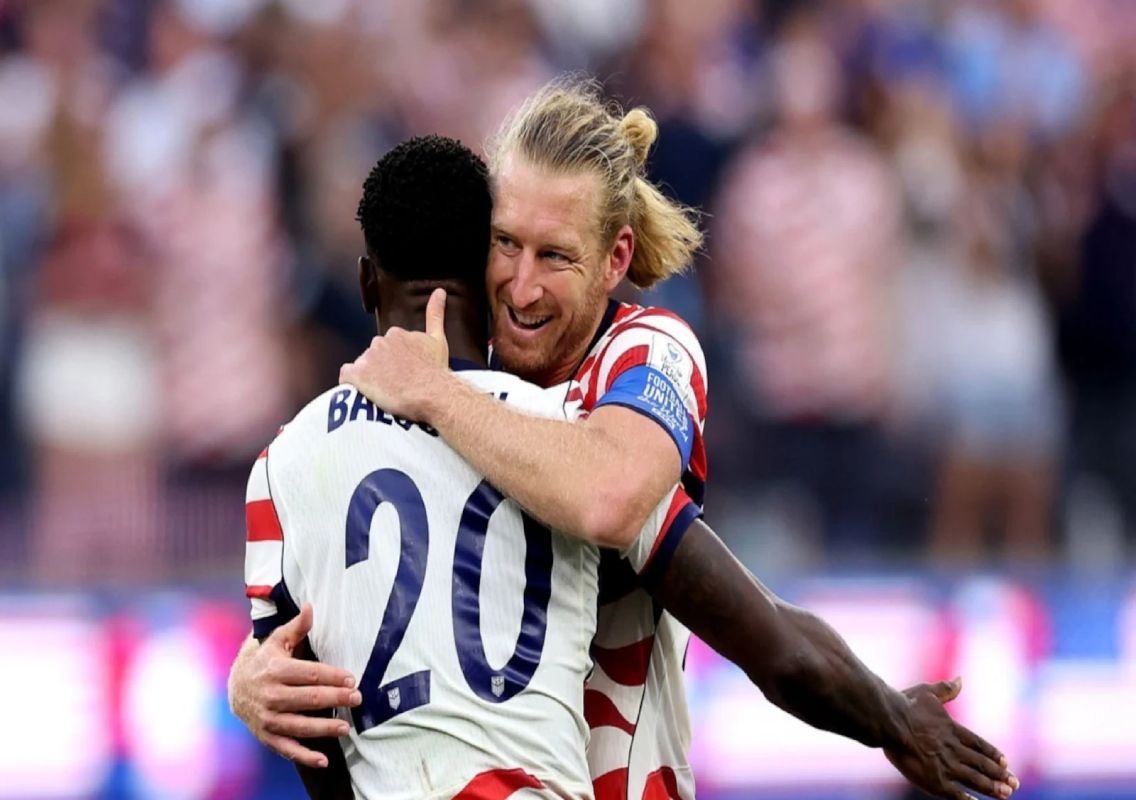


Los Angeles: United States captain Tim Ream was involved in a rare and controversial VAR moment during his team’s 4-1 victory over Paraguay in their FIFA World Cup Group D clash at SoFi Stadium.
The 38-year-old defender was initially shown a yellow card by Dutch referee Danny Makkelie after appearing to foul Paraguay captain Miguel Almiron in the second half. However, the decision was dramatically overturned following a delayed intervention from the Video Assistant Referee (VAR), leading to confusion among players, officials and fans alike.
Unprecedented VAR intervention
In an unusual sequence, the VAR stepped in only after the resulting free-kick had already been taken. This led to a temporary halt in play as Makkelie reviewed the incident on the pitch-side monitor.
After analysing the replays, the referee reversed his original decision, rescinded Ream’s yellow card and instead booked Almirón for simulation. The incident marked one of the first instances at a FIFA World Cup where VAR was used to correct a booking decision involving mistaken judgement after play had resumed.
The development follows expanded VAR protocols introduced for the tournament, allowing reviews in cases of potential second yellow cards or wrongful disciplinary actions stemming from mistaken identity or simulation.
Backing from refereeing authorities
The decision received backing from Pierluigi Collina, the head of FIFA’s refereeing committee. Collina has been a strong advocate for the evolution of VAR usage, particularly in ensuring accuracy in disciplinary decisions.
Under the updated guidelines, referees are now encouraged to review situations where a player may have been incorrectly cautioned or where simulation has influenced the initial call. Traditionally, VAR has not intervened in first yellow card decisions, making this case particularly significant.
Match continues despite confusion
Despite the bizarre interruption, the incident did little to disrupt the United States’ momentum. Managed by Mauricio Pochettino, the hosts delivered an impressive performance to secure a convincing win in front of a lively home crowd.
The United States took an early lead when Paraguay midfielder Damian Bobadilla inadvertently turned the ball into his own net following a dangerous cut-back from Weston McKennie.
Dominant first-half display
Forward Folarin Balogun then took centre stage, scoring twice before halftime to give the United States a commanding 3-0 lead at the break. His clinical finishing ensured he became only the second American player to score more than once in a single World Cup match.
The attacking play was orchestrated by Christian Pulisic, whose creativity and movement caused persistent problems for the Paraguayan defence throughout the first half.
Although Paraguay managed to pull one goal back later in the match, the outcome was never seriously in doubt as the United States maintained control.
Significance of the VAR moment
The overturned booking involving Ream could have had wider implications had it stood, especially given his role as captain and defensive leader. Avoiding a yellow card early in the tournament ensures he remains available without the risk of suspension in upcoming matches.
The incident has also sparked discussion around the evolving use of VAR in football, particularly in situations involving subjective decisions like simulation and fouls.
Conclusion
While the United States’ emphatic 4-1 victory over Paraguay will be remembered for its attacking brilliance, the VAR controversy involving Tim Ream added an unusual subplot to the match. The successful intervention highlighted both the potential and complexity of modern officiating technology, reinforcing its growing influence on the game. As the World Cup progresses, such decisions could play a crucial role in shaping outcomes on the global stage.
(Except for the headline, this story has not been edited by News Karnataka staff and is published from a syndicated feed.)