







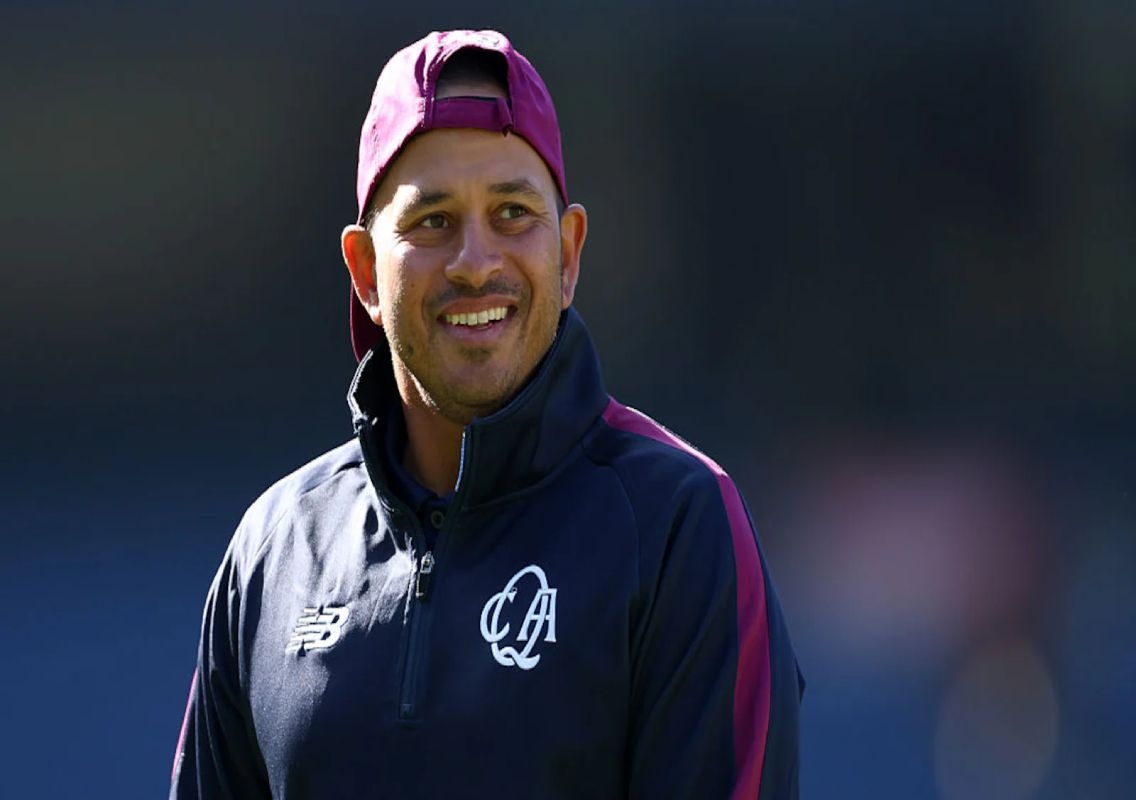


New Delhi: Former Australia batter Usman Khawaja has taken a sharp and humorous dig at Pakistan cricket after Pakistan Cricket Board (PCB) director of high performance Aaqib Javed admitted that the cricketing world was “laughing” at the team following its disastrous Test series in England.
Khawaja responded to a social media post highlighting Aaqib’s comments with a short but pointed remark: “The world is laughing harder now.” His response quickly attracted attention as Pakistan found itself in the middle of an unprecedented mid-series overhaul following two heavy defeats against England.
The controversy comes at a particularly difficult time for Pakistan cricket. The team lost the first Test by an innings and suffered a 194-run defeat in the second match at Lord’s. With England taking an unassailable 2-0 lead, the PCB responded by making sweeping changes to the squad and coaching staff ahead of the third and final Test.
Aaqib Javed admits Pakistan is under scrutiny
Aaqib Javed, who is part of Pakistan’s selection setup, was openly critical of the team’s performance during the England tour.
Speaking on Geo, Aaqib said Pakistan had failed to compete during the first two Tests and acknowledged that the situation had become embarrassing. He argued that the team management had failed to make certain changes despite recommendations regarding the playing combination.
According to Aaqib, Pakistan needed greater pace variety in its bowling attack and should have considered playing Ubaid Shah. He also questioned the decision to persist with certain players and argued that the side needed to make difficult selection decisions.
His blunt assessment was that the world was laughing at Pakistan because the team had been unable to compete effectively during the series.
Khawaja’s response came underneath an ESPNcricinfo post featuring Aaqib’s comments. Instead of writing a lengthy criticism, the Australia batter simply suggested that the latest developments had made the situation even more amusing for observers.
Pakistan makes seven-player squad overhaul
The PCB’s response to the two defeats has been dramatic.
Seven players were released from the Test squad ahead of the third match. The players sent home included Mohammad Rizwan, Imam-ul-Haq, Salman Ali Agha, Aamer Jamal, Awais Zafar, Ali Usman and Khurram Shahzad.
The board then brought in a number of replacements, including five uncapped players. Arafat Minhas, Mohammad Imran Jnr, Saad Baig, Mohammad Imran Randhawa and Razaullah were added to the squad, while Saim Ayub and Abdullah Fazal were also included.
The scale and timing of the changes attracted criticism from former Pakistan players and cricket observers. Reuters reported that former captains questioned the PCB’s decision to make such sweeping changes in the middle of a Test series, with some describing it as a panic response rather than a carefully planned restructuring.
The overhaul has also raised questions about Pakistan’s long-term planning and player development.
Coaching staff also hit by major changes
The shake-up was not limited to players.
Head coach Sarfaraz Ahmed and bowling coach Umar Gul were removed from their positions following the team’s poor performances. White-ball coaching staff member Mike Hesson was brought in as head coach, while Ashley Noffke was added to the coaching setup.
The changes mean Pakistan will enter the third Test with a significantly altered support staff and playing group.
Such a major restructuring during an ongoing overseas Test series is highly unusual. Rather than having a settled squad prepare for the final match, Pakistan will now have to integrate several inexperienced players while simultaneously dealing with the pressure of trying to avoid a series clean sweep.
For a team already struggling for consistency, the disruption adds another layer of difficulty.
Aaqib questions team selection
Aaqib also revealed that he had previously spoken to captain Babar Azam and former coach Sarfaraz about changes he believed were required in the playing combination.
He argued that Pakistan needed an additional fast bowler and pointed specifically to Ubaid Shah, who can bowl close to 140 kmph. Aaqib believed the extra pace could have changed the composition of the attack.
He also questioned the absence of an all-rounder and suggested that Ghazi Ghori could have been selected as wicketkeeper instead of Mohammad Rizwan.
His comments effectively placed some responsibility for the team’s poor performances on the decision-making of the captain, coach and management.
The public nature of those criticisms has added to the impression of internal disagreement within Pakistan cricket.
Imam-ul-Haq injury becomes another controversy
The situation surrounding Imam-ul-Haq has also become a talking point.
Imam missed both innings with the bat after suffering a calf injury while fielding. However, footage showing him taking part in throwdowns with his calf taped created questions about why he had not attempted to bat.
Aaqib said the injury raised a “big question mark” and indicated that an inquiry could follow. He stopped short of accusing Imam of deliberately faking the injury, but questioned whether a muscle problem should have prevented him from attempting to bat altogether.
The comments have added another controversy to an already chaotic tour.
Misbah-ul-Haq reportedly resigns
Pakistan’s turmoil has also reached the selection committee.
Former Pakistan captain Misbah-ul-Haq reportedly offered his resignation from the men’s national selection committee following the PCB’s decision to overhaul the squad and coaching staff. According to the NDTV report, the PCB had not yet accepted his resignation.
Misbah had returned to an official role within Pakistan cricket after previously serving as head coach and chief selector. He was appointed to the four-member national selection committee in March alongside Aaqib Javed, Sarfaraz Ahmed and Asad Shafiq.
His reported decision to step away has added further uncertainty around Pakistan’s selection structure.
PCB seeks explanations over Rizwan and Imam selections
The PCB has also sought explanations from selectors over the inclusion of Mohammad Rizwan and Imam-ul-Haq in the England Test squad.
According to the report, selectors were asked to explain the reasons behind selecting the two players and the process used to reach those decisions. The development came shortly after the board announced the removal of seven players and two members of the coaching staff.
Rizwan had been one of Pakistan’s leading Test run-scorers in the period from 2024 until the West Indies tour, while Imam had been performing strongly in domestic cricket despite limited Test appearances during that period.
The scrutiny therefore extends beyond individual performances and into the wider selection process.
Pakistan faces another major challenge at Edgbaston
Pakistan will now turn its attention to the third Test against England at Edgbaston, beginning on September 9.
The team has already lost the series and will be attempting to avoid a 3-0 whitewash. But the bigger challenge may be rebuilding confidence after a period of intense criticism and administrative upheaval.
The first two Tests exposed major weaknesses in Pakistan’s batting and bowling combinations. The subsequent squad changes have created an opportunity for younger players, but they also bring considerable risk because several newcomers have limited international Test experience.
The third Test will therefore be more than an opportunity to improve the scoreline. It will provide an early indication of whether the PCB’s dramatic intervention can produce any immediate improvement.
Khawaja’s one-line comment captures the mood
Khawaja’s response has resonated because of its simplicity.
Aaqib’s statement that the cricketing world was laughing at Pakistan came while defending the board’s decision to take drastic action. Khawaja’s reply — that the world was “laughing harder now” — turned the official’s own words into a pointed joke about the scale of the turmoil.
The Australian batter, who was born in Pakistan, has previously commented on controversies involving the PCB and Pakistan cricket. His latest remark has once again placed him in the middle of the conversation surrounding the country’s cricket administration.
For Pakistan, however, the immediate priority is no longer the social media reaction. The team must now find stability, rebuild confidence and prepare for a final Test in which a largely reshaped squad will attempt to stop a difficult England tour from ending in a clean sweep.
The developments have made Pakistan cricket the subject of widespread discussion far beyond the boundary. Whether the PCB’s dramatic changes can deliver results on the field will ultimately determine whether the overhaul is remembered as a necessary reset or another episode of instability.