







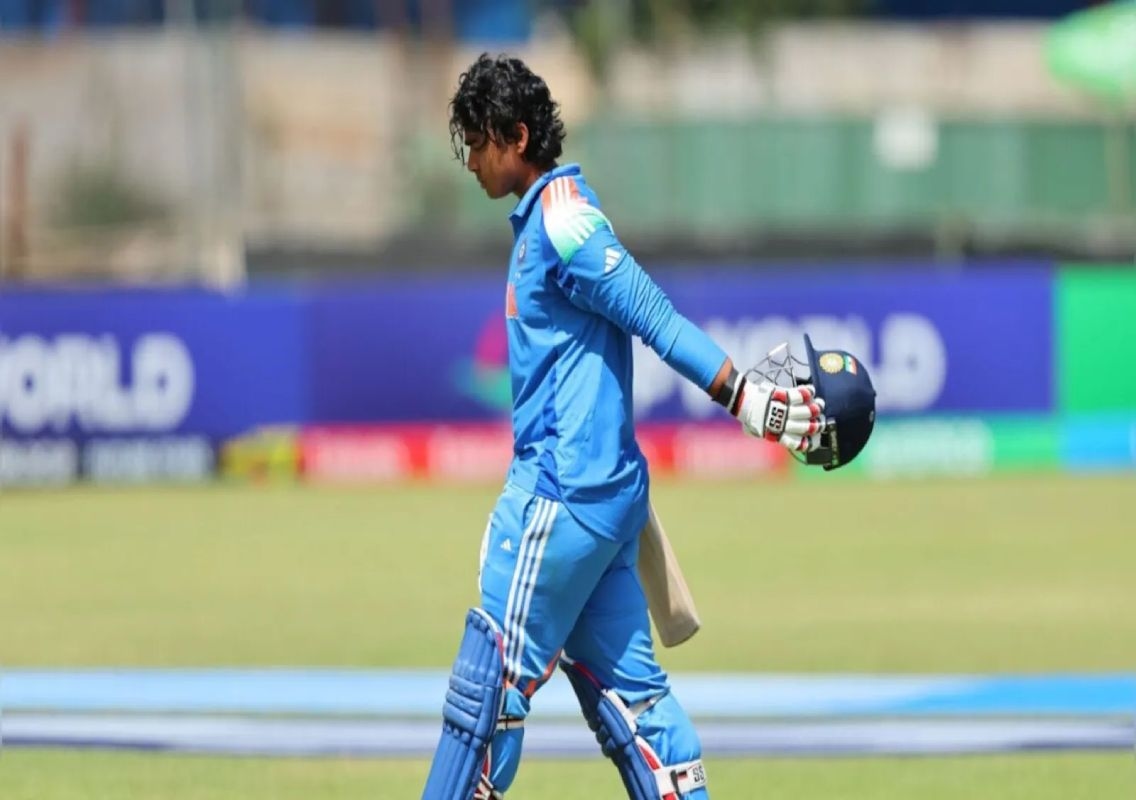


Dambulla: Rising Indian batting sensation Vaibhav Sooryavanshi has come under the spotlight after reacting aggressively to sledging during a recent India A match against Sri Lanka A, prompting experts to call for structured mental conditioning support from the Board of Control for Cricket in India.
The 15-year-old prodigy, who has quickly built a reputation with his explosive batting and fearless approach, is now facing a new challenge—handling psychological pressure at the highest levels of the game.
Incident highlights need for mental conditioning
Sooryavanshi grabbed headlines following an on-field altercation in Dambulla, where he reacted visibly to verbal provocation from Sri Lanka A players in a closely contested match that India A eventually lost.
Experts believe that as his stature in international cricket grows, such tactics will become more frequent, making mental resilience a key factor in his development.
Prominent sports psychologist Dr Swaroop Savanur, who has previously worked with young cricketers at the National Cricket Academy (now Centre of Excellence), emphasised that while Sooryavanshi is naturally calm, structured guidance is essential.
“I have worked with Vaibhav during his early years, and he is a composed individual. However, as he rises, opponents will try to unsettle him. Preparation for such situations is crucial,” Savanur said.
Role of BCCI and Centre of Excellence
Savanur highlighted that the BCCI, along with its Centre of Excellence headed by VVS Laxman, has already incorporated sports psychology into player development programmes.
He noted that young players are regularly profiled during training camps to understand their mental frameworks and behavioural responses under pressure.
However, he stressed that more consistent and in-depth efforts are required to bridge the gap between talent and performance at the senior level.
“Many players excel in under-19 cricket but struggle to replicate that success internationally. Mental conditioning plays a huge role in that transition,” he explained.
Importance of situational intelligence
A key area identified by experts is “situational intelligence”—the ability to assess match scenarios and respond calmly under pressure.
According to Savanur, this skill is often what differentiates good players from great ones.
“If situational intelligence is not developed, talent does not get fully expressed. It is not about whether Vaibhav has it, but how it is nurtured over time,” he said.
The ability to remain composed during high-pressure moments, including dealing with sledging, is seen as essential for long-term success in modern cricket.
Transition phase in Indian cricket
The discussion around Sooryavanshi’s behaviour comes at a time when Indian cricket is undergoing a transition, with several senior players like Virat Kohli, Rohit Sharma, Ravichandran Ashwin and Ravindra Jadeja stepping away from certain formats.
This shift has opened doors for young talents, but it has also increased expectations and pressure on newcomers to perform immediately.
A former national selector pointed out that young players often feel compelled to match the achievements of their predecessors quickly, which can lead to anxiety and poor decision-making.
“They must not rush. The team management should reassure them and give them time to grow. Proper counselling can help ease the pressure,” he said.
Mental strength as a game-changer
Experts unanimously agree that cricket is as much a mental game as it is technical.
Savanur emphasised that mental preparation should not be treated as a reactive measure but as an integral part of an athlete’s routine.
“Awareness about mental strength exists, but it is often seen as a problem-solving tool rather than a continuous process. It needs to be embedded into daily training,” he noted.
He added that mental conditioning helps players cope not only with pressure situations like sledging but also with failures, which are inevitable in a long career.
Learning from early experiences
Despite the recent controversy, Sooryavanshi’s performances remain impressive. He had a remarkable season in the Indian Premier League, scoring 776 runs and winning the Orange Cap with a strike rate exceeding 200, underlining his immense potential.
Experts believe that such incidents should be treated as learning opportunities rather than setbacks.
“At crucial moments, if a player cannot control emotions, it impacts performance. The difference between a good and a great player lies in mastering such situations,” Savanur explained.
Conclusion
Vaibhav Sooryavanshi’s rise in Indian cricket has been nothing short of extraordinary, but his recent reaction to sledging highlights the challenges that come with early success. As expectations continue to grow, the focus must shift towards building mental resilience alongside technical skills. With the right guidance from the BCCI and structured psychological support, the young batter can evolve into a complete cricketer capable of handling both pressure and provocation on the global stage.