







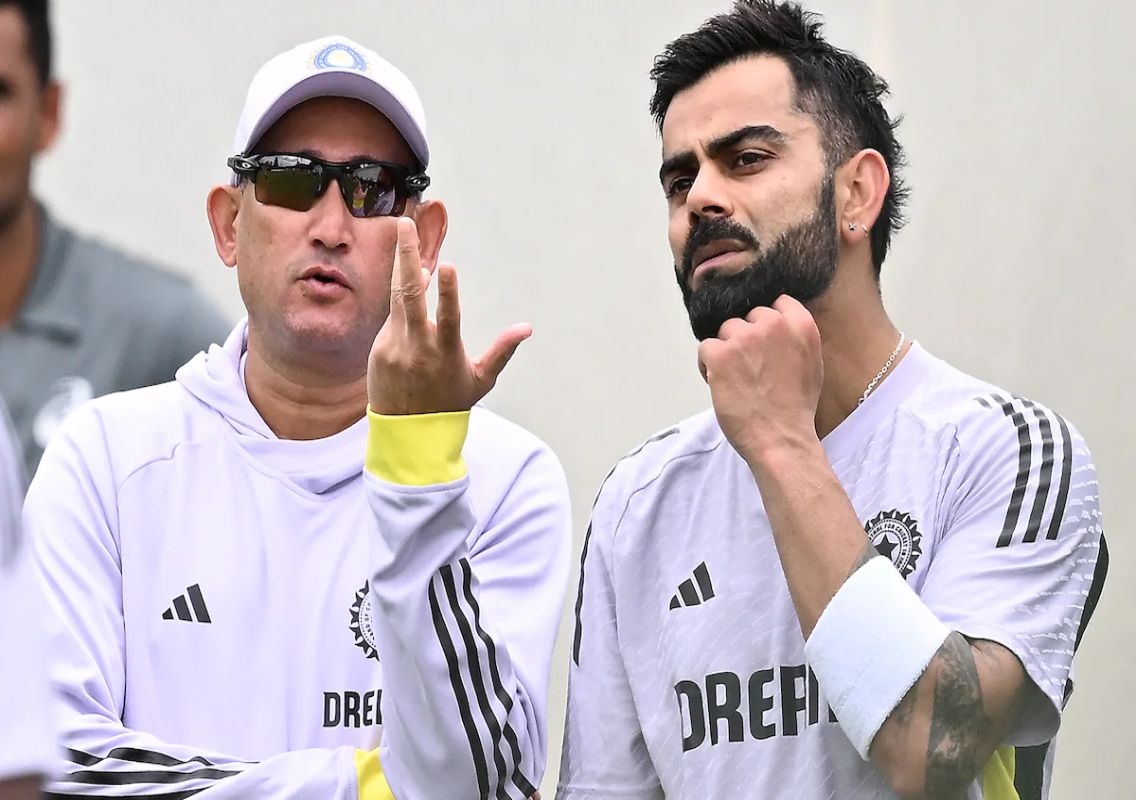


New Delhi: Virat Kohli has sparked a major debate around his ODI future after issuing a firm stance on his role ahead of the 2027 ICC ODI World Cup, placing the responsibility squarely on the Board of Control for Cricket in India (BCCI). His remarks, made during a podcast with Royal Challengers Bengaluru, have not only raised questions about selection policies but also highlighted the complexities of managing senior players in Indian cricket.
Kohli, one of the most accomplished batters in modern cricket, made it clear that he is unwilling to continue in an environment where he feels the need to repeatedly justify his place in the team. His statement reflects a growing tension between experienced players seeking stability and a system that increasingly favours flexibility and rotation.
Kohli demands clarity on role
Addressing speculation about his participation in the 2027 World Cup, Kohli did not mince words. He asserted that the team management must take a clear and upfront decision regarding his future rather than keeping him in a state of uncertainty.
“Either tell me on day one I am not good enough or I am not needed. But if I am made to feel like I need to constantly prove my worth and my value, then I am not in that space,” Kohli said.
The statement underscores his desire for transparency and respect, especially at a stage in his career where he has already achieved significant milestones. Kohli’s stance effectively shifts the pressure onto the selectors, asking them to either fully back him or move on without ambiguity.
ODI cricket remains his only format
Following his retirement from T20 Internationals after India’s 2024 World Cup victory and his subsequent exit from Test cricket, Kohli’s international career is now limited to the ODI format. This makes the discussion around his role even more significant, as the 50-over format is his sole remaining platform at the international level.
However, the declining frequency of ODI matches in the global calendar has added another layer of complexity. With fewer matches being played, opportunities to assess form and performance are limited, making selection decisions more critical and often more contentious.
Performance continues to justify selection
Despite concerns over age and workload, Kohli’s recent performances suggest that he remains a vital asset to the Indian team. In the previous year, he scored 651 runs in ODIs at an average of 65.1, including three centuries. He has already added another century this year, further strengthening his case.
In addition to his batting prowess, Kohli emphasised his fitness levels, stating that he is fully capable of meeting the physical demands of modern-day cricket. By doing so, he dismissed any potential arguments related to fitness or workload management as reasons for his exclusion.
BCCI’s selection approach under scrutiny
The BCCI’s recent selection strategy has been centred around flexibility, with senior players often evaluated on a series-by-series basis. This approach allows the team management to experiment with combinations and prepare for major tournaments.
The board has also shown a willingness to look beyond established names, as seen in leadership decisions involving players like Rohit Sharma. While this strategy aims to build a balanced and future-ready squad, it has also led to uncertainty for senior players.
Kohli’s demand for a long-term commitment challenges this approach. Granting him a guaranteed place in the squad until the 2027 World Cup could limit experimentation, while not doing so risks alienating one of India’s most influential cricketers.
A delicate balance for selectors
Kohli’s ultimatum places the selectors in a difficult position. On one hand, his experience, consistency and ability to perform in high-pressure situations make him an invaluable asset. On the other hand, the team must also focus on grooming younger players and building for the future.
The situation is further complicated by the public and emotional weight that Kohli carries. Any decision regarding his future is likely to attract significant attention and scrutiny, both from fans and within the cricketing fraternity.
Conclusion
Kohli’s latest remarks have set the stage for a crucial decision that could shape the future of Indian ODI cricket. By demanding clarity and long-term assurance, he has drawn a firm line, signalling that he values trust and respect as much as performance.
The BCCI must now carefully evaluate its options. Backing Kohli could provide stability and experience leading into the 2027 World Cup, while moving on from him would mark the beginning of a new era.
Either way, the decision will not just determine Kohli’s future but also define how Indian cricket manages its transition while respecting the legacy of its greatest players.