







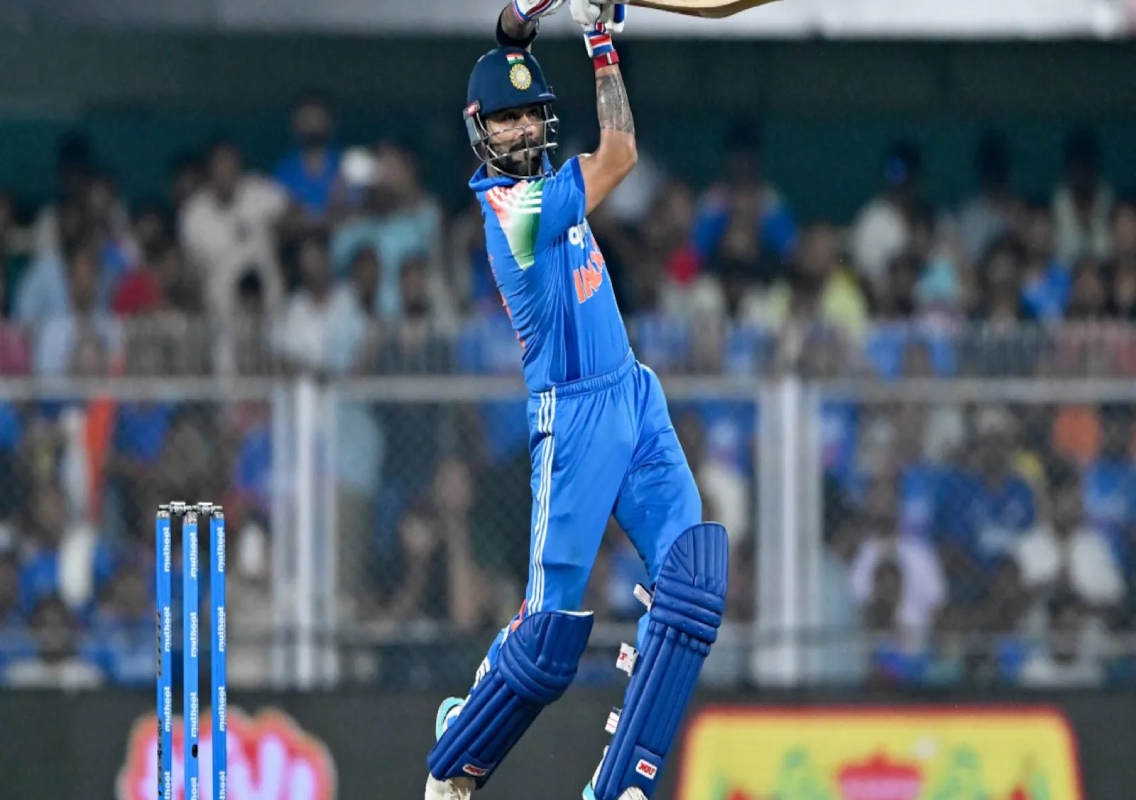


New Delhi: Former India cricketer Wasim Jaffer has backed Tilak Varma as a potential successor to Virat Kohli at No. 3 in India’s ODI batting order, once the veteran batter brings his 50-over career to an end.
Jaffer’s assessment came after Tilak produced a match-winning performance in India’s Asian Games 2026 final against Pakistan. Batting at No. 6, the left-hander smashed an unbeaten 51 off 22 balls to help India post 211/6 and defeat Pakistan by 19 runs for the gold medal.
While several players could eventually be considered for Kohli’s position, Jaffer believes Tilak’s versatility, left-handed batting and domestic record make him particularly well suited to the role.
Jaffer picks Tilak over other contenders
Speaking on his YouTube channel, Jaffer highlighted Tilak’s ability to adapt to different batting positions.
“It feels great to see his versatility. He previously scored a century at No. 3, and now he has adapted to the No. 5 and No. 6 positions so beautifully. This is an amazing quality,” Jaffer said.
Jaffer then identified Tilak as his preferred candidate to eventually take Kohli’s position.
“When Virat and Rohit leave, obviously Yashasvi Jaiswal is there to replace Rohit, but I feel Tilak can take Virat’s spot. You will get a left-hander as well,” he said.
The former India opener also pointed to Tilak’s first-class performances, saying the youngster has the game to operate successfully across formats.
Jaffer’s comments are an assessment of Tilak’s potential and do not represent a formal decision by the Indian team management on who will eventually bat at No. 3 in ODIs.
Tilak’s explosive Asian Games final
Tilak’s latest performance provided a timely reminder of his ability to influence matches under pressure.
India were in a strong position after Abhishek Sharma’s 61 off 28 balls, but Pakistan’s bowlers continued to take wickets during the middle overs. Tilak entered the contest at No. 6 and provided the acceleration India needed towards the end of the innings.
He remained unbeaten on 51 from just 22 deliveries, striking at more than 230 and hitting three fours and four sixes.
His innings helped India finish on 211/6, their highest total of the men’s Asian Games competition. Pakistan responded strongly through Hasan Nawaz, who scored 96, but India eventually restricted them to 192/6 to win by 19 runs.
The result also allowed India to successfully defend its men’s cricket gold medal at the Asian Games.
Why Jaffer sees Tilak as a No. 3 option
Tilak’s left-handedness is one of the factors that makes him an interesting option for India’s future top order.
Kohli has occupied the No. 3 position for much of his ODI career, making the role one of the most important positions that India will eventually have to fill.
Jaffer believes Tilak could provide a different combination of skills while retaining the ability to bat in the middle order when required.
The youngster has already demonstrated his flexibility in T20 cricket, while his domestic performances have strengthened the case for considering him beyond the shortest format.
Jaffer specifically referred to Tilak’s first-class average of around 55 and his performances in the Duleep Trophy as evidence of his potential.
Tilak still has limited ODI experience
Despite the praise, Tilak remains relatively inexperienced in ODI cricket.
The 23-year-old has established himself as an important part of India’s T20 setup, but he has played only a handful of ODIs so far. That means his suitability for a long-term No. 3 role in 50-over cricket will ultimately depend on how he develops and performs when given more opportunities in the format.
His first-class and List A numbers provide encouraging indicators, but they cannot by themselves guarantee a place in India’s future ODI batting order.
The next few seasons will therefore be important in determining whether Tilak can translate his promise into consistent performances in 50-over cricket.
India have several options after Kohli
Tilak is not the only player who could come into consideration when Kohli eventually leaves ODI cricket.
Shubman Gill, who has already taken on a leadership role for India, could potentially move into the No. 3 position depending on the team’s future combination.
Ruturaj Gaikwad and Ishan Kishan are also among the batters who have experience in India’s limited-overs setup and can operate in different positions.
Rishabh Pant remains another high-impact option when available, while the emergence of younger players could further expand India’s choices before the 2027 World Cup and beyond.
Jaffer, however, has specifically singled out Tilak from this group because of his versatility and the balance that a left-hander could provide.
Kohli’s ODI future remains a major talking point
Kohli’s eventual departure from ODI cricket will leave a significant vacancy in India’s batting line-up.
The former India captain has already retired from Test and T20I cricket, leaving ODIs as his remaining international format. His continued presence in the 50-over side means India still has time to assess potential successors before a major transition takes place.
The 2027 ODI World Cup is expected to be an important milestone in that transition. India will have to plan not only for Kohli’s eventual departure but also for the changing roles of other senior players.
Jaffer has suggested that Yashasvi Jaiswal could eventually take over from Rohit Sharma at the top of the order, while Tilak could move into Kohli’s No. 3 position.
These remain projections rather than confirmed plans, but they offer one possible picture of India’s next-generation batting line-up.
Tilak’s versatility could work in his favour
One of the strongest points in Jaffer’s argument is Tilak’s ability to adapt.
At the Asian Games, he was asked to bat at No. 6 rather than his more familiar top-order position. Instead of struggling with the change, he produced one of the most important innings of the final.
His ability to contribute from different positions could prove valuable in ODI cricket, where teams increasingly need batters who can adapt according to match situations.
For now, however, Tilak’s immediate focus will be on converting his promise into consistent performances across formats.
A potential successor, not a confirmed choice
Jaffer’s endorsement places Tilak Varma among the names worth watching as India considers life after Virat Kohli at No. 3.
The youngster’s left-handed batting, flexibility and strong domestic record give him several qualities that could suit the role. His unbeaten 51 in the Asian Games final has only strengthened the attention around him.
However, the final decision will depend on India’s selectors and team management, as well as Tilak’s performances in ODI cricket over the coming years.
For now, Jaffer’s message is clear: among India’s emerging batting options, he believes Tilak Varma has the qualities to inherit one of the most prestigious positions in Indian ODI cricket.