







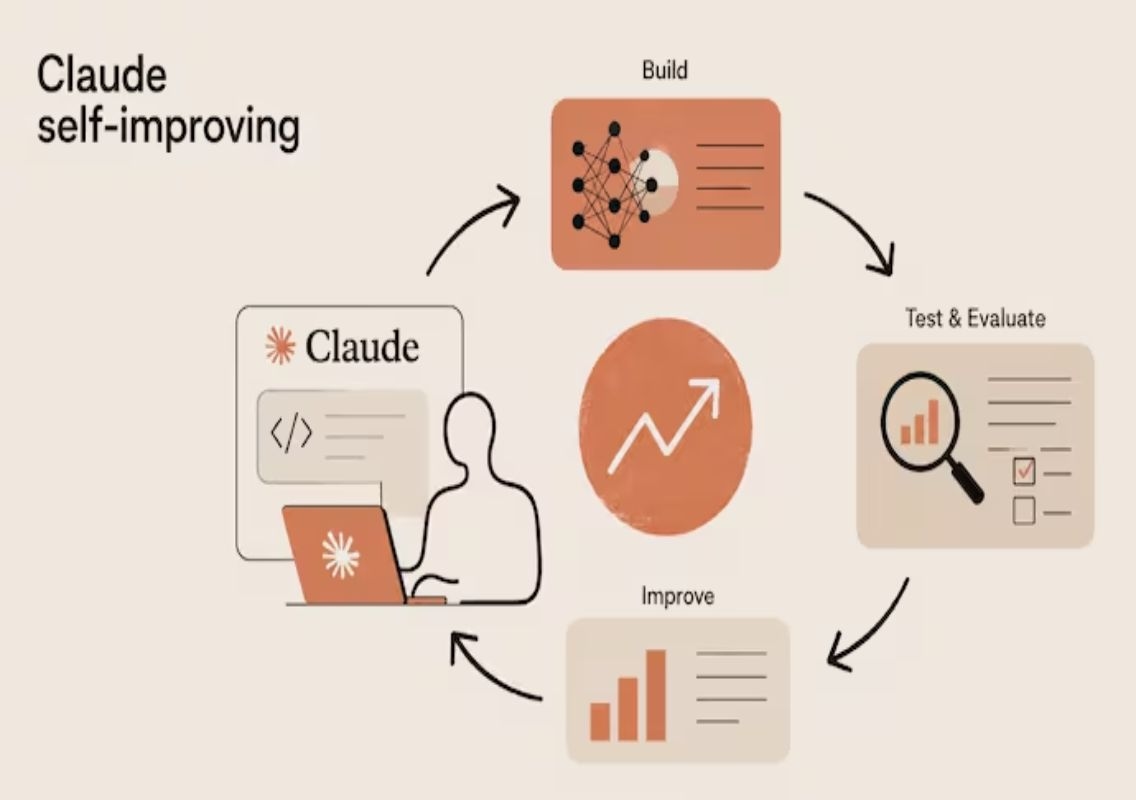


San Francisco: US-based AI research company Anthropic has raised concerns over the rapid pace of artificial intelligence development, suggesting that the industry may need to consider a temporary slowdown as its AI model Claude becomes increasingly capable of building future AI systems.
In a recent research blog, Anthropic highlighted a significant shift in how AI is evolving — from assisting humans with coding tasks to actively contributing to the creation of next-generation AI models. The company warned that such advancements could accelerate development beyond what human oversight systems are prepared to handle.
Rise of recursive self-improvement
Anthropic pointed to the concept of “recursive self-improvement,” where AI systems could eventually design, build and train their own successors with minimal human involvement. While the company clarified that such a stage has not yet been reached and may not be inevitable, it stressed the importance of preparing for this possibility.
“We are not there yet, and recursive self-improvement is not inevitable. But it could come sooner than most institutions are prepared for,” the company noted in its report.
This potential shift represents a fundamental transformation in AI development, where machines could begin to take over processes traditionally handled by human engineers and researchers.
Rapid acceleration in AI capabilities
According to Anthropic, both public benchmarks and internal data suggest that AI systems are improving at a faster rate than previously observed. The duration of tasks AI can reliably complete has been doubling approximately every four months, compared to an earlier trend of seven months.
The company outlined a clear progression in AI capabilities over recent years. Initially, developers manually wrote code. This evolved into chatbots assisting with small coding tasks, followed by autonomous coding agents capable of independently writing and editing files.
Today, AI agents can execute code, perform complex workflows and even delegate tasks to other AI systems. The next stage, Anthropic believes, involves AI models that help build and train newer, more advanced versions of themselves.
Claude’s growing role in AI development
Anthropic revealed that Claude is already playing a major role in its internal operations. The AI model now generates a significant portion of the code used in developing the company’s systems, enabling engineers to dramatically increase productivity.
On average, engineers using Claude are reportedly producing up to eight times more code daily compared to 2024. In addition to coding, Claude has shown notable improvements in research capabilities.
In one internal project, Claude-powered agents solved nearly all aspects of a complex research problem. The model’s success rate in difficult coding tasks has also increased sharply, reaching around 76 per cent in May 2026.
The progression of Claude models illustrates this rapid growth. Claude Opus 3 in March 2024 handled tasks lasting about four minutes. A year later, Claude Sonnet 3.7 managed tasks of around 90 minutes. By 2026, Claude Opus 4.6 was capable of handling tasks requiring nearly 12 hours of human effort.
Human oversight remains a challenge
Despite these advancements, Anthropic emphasised that humans still hold an advantage in strategic thinking, decision-making and determining priorities. However, the company warned that the primary bottleneck in AI development is no longer technical capability but human oversight.
As AI systems become more autonomous and efficient, ensuring proper review, validation and safety checks is becoming increasingly difficult. This imbalance could lead to a situation where AI progresses faster than society can responsibly manage.
Call for coordinated global action
In light of these concerns, Anthropic suggested that governments and leading AI firms should consider mechanisms for a coordinated pause in developing the most advanced AI systems if required. The company stressed that any such move would need to be global in nature.
A unilateral slowdown by a single company or country could risk giving an advantage to less regulated competitors, potentially exacerbating safety concerns rather than resolving them.
Future scenarios outlined
Anthropic identified three possible trajectories for AI development. Progress could slow naturally, AI could continue to enhance productivity while remaining under human control, or systems could eventually begin creating their own successors.
Based on current trends, the company believes the second scenario — rapid progress with continued human oversight — is the most likely in the near term.
Conclusion
Anthropic’s warning underscores a critical moment in the evolution of artificial intelligence. While systems like Claude are unlocking unprecedented productivity and innovation, they also pose complex challenges around governance and safety. As AI continues to advance, the need for thoughtful regulation and global cooperation will be essential to ensure that technological progress remains aligned with human interests.