







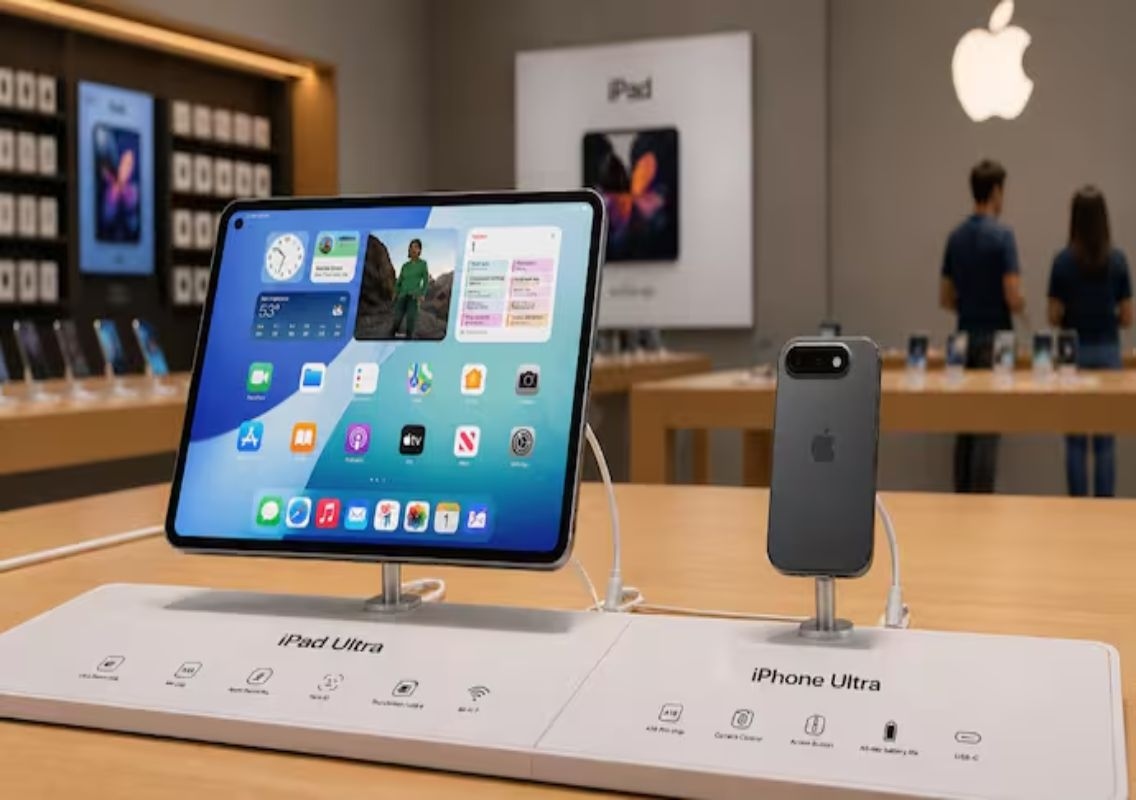


Cupertino: Apple may be preparing to expand its premium “Ultra” branding beyond watches and chips, with reports suggesting the development of a foldable iPhone and a new high-end MacBook. If these plans materialise, the company could introduce a new top-tier category that sits above its existing Pro lineup, marking a significant shift in its product strategy.
Apple’s ‘Ultra’ branding may expand
Apple’s “Ultra” label has so far been reserved for its most powerful offerings, such as the Apple Watch Ultra and high-performance chipsets. However, recent reports indicate that the company may extend this branding to upcoming devices, including a foldable iPhone and a redesigned MacBook.
According to reports cited by leading tech publications and based on insights from industry analysts, Apple is considering naming its first foldable smartphone the “iPhone Ultra” instead of “iPhone Fold”. This move would position the device as a premium flagship above the Pro and Pro Max variants, rather than as a replacement.
If launched under the Ultra branding, the foldable iPhone is expected to target a niche segment with cutting-edge features, higher pricing, and potentially limited availability.
Foldable iPhone could redefine Apple’s lineup
The foldable iPhone is expected to represent a major technological leap for Apple. Early speculation suggests a book-style design, similar to existing foldable devices in the market. The outer display could measure between 5.3 inches and 5.5 inches, while the inner screen may expand to around 7.8 inches when unfolded.
Apple is reportedly focusing on addressing key challenges associated with foldable devices, particularly the visibility of display creases and long-term durability. Improvements in hinge design and display technology are likely to be central to the device’s development.
On the software front, the foldable iPhone may run a customised version of iOS, potentially optimised for larger screens. This could include multitasking features similar to those seen on iPads, such as split-screen functionality and enhanced app layouts.
In terms of hardware, the device is expected to feature Apple’s next-generation A20 Pro chip along with its in-house C2 modem. Camera capabilities may include a dual rear setup with 48MP main and ultra-wide sensors, along with front-facing cameras on both the inner and outer displays.
Battery capacity is also expected to be significantly higher, with reports suggesting a 5,500mAh unit. The build could incorporate a titanium–aluminium frame for improved strength without excessive weight. Interestingly, Apple may opt for Touch ID integrated into the power button instead of Face ID, possibly due to space constraints in the foldable design.
MacBook Ultra may introduce touchscreen support
Alongside the foldable iPhone, Apple is also reportedly working on a MacBook Ultra. This device could introduce features that users have long requested, most notably a touchscreen display.
Unlike incremental upgrades to the MacBook Pro lineup, the MacBook Ultra is expected to be positioned as a separate and more premium offering. It may feature an OLED display, a redesigned chassis, and a touch-enabled interface that could blur the line between macOS and iPadOS experiences.
Some reports suggest the inclusion of a Dynamic Island-style cut-out, replacing the traditional notch. Additionally, the MacBook Ultra could support cellular connectivity using Apple’s C2 modem, allowing users to stay connected without relying on Wi-Fi.
Such features would make the MacBook Ultra a distinct category within Apple’s laptop portfolio, appealing to professionals and power users seeking advanced functionality.
Uncertain timelines for launch
While excitement around these potential products is growing, the launch timelines remain unclear. Supply chain reports indicate that OLED panels for MacBooks could begin shipping later this year. However, delays related to component availability, including RAM, may push the MacBook Ultra’s debut to the first half of 2027.
The foldable iPhone, on the other hand, is rumoured to launch as early as September, possibly alongside the iPhone 18 Pro lineup. However, Apple has not confirmed any such plans, and timelines may change depending on development progress and market conditions.
A new premium category in the making
If Apple proceeds with these plans, the introduction of Ultra-branded devices could signal a new direction for the company. By placing these products above the Pro lineup, Apple may be aiming to create a distinct ultra-premium segment focused on innovation and exclusivity.
Such a move would also allow the company to experiment with new technologies without disrupting its core product range. For consumers, this could mean access to more advanced features, albeit at a significantly higher price point.
Conclusion
While official confirmation is still awaited, the possibility of an iPhone Ultra and MacBook Ultra highlights Apple’s continued push towards innovation and premium positioning. If these devices launch as expected, they could redefine the company’s product hierarchy and set new benchmarks in design and functionality.