







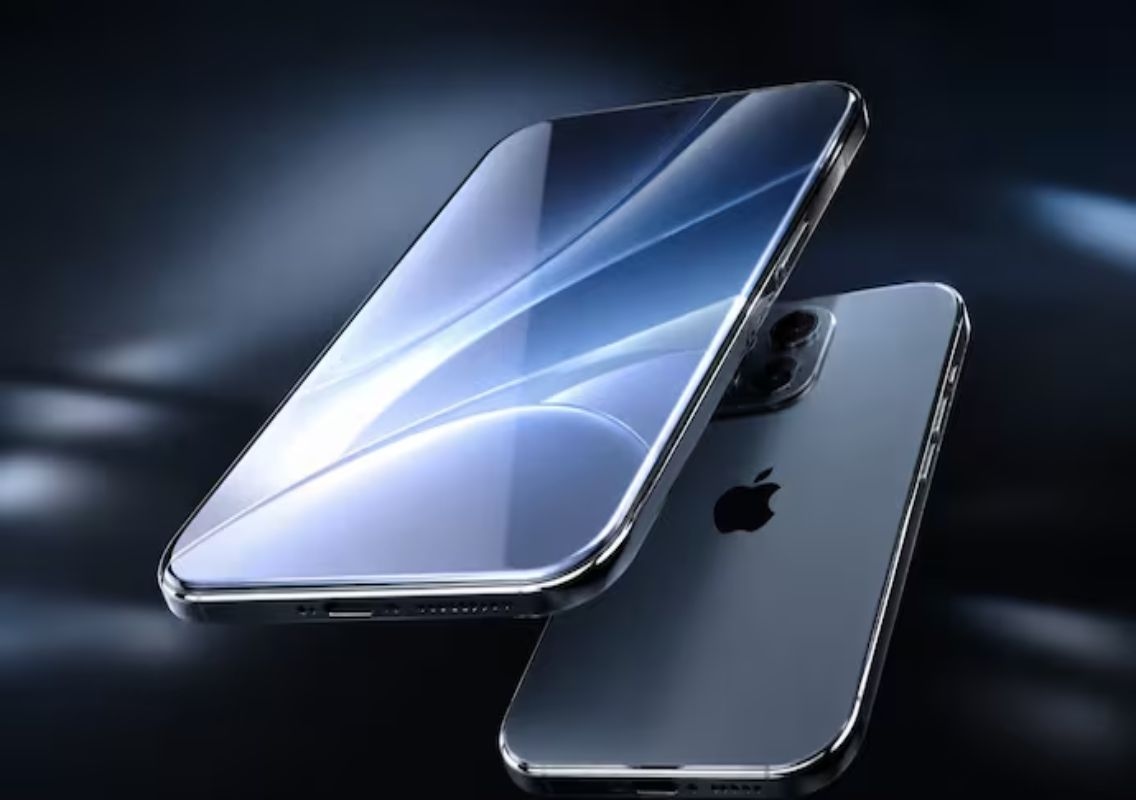


Apple is reportedly working on a next-generation display technology that could significantly transform the look and feel of future iPhones. According to recent industry reports, the company is developing an advanced micro-curved OLED display designed to reduce bezels further while improving brightness and visual consistency, particularly around the edges.
The technology is still in the development phase, but it is expected to play a key role in Apple’s long-term design roadmap, including a potential 20th anniversary iPhone anticipated around 2027.
Advanced display design in the works
The report suggests that Apple is exploring a refined version of its rumoured “four-sided bending” OLED display. Unlike conventional flat panels or curved displays that bend only along the sides, this new approach would allow the screen to curve subtly along all four edges of the device.
The aim is to create an almost bezel-free design, delivering a more immersive viewing experience. By minimising the visible borders around the display, Apple is looking to push the boundaries of smartphone aesthetics while maintaining usability.
However, such aggressive curvature introduces technical challenges, particularly related to display performance. Current OLED panels can suffer from brightness reduction and image distortion near curved edges, which Apple is reportedly trying to address with new materials.
New material could improve brightness and clarity
At present, many OLED displays use a magnesium-silver alloy layer within the panel structure. While effective for standard displays, this material may not perform optimally when screens are bent significantly around the edges.
To overcome this limitation, Apple is said to be evaluating the use of Indium Zinc Oxide (IZO), a more transparent material that allows light to pass through more efficiently. This could help maintain consistent brightness and colour accuracy even in highly curved sections of the display.
In practical terms, this means users could experience a cleaner and more uniform display without the dimming or distortion that sometimes affects curved screens.
Linked to anniversary iPhone plans
The development of this display technology is also being linked to Apple’s long-rumoured 20th anniversary iPhone, expected in 2027. That model is believed to introduce a “four-sided bending” display as a major design milestone.
Subsequent models, including a possible 2028 iPhone, could further refine the technology by incorporating improved materials like IZO. This would allow Apple to reduce bezels even more without compromising on durability or visual quality.
Such a move would align with Apple’s history of marking milestone anniversaries with significant design changes, as seen with previous iPhone iterations.
Samsung and LG preparing for production changes
The report indicates that Apple’s key display partners, Samsung Display and LG Display, are already preparing for potential shifts in production requirements. Both companies are major suppliers of OLED panels for Apple devices and are likely to play a crucial role in bringing this new technology to market.
LG Display has reportedly announced investments in OLED infrastructure, which industry insiders believe could be tied to next-generation display innovations. Meanwhile, Samsung Display is said to be evaluating new manufacturing processes, as the proposed materials and design may not be compatible with existing production lines.
These developments suggest that the transition to micro-curved OLED displays may require significant changes in how panels are manufactured.
Challenges and uncertainties remain
Despite the promising outlook, the technology is still at an early stage, and several challenges remain. Manufacturing curved displays with consistent quality across all edges is complex and may lead to higher production costs.
There are also questions about durability, as more curved designs could potentially make screens more vulnerable to damage. Apple will need to ensure that any new display technology meets its standards for reliability and user experience.
Moreover, the company has not officially confirmed any of these plans, and the information is based on industry reports and supply chain sources. As such, the final implementation and timeline could differ from current expectations.
Conclusion
Apple’s reported work on micro-curved OLED displays highlights its continued focus on design innovation and display excellence. By addressing the limitations of current curved screens and exploring new materials like Indium Zinc Oxide, the company appears to be laying the groundwork for a new generation of iPhones.
If successful, this technology could deliver a near bezel-less experience without sacrificing brightness or clarity, setting a new benchmark in smartphone design. However, as with all early-stage developments, users may need to wait several years before these advancements become a reality.