







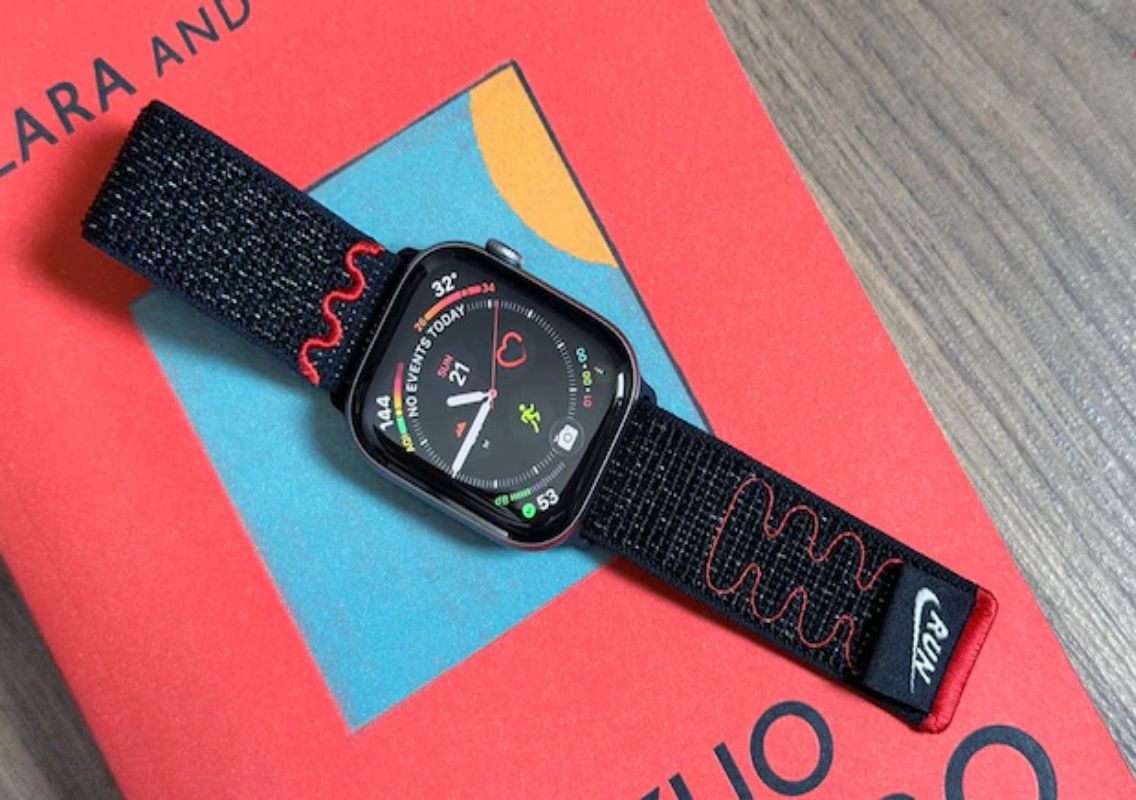


Cupertino: Apple is reportedly exploring a major redesign of its Apple Watch lineup, including new models that could eventually remove the display altogether. The move would represent one of the biggest changes to Apple’s wearable strategy since the Apple Watch was introduced more than a decade ago.
According to a Bloomberg report cited in the supplied information, Apple is testing several possible directions for future Watch products as it looks to respond to the growing popularity of screenless fitness trackers, smart rings and increasingly AI-focused wearables.
The exploration comes just weeks before Apple’s expected September product event, where the company is tipped to introduce its next-generation iPhone lineup, including the iPhone 18 Pro series and a foldable iPhone. However, the reported Apple Watch changes are unlikely to appear in their most radical form this year.
Instead, Apple is expected to continue with incremental upgrades to its existing products in the near term.
Apple explores screenless Watch models
The most striking possibility under consideration is an Apple Watch that does not have a display.
A screenless wearable would be a significant departure from the Apple Watch concept that consumers have known since the first generation launched more than a decade ago. Rather than relying on a touchscreen for notifications, apps and interactions, such a product could focus primarily on health, fitness and activity tracking.
The idea would put Apple closer to products such as Whoop, which has built its identity around screen-free health and fitness monitoring.
Google has also entered this segment with Fitbit Air, a wrist-worn device designed around health tracking without following the conventional smartwatch format.
Screenless wearables can offer several advantages. They can be lighter, potentially cheaper and less distracting than traditional smartwatches. Users can collect health and fitness data without constantly interacting with a screen.
For Apple, however, eliminating the display would require the company to rethink how users interact with the device and how it fits into its broader ecosystem.
Apple is reportedly testing several form factors
The potential move towards a screenless wearable is only one part of Apple’s reported experimentation.
The company is said to be considering changes across the Apple Watch range, from more affordable devices positioned below or beyond the existing SE strategy to premium models that could sit above the Apple Watch Ultra and Hermès editions.
Apple is also reportedly exploring different display technologies, screen sizes and form factors.
A round display has reportedly been considered, although such a design is not currently expected to reach consumers.
The experimentation suggests Apple’s industrial design teams are examining whether the traditional square-shaped smartwatch remains the best format for the next phase of wearable technology.
Since its introduction, the Apple Watch has retained its distinctive rectangular design, even as Apple has progressively improved its internal hardware and software.
The company has added features such as cellular connectivity, improved water resistance, satellite-related capabilities and increasingly sophisticated health and fitness functions.
The fundamental concept, however, has remained largely unchanged.
Smart rings and fitness bands create new competition
Apple’s reported experimentation comes as the wearable market becomes increasingly diverse.
The traditional smartwatch is no longer the only category competing for space on consumers’ wrists.
Fitness bands, screenless trackers and smart rings have gained popularity among people who want health and activity monitoring without the size, complexity or distractions of a full smartwatch.
Companies such as Whoop and Oura have focused heavily on health metrics and fitness insights rather than conventional smartwatch functions.
Smart rings are particularly interesting because they can offer continuous health tracking in a much smaller form factor.
Apple has yet to launch a smart ring, but the company’s reported exploration of different wearable designs suggests it is closely watching these developments.
A screenless Apple wearable could allow the company to compete in this growing category while maintaining its focus on health and fitness.
Apple Watch remains a strong wearable business
Despite increasing competition, Apple’s existing Watch strategy continues to perform strongly.
According to Counterpoint Research data cited in the supplied report, Apple Watch sales have continued to rise, even as some competitors, including Samsung, have experienced declines.
That performance gives Apple little immediate reason to abandon its existing formula.
The company has therefore been able to evolve the Apple Watch gradually rather than introducing a completely new design every few years.
The introduction of the Apple Watch Ultra in 2022 was one of the biggest recent changes to the range. The Ultra brought a larger and more rugged design aimed at outdoor enthusiasts, athletes and users seeking a premium model.
Since then, Apple has largely focused on improving the underlying technology rather than completely reinventing the product.
The reported exploration of new designs could signal that Apple believes the next stage of wearable growth will require something more substantial.
Artificial intelligence could reshape the Apple Watch
Design is not the only area where Apple is reportedly considering major changes.
The company is also looking at making future wrist-worn devices more closely integrated with artificial intelligence.
As Apple develops its AI capabilities and works towards a smarter version of Siri, wearable devices could become increasingly important interfaces for accessing AI-powered services.
A smartwatch or fitness wearable can collect information about a user’s activity, location and health-related patterns, potentially allowing AI systems to provide more personalised assistance.
Apple’s reported focus on AI could therefore influence both the hardware and software direction of future Watch models.
Rather than simply becoming smaller versions of smartphones, future wearables could increasingly act as intelligent health and personal-assistance devices.
Health app overhaul could play a major role
Apple’s wider health strategy could also influence the development of future wearable products.
The company has long positioned the Apple Watch as an important part of its health and fitness ecosystem. Its devices already collect information related to exercise, heart activity, sleep and other metrics.
The Health app is reportedly being considered for a broader overhaul under Eddy Cue, who has taken responsibility for Apple’s health initiatives.
Cue is also said to be a fan of products from companies such as Whoop and Oura.
That is significant because those companies have built their products around turning large quantities of health and fitness data into easily understandable insights.
Apple could potentially use its existing hardware, software and health ecosystem to offer similar functionality while integrating it more deeply with AI.
Apple Watch Series 12 and Ultra 4 expected first
Despite the reported experimentation, consumers should not expect Apple to unveil a radically redesigned Watch at the company’s expected September event this year.
The immediate focus is likely to remain on incremental upgrades.
The Apple Watch Series 12 and Apple Watch Ultra 4 are expected to receive performance improvements, new colours and bands, along with additional health and fitness features.
A ceramic case option could also return, according to the supplied report.
These changes would fit Apple’s established approach of gradually updating its hardware while continuing to work on more ambitious products behind the scenes.
The company has not yet officially announced its September event, so the final product lineup and launch timing remain subject to confirmation.
A radical Apple Watch could still be years away
If Apple ultimately decides to launch a screenless wearable or another unconventional Watch design, it could take several years before the product reaches consumers.
Hardware development requires extensive testing, particularly for a company such as Apple, which typically places significant emphasis on design, reliability and integration between devices.
A radical redesign would also need to fit into Apple’s wider ecosystem.
The company would have to determine whether consumers want a wearable without a screen, how notifications and interactions would work, and how such a device would complement rather than cannibalise existing Apple Watch models.
There is also the question of pricing. Screenless devices are generally positioned as simpler and potentially less expensive products, but Apple’s brand positioning could allow it to occupy both premium and mainstream segments.
Conclusion
Apple’s reported exploration of screenless wearables, new display formats and AI-focused devices suggests that the company is thinking beyond the traditional Apple Watch.
The immediate future is likely to be less dramatic, with the expected Series 12 and Ultra 4 focusing on performance, health and fitness improvements rather than a complete redesign. But Apple’s experimentation with screenless products could eventually bring it into closer competition with Whoop, Fitbit and smart-ring makers such as Oura.
If Apple does decide to move beyond the familiar rectangular smartwatch, the change could redefine what consumers expect from a wearable device — shifting the focus from screens and apps towards health tracking, artificial intelligence and more discreet technology.