







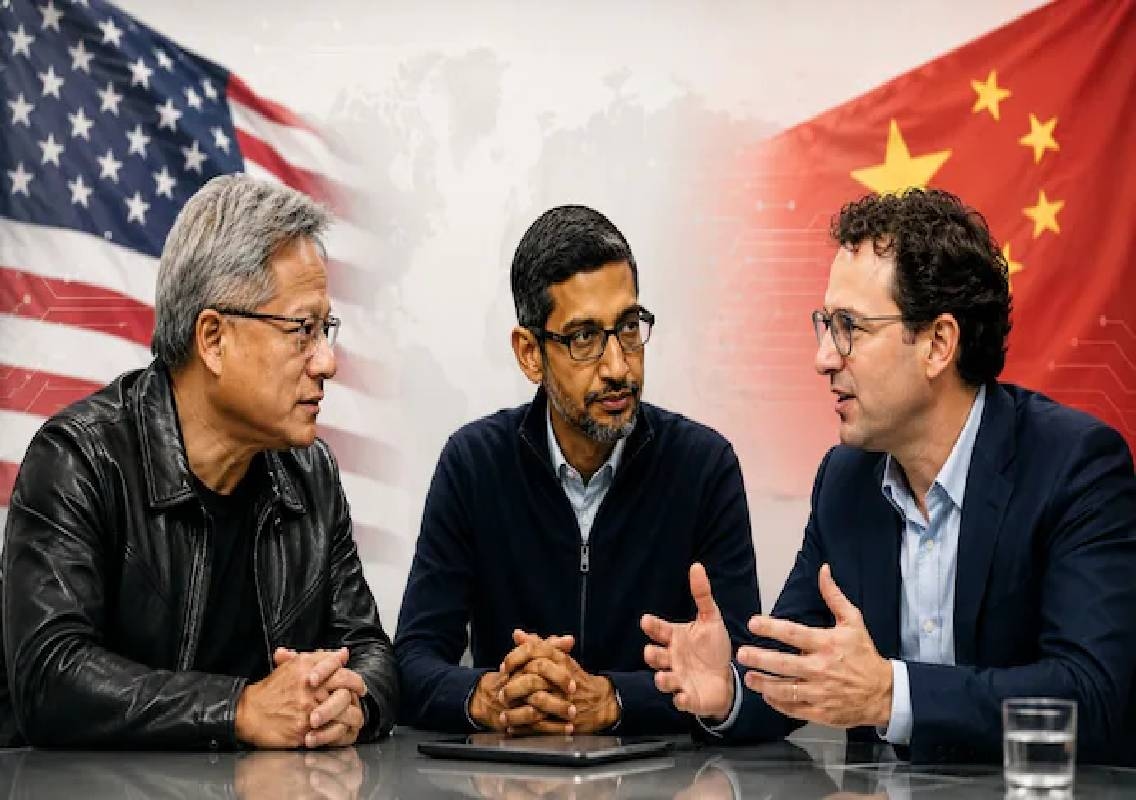


New Delhi: Chinese artificial intelligence (AI) models have sparked a sharp divide within Silicon Valley, with technology giants such as Nvidia, Microsoft, Meta and several startups advocating continued access to open-weight Chinese AI models, while Anthropic has called for tighter restrictions over concerns related to national security, intellectual property and misuse. The debate reflects growing tensions over how the United States should respond to China’s rapid advances in AI.
The disagreement has intensified as Chinese AI companies continue releasing increasingly capable open-weight models that rival leading American systems at significantly lower costs. The issue has become a key policy debate in Washington, where officials are weighing potential restrictions on Chinese AI technologies.
Why Silicon Valley is divided
A coalition of AI and technology companies, including Nvidia, Microsoft, Meta, IBM, Palantir and Hugging Face, has urged the US government not to impose a blanket ban on open-weight AI models originating from China.
These companies argue that open access encourages innovation, allows startups to compete with larger AI firms and strengthens the broader AI ecosystem. They also contend that restricting such models could leave only a handful of dominant companies in control of advanced AI technologies.
Anthropic pushes for tighter restrictions
Anthropic has taken the opposite position, warning that unrestricted access to advanced Chinese AI models could create national security risks and enable intellectual property theft.
The company has argued for stronger safeguards and tighter controls, particularly amid allegations that some Chinese developers may have used model distillation techniques involving US AI systems. Anthropic believes stricter oversight is necessary to protect sensitive AI capabilities and maintain America’s technological advantage.
Chinese AI gains momentum
Chinese AI laboratories have rapidly narrowed the performance gap with leading US developers by releasing competitive open-weight models that are less expensive to deploy.
Their growing capabilities have attracted global attention and prompted many developers and businesses to experiment with Chinese models as alternatives to proprietary American systems. This rapid progress has intensified discussions around AI regulation, export controls and technological competition between the US and China.
What it means for the AI industry
The debate extends beyond geopolitics and could influence the future direction of AI development.
Supporters of open models argue that accessibility promotes research, transparency and competition, while opponents believe unrestricted availability may increase security risks and reduce incentives for companies investing billions in developing frontier AI systems.
The outcome of the policy debate could shape how AI models are developed, shared and regulated globally in the years ahead.
Conclusion
The rise of powerful Chinese AI models has exposed a growing divide within Silicon Valley. While Nvidia and several major technology companies favour continued access to open-weight AI models to foster innovation and competition, Anthropic is advocating stricter controls to address security and intellectual property concerns. As Washington considers its next steps, the debate is likely to play a significant role in shaping global AI policy.