


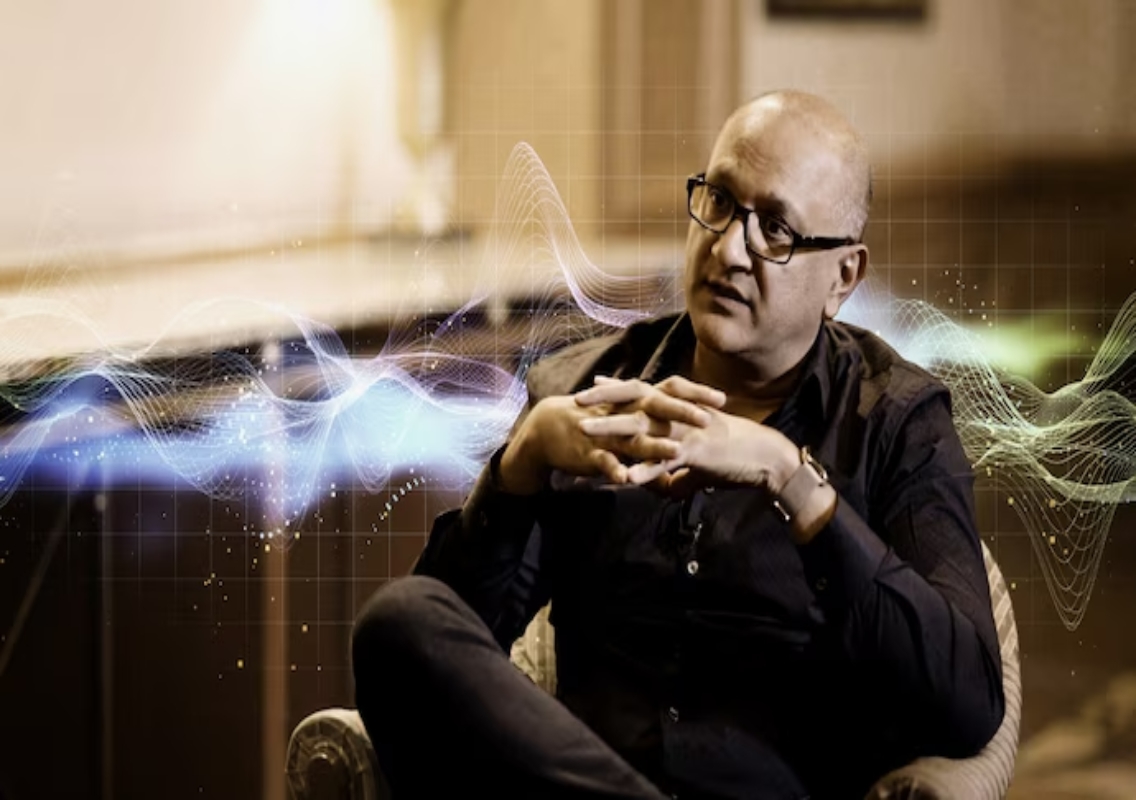


New Delhi: Cisco President and Chief Product Officer Jeetu Patel believes giving young employees unrestricted access to artificial intelligence tools can help companies rethink software development and accelerate innovation. His comments follow an experiment in which a 27-year-old engineer has been given unlimited AI tokens and an ambitious target to modernise 98% of Cisco’s legacy code within 24 months.
The engineer, Padmanabhan Krishnamurthy, popularly known as Paddy, is a former startup founder who joined Cisco after the company acquired EzDubs, a real-time translation startup he co-founded. Patel has backed his proposal to use AI extensively for code refactoring, arguing that the experiment could benefit engineers across the company rather than remain an isolated project.
In a post on X, Patel explained that the small team working on the initiative is intended to act as a catalyst. The larger objective is to encourage Cisco’s core engineering teams to adopt new approaches and take ownership of the modernised software.
The comments highlight a growing discussion in the technology industry about how AI tools, younger employees and experienced engineers can work together to change established software development practices.
A 27-year-old engineer gets an ambitious assignment
The project began after Patel met Krishnamurthy at Cisco’s San Francisco office. Despite having previously founded a startup, the young engineer was working in a role that Patel considered less strategic than his capabilities warranted.
During their conversation, Krishnamurthy proposed that a team of just two people could take on the task of rewriting much of Cisco’s legacy code with the help of AI tools.
The idea caught Patel’s attention because even some of the company’s AI-focused teams had not considered approaching the challenge in this way.
Patel subsequently gave Krishnamurthy unlimited AI tokens to support the work. Tokens are the units of text and data that AI models process when interpreting prompts and generating responses. Providing extensive access allows developers to experiment with AI coding tools without having to manage a restrictive token allocation for every task.
The engineer has set himself an initial four-week period to demonstrate what the approach can achieve. The longer-term target is to refactor 98% of Cisco’s legacy code within 24 months.
This remains an ambitious goal rather than a completed project. The initial demonstration and the wider modernisation effort will determine how much of the company’s existing software can realistically be transformed through the approach.
Small team designed to trigger wider engineering change
Patel has clarified that the initiative is not intended to leave the entire code-modernisation effort in the hands of one young employee.
He described the two-to-three-person team as a catalyst that can demonstrate a different way of working. Once the approach is established, Cisco’s core engineering teams are expected to take ownership of the final product and apply the lessons to their respective areas.
According to Patel, the experiment could help engineers across the company work faster and reconsider traditional methods of building and maintaining software.
He believes that employees who participate in modernising their own areas of code could discover ways to build products and features that were previously difficult to deliver.
The strategy also gives the company an opportunity to test whether a small, AI-enabled team can make progress on a large engineering challenge before the approach is expanded.
Patel acknowledged that not every experiment will succeed, but argued that the potential benefits make such initiatives worth pursuing.
The broader objective is to create an environment in which engineers are encouraged to question established processes and explore different ways of solving technical problems.
AI-led code migration could improve software security
The experiment is not limited to improving development speed. Patel also sees potential security benefits from modernising older software.
One area of interest is migrating code to memory-safe programming languages. These languages are designed to prevent certain memory-management errors that can create security vulnerabilities.
Memory-related problems, including buffer overflows and use-after-free errors, have historically been a source of software weaknesses. Moving suitable components to memory-safe languages can reduce exposure to some of these vulnerabilities.
However, rewriting large volumes of legacy code is a complex process. Existing systems may contain years of business logic, dependencies and integrations that must continue working after modernisation.
AI tools could help engineers understand older code, identify opportunities for refactoring and generate updated implementations. But the output still requires testing, review and validation to ensure that the new software behaves correctly and does not introduce fresh security problems.
Patel’s comments suggest that Cisco sees the experiment as an opportunity to combine faster software development with a broader effort to make its products more secure and adaptable.
The company has not said that AI-generated code will be accepted without human oversight. Its plan for the core engineering teams to own the final product points to an important continuing role for experienced developers.
Why Patel wants more young employees in technology teams
Patel’s support for Krishnamurthy is part of a wider effort to bring more early-career employees and entrepreneurial talent into important engineering projects.
He believes people who are new to an organisation can question practices that experienced employees may have become accustomed to following. Their lack of familiarity with established internal processes can sometimes help them identify alternative solutions.
That does not mean experience has no value. Patel has argued for teams that combine employees who understand how a large company operates with people who bring outside perspectives and AI-focused entrepreneurial experience.
He also recognises that putting younger employees together with colleagues who have spent decades in the industry can create disagreements. However, he distinguishes constructive disagreement about ideas from personal conflict.
Patel believes companies should create enough trust for employees to challenge assumptions and set ambitious goals without allowing differences in experience or seniority to become personal disputes.
The approach reflects a management philosophy in which younger employees are not restricted to routine assignments simply because they are at an early stage of their careers.
Interns as reverse mentors
Patel has also described interns as potential reverse mentors who can teach experienced employees about emerging technology and new ways of working.
He cited the example of a student named Baya, whom he met during an interaction with Stanford scholarship students. Rather than immediately offering an internship, Patel asked her to send monthly updates about what she was learning in AI.
She consistently followed through on the request and later secured an internship at Cisco. During the internship, she reportedly redesigned something that experienced employees had struggled to solve.
Patel said the intention was not to bring interns into the company merely to handle administrative tasks or data entry. Instead, he wanted them to contribute ideas and help colleagues understand different approaches to technology.
The example illustrates his belief that younger workers can contribute to technical problem-solving even when they have limited formal industry experience.
A broader shift in how companies approach AI talent
Cisco’s experiment comes as technology companies reconsider how software engineering teams should operate in an era of increasingly capable AI coding tools.
AI systems can assist with writing code, explaining unfamiliar software, generating tests and identifying potential problems. These capabilities may allow smaller teams to attempt projects that would traditionally require more people or longer development cycles.
However, large-scale code modernisation remains difficult. Organisations must account for reliability, security, regulatory requirements, compatibility and the cost of maintaining software after it has been rewritten.
The unlimited-token experiment is therefore also a test of how much productivity can be gained when engineers are given broad access to AI tools and the freedom to pursue ambitious technical goals.
For Cisco, the immediate measure of success will be whether Krishnamurthy and his small team can demonstrate meaningful progress and create a process that the wider engineering organisation can adopt.
Patel’s larger message is that AI access should not be limited to a small group of specialists. By combining experienced engineers with young, AI-native employees, he believes companies can challenge conventional development practices and unlock new possibilities.
Whether the 98% code-modernisation target can be achieved within two years remains to be seen. But Cisco’s experiment offers an example of how technology companies are beginning to rethink the relationship between AI tools, employee experience and software engineering.