







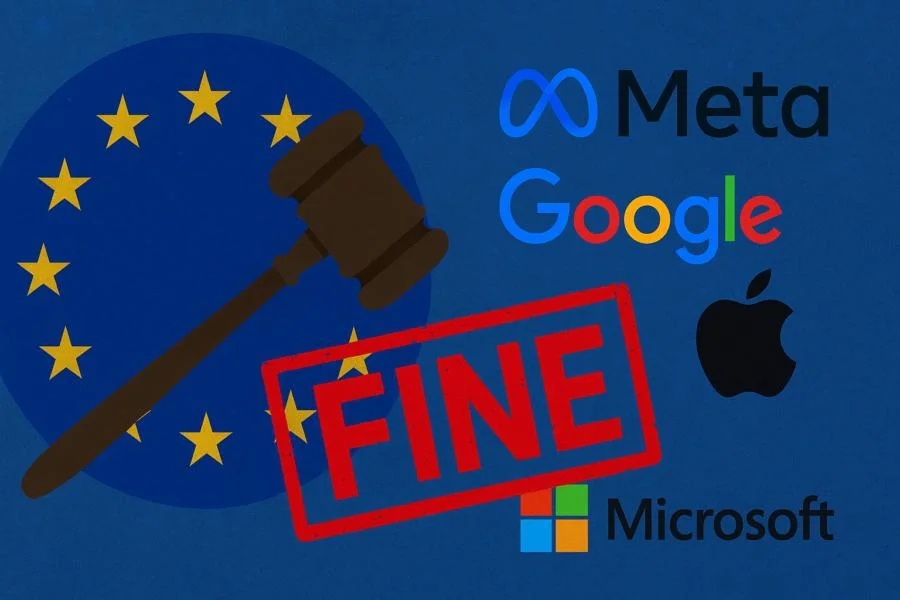


Google faces the prospect of a significant European Union fine early next year if it fails to make further changes to ensure that its Google Play app store fully complies with EU rules on fair access and competition, according to people familiar with the investigation. The move threatens to heighten tensions between the EU and the United States, which has criticised Europe’s recent tech regulations as being disproportionately aimed at American companies.
Google Play under EU scrutiny
The European Commission has been examining Google Play since March, raising concerns about technical restrictions that prevent app developers from directing users to alternative purchasing channels where cheaper offers may be available.
(See also: NK report on global tech regulation | Digital Markets Act – Wikipedia)
Another point of contention is the service fee Google charges when helping developers acquire new customers through its platform. Regulators argue the fee extends beyond what is reasonable for the service provided.
Although Google announced changes in August to make it easier for developers to guide users to other payment channels and select different fee models, EU officials say the adjustments still fall short. Apple’s recent restructuring of its App Store — following a €500 million fine — is reportedly being used as a benchmark for compliance.
Apple’s compliance sets the comparison
Apple overhauled its App Store rules and fee structure earlier this year after being penalised for preventing developers from informing users of more affordable offers outside its platform. EU regulators are expected to confirm that Apple’s revised model complies with the Digital Markets Act (DMA), the new set of rules designed to ensure fair competition in digital markets.
The DMA outlines what dominant technology companies — known as “gatekeepers” — can and cannot do, with the aim of promoting innovation, competition, and consumer choice.
Google may still propose changes
Sources indicate that Google can still present additional adjustments before the Commission issues a fine, expected in the first quarter of next year. However, the timeline could shift depending on negotiations and regulatory assessments.
In a statement, a Google spokesperson said the company continues to work with the Commission but warned that further changes could expose Android and Google Play users to greater risks of malware, scams, and data theft. “Unlike iOS, Android is already open by design,” the spokesperson said.
The European Commission declined to comment on the ongoing proceedings.
Potential scale of penalties
Under the DMA, fines can reach 10% of a company’s global annual revenue, giving regulators considerable leverage in enforcement. Google is also facing other investigations, including accusations that it favoured its own specialised search services and concerns surrounding the use of online content for its artificial intelligence tools and spam policy.
The latest development adds to a growing list of regulatory challenges for major tech companies, signalling a decisive shift in how digital platforms are governed in Europe.