







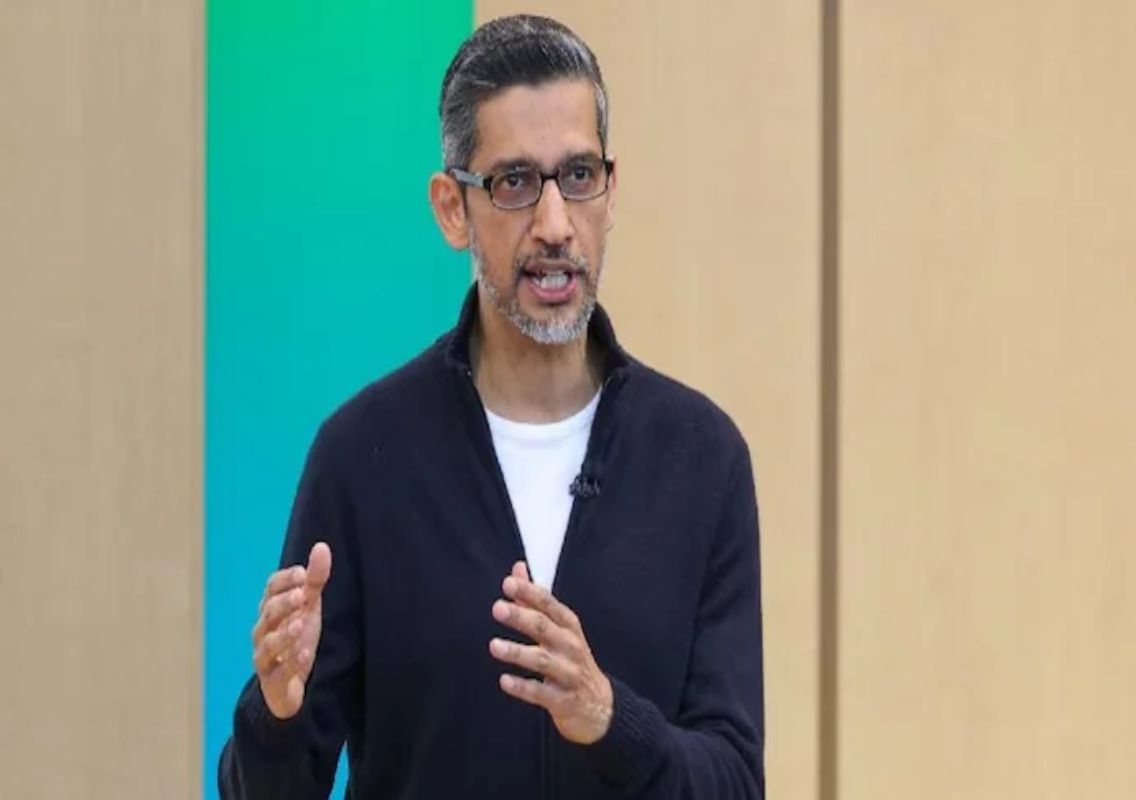


Mountain View: At its annual developer conference, Google I/O 2026, Google unveiled a sweeping set of announcements centred on artificial intelligence, signalling a major shift towards making AI the core of its ecosystem. From Search and YouTube to Gmail, Docs, Chrome and even smart glasses, the company introduced a range of tools designed to turn AI into a proactive personal assistant.
The keynote highlighted the rapid adoption of Google’s AI offerings. The company revealed that over 900 million users are now using its Gemini assistant, while more than 50 billion images have been generated using its AI tools. Additionally, AI Overviews in Search reportedly have over 2.5 billion monthly active users, underlining the scale at which AI is already integrated into everyday products.
Gemini models take centre stage
Mountain View: One of the biggest announcements was the introduction of Gemini 3.5 Flash, the company’s latest AI model. Google stated that it outperforms earlier versions such as Gemini 3.1 Pro across several benchmarks, particularly in coding and practical real-world tasks.
The company also introduced Gemini Omni, a new family of models designed to handle multiple forms of input including text, images, audio and video. With the ability to generate editable videos and content grounded in real-world understanding, Gemini Omni represents Google’s push towards building a unified AI system capable of reasoning and creation.
These advancements reflect Google’s broader ambition to move beyond simple chat-based AI into systems that can understand and act across different contexts.
Search becomes more conversational and agent-driven
Google announced significant updates to its Search platform, positioning it as an AI-powered assistant rather than just a tool for retrieving links. The company introduced “information agents” that can continuously work in the background to gather data and perform tasks for users.
Users will now be able to search using multiple formats simultaneously, including text, images, files, videos and even open Chrome tabs. AI Overviews are also being enhanced to allow more natural, ongoing conversations, enabling users to ask follow-up questions seamlessly.
These changes aim to transform Search into a more interactive and personalised experience, reducing the need to manually browse through multiple results.
YouTube and Docs get conversational AI features
YouTube received a major upgrade with the introduction of “Ask YouTube”, a conversational search feature that allows users to interact with the platform using natural language queries. Instead of relying on keywords, users can ask detailed questions and refine them through follow-ups.
The feature searches across YouTube’s entire library, including long-form videos and Shorts, and presents structured, context-aware responses.
Meanwhile, Google introduced “Docs Live” for its Docs platform. This feature allows users to create documents simply by speaking, with AI converting spoken input into structured text. The move is aimed at simplifying content creation and reducing reliance on detailed prompts.
Rise of AI agents with Antigravity and Spark
Google expanded its vision of AI agents with the launch of Antigravity 2.0, a platform designed to manage and coordinate multiple autonomous AI agents. Originally focused on coding, the system has now evolved into a broader tool for orchestrating complex workflows.
Building on this, the company introduced “Gemini Spark”, a personal AI agent integrated into the Gemini app. Powered by Gemini 3.5 and Antigravity, Spark is designed to complete tasks independently in the background, marking a step towards more autonomous digital assistants.
Another feature, Daily Brief, will provide personalised summaries by analysing a user’s emails, calendar and tasks, helping users stay updated without manual effort.
Focus on creativity and content authenticity
Google also unveiled new tools aimed at creative workflows. “Flow” is an AI agent designed for brainstorming and creative editing, enabling users to build and modify content interactively.
Additionally, the company introduced “Google Pics”, an AI-powered image generation and editing tool that can identify and manipulate individual elements within an image, offering more precise control than traditional editing software.
To address concerns around AI-generated content, Google announced updates to its SynthID and Content Credentials systems. These tools will help users identify whether content is AI-generated or edited, and are being expanded across platforms such as Search and Chrome. Several companies, including OpenAI and others, are also adopting SynthID technology.
Smart glasses signal wearable AI push
In a notable hardware-related announcement, Google shared details about its upcoming smart glasses. The company revealed two variants: audio-based glasses that provide voice assistance and display-enabled glasses that overlay visual information in real time.
This marks Google’s renewed entry into wearable technology, with a stronger emphasis on AI integration compared to its earlier attempts.
Conclusion
The announcements at Google I/O 2026 clearly indicate that the company is moving towards an AI-first future, where intelligent agents play a central role in how users interact with technology. By integrating AI deeply across its products, Google aims to create a more seamless, intuitive and automated digital experience.
While the full impact of these innovations will unfold over time, the direction is clear — AI is no longer just a feature but the foundation of Google’s ecosystem.