







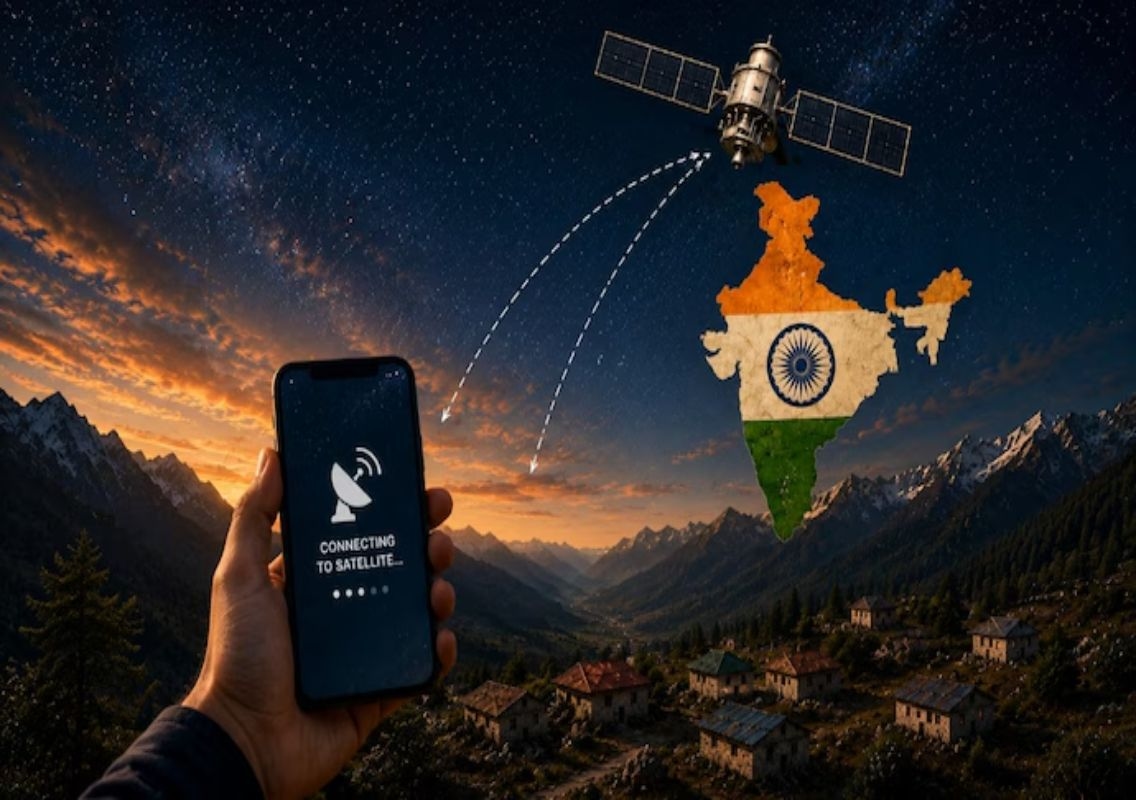


New Delhi: India is moving closer to enabling direct-to-device (D2D) satellite connectivity on smartphones, a technology that could significantly improve communication access in remote and underserved regions. However, global technology leaders Apple Inc. and Google have raised concerns over technical feasibility and regulatory clarity, even as discussions with the government continue.
D2D satellite connectivity allows smartphones to communicate directly with satellites without relying on terrestrial mobile towers. The technology is being considered as a solution to connectivity gaps in India, especially in geographically challenging regions such as mountainous terrains, dense forests and border areas where traditional telecom infrastructure is difficult to deploy or financially unviable.
Why satellite connectivity matters for India
India still faces patchy mobile network coverage in several rural and remote regions. Despite rapid expansion of 4G and ongoing rollout of 5G services, certain areas remain beyond the reach of conventional telecom networks.
In such scenarios, satellite connectivity could play a critical role. It would enable users to send emergency messages, share their location and even make basic communication possible during crises such as natural disasters or accidents. This capability could prove particularly valuable for disaster response teams, security personnel and residents in isolated regions.
Globally, satellite connectivity features have already been introduced in premium smartphones, primarily as emergency SOS services. These systems activate when mobile networks are unavailable, allowing users to connect to satellites for limited communication.
Industry raises technical concerns
While the potential benefits are clear, companies including Apple and Google have pointed out several technical challenges that must be addressed before the technology can be implemented widely.
One of the primary concerns is battery consumption. Connecting to low-earth orbit satellites requires significantly higher power compared to traditional cellular networks. This could lead to faster battery drain, affecting the overall user experience.
Another major issue is hardware limitation. Smartphones are designed to be compact and lightweight, leaving limited space for advanced antenna systems required for stable satellite communication. Ensuring reliable connectivity using small antennas remains a complex engineering challenge.
In addition, maintaining consistent connectivity under real-world conditions poses difficulties. India’s diverse terrain and environmental factors such as weather conditions can interfere with satellite signals, making reliability a concern.
Integration with existing networks remains complex
Industry stakeholders have also highlighted the complexity of integrating satellite communication with existing 4G and 5G networks. Seamless switching between terrestrial and satellite networks is essential to ensure a smooth user experience.
Any disruption or delay in connectivity could impact the practicality of the technology, especially for emergency use cases where reliability is critical.
Moreover, there are concerns about how satellite services would operate within India’s existing telecom framework. Clear guidelines are required to define spectrum usage, service standards and interoperability requirements.
Concerns over India-specific regulations
Another key issue raised by companies is the possibility of India-specific regulatory requirements. Apple, in particular, has reportedly advised against mandating hardware modifications or additional certification processes for enabling satellite connectivity.
Technology companies typically design features for global markets. Any requirement to customise hardware specifically for India could increase costs, delay product launches and disrupt global standardisation efforts.
Such mandates could also discourage companies from rolling out satellite features in India at the same pace as other markets.
Government consultations underway
The Department of Telecommunications (DoT) is currently holding consultations with industry stakeholders to better understand the technological and operational aspects of D2D satellite connectivity. These discussions aim to strike a balance between innovation and practical implementation.
At the same time, the Telecom Regulatory Authority of India (TRAI) has issued a consultation paper seeking views on whether satellite communication services should use dedicated spectrum or share existing mobile network airwaves.
These regulatory decisions will play a crucial role in shaping how satellite connectivity is introduced and scaled in India.
Conclusion
Direct-to-device satellite connectivity holds significant promise for improving communication access in India’s most remote regions. However, the concerns raised by major technology companies highlight that the technology is still evolving and requires careful planning.
As the government continues its consultations, addressing technical limitations, ensuring regulatory clarity and maintaining global compatibility will be essential. The success of satellite connectivity in India will depend on how effectively these challenges are managed while unlocking its potential to bridge the digital divide.