




New Delhi: Palmer Luckey, the co-founder of defence technology company Anduril, is backing a new venture that aims to develop genetically enhanced dogs for military, law enforcement and emergency-response operations. The startup, Warhound, has emerged from stealth with $200 million in seed funding, bringing genetic engineering, animal cloning and battlefield technology together in an effort to improve the supply of specialised working dogs.
The Texas-based company was founded by technology entrepreneur Ben Lamm, who also leads biotechnology firm Colossal Biosciences, and Luckey. Warhound aims to produce healthier, more capable working dogs that can perform demanding tasks such as detecting explosives, searching dangerous locations and supporting personnel in high-risk situations.
The funding round values the company at approximately $1.2 billion, according to reports. Its launch highlights a growing intersection between biotechnology and defence technology, extending military innovation beyond drones, missiles and autonomous systems into the genetic development of animals.
However, the project remains at an early stage. Its long-term ambitions should be distinguished from capabilities already demonstrated in operational military deployments.
Why Warhound wants to develop genetically enhanced dogs
Military and police working dogs are used for tasks that can be difficult for humans or machines to perform. Their keen sense of smell, mobility and ability to work alongside handlers make them valuable for detecting explosives, locating people and searching hazardous environments.
Warhound says the existing supply chain for military working dogs presents a challenge for the United States. According to the company, more than 80% of the working dogs used by the US military are sourced from Europe, while fewer than half of candidate dogs complete the process required to qualify for service.
The company wants to increase domestic production while improving the likelihood that dogs remain healthy and successfully complete training.
Some dogs fail to qualify because of health problems, including hip dysplasia, poor eyesight and other inherited conditions. Warhound intends to use genetic screening, gene editing and cloning technologies to address some of these limitations.
Its approach combines the preservation of genetic material from high-performing working dogs with efforts to reduce inherited health risks. The objective is to develop animals better suited to demanding working environments, rather than relying exclusively on conventional breeding and selection.
How genetic engineering and cloning could work
Warhound plans to draw on technology associated with Colossal Biosciences, the biotechnology company known for its high-profile efforts involving the genetics and cloning of animals.
The programme is expected to focus on breeds such as Belgian Malinois, German Shepherds and Labradors, which are widely used in working roles.
According to reporting by technology publications, the company is examining ways to edit genes associated with inherited health problems. Longer-term possibilities include improving traits such as endurance, agility and the ability to detect odours.
One potential area of research involves the olfactory system, which enables dogs to detect and distinguish smells. Improving scent-detection capabilities could be useful for missions involving explosives, search operations and other specialised detection work.
However, the precise genetic changes that might eventually be introduced, their effectiveness and their safety have not been fully established publicly. Genetic engineering is complex, and altering one biological characteristic can have unintended effects elsewhere in an animal’s development.
Cloning also does not guarantee that an animal will have identical behaviour or performance to the original. Training, health, environment and individual temperament remain important factors in determining whether a working dog can perform specialised duties.
The company’s plans therefore represent an attempt to apply emerging biotechnology to working-dog programmes, rather than proof that genetic engineering can reliably produce animals with every desired military capability.
Anduril technology to support dogs and handlers
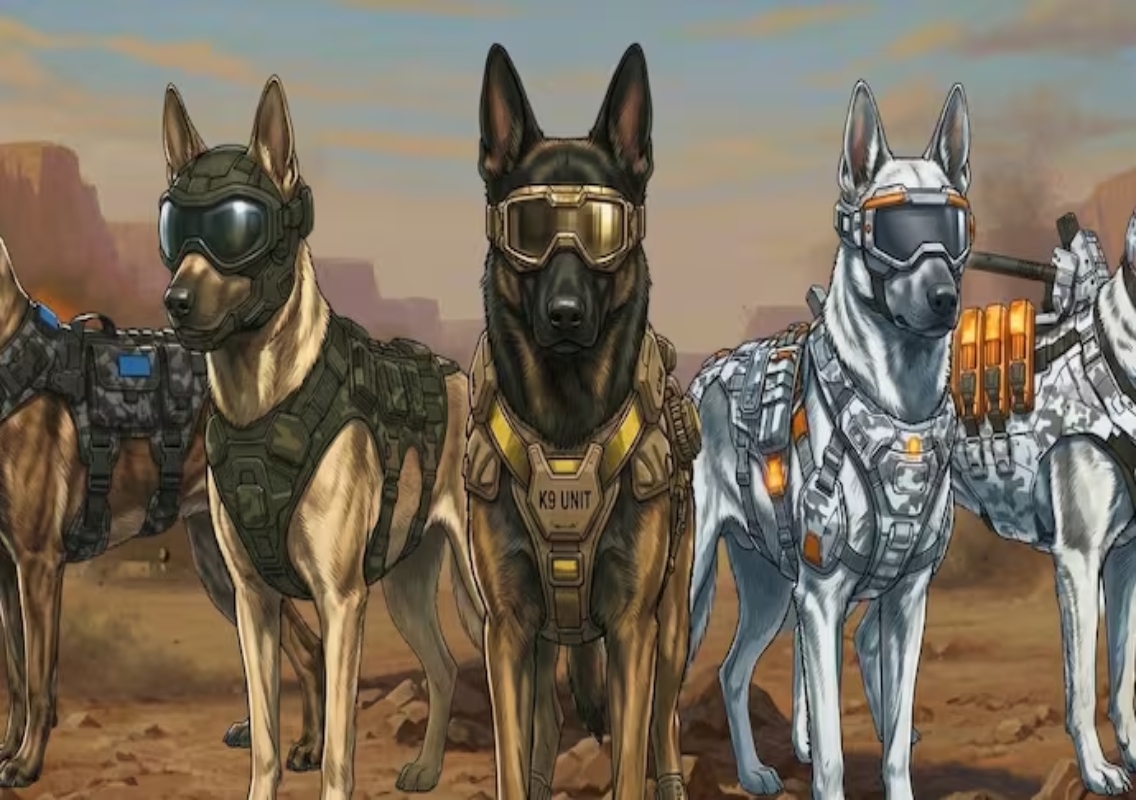
Warhound’s plans extend beyond genetics. The company intends to use technology developed by Anduril to equip working dogs with protective equipment and tools designed to improve battlefield awareness.
These could include protective vests, eye protection and sensor-equipped equipment that helps handlers understand conditions around a dog during an operation.
The purpose is to improve communication between dogs and their handlers while reducing risks in hazardous environments. Sensors and other external devices could provide information that helps personnel coordinate their movements and respond to changing conditions.
Despite descriptions of the project as involving cybernetically enhanced dogs, the initial concept does not necessarily involve implanting computers or electronic devices inside the animals. Reporting on the venture indicates that much of the proposed technology would be attached to equipment worn by the dogs.
This distinction is important. Genetic engineering changes an organism’s biological characteristics, while wearable equipment adds technological capabilities without necessarily modifying the animal internally.
The combined approach aims to improve the health, protection and effectiveness of working dogs through biological research and external technology.
$200 million funding and investor interest
Warhound’s $200 million seed funding round is substantial for a newly launched defence technology venture. The company has attracted investors including In-Q-Tel, Sequoia Capital, ARK Invest, 8VC and other investment firms.
Its reported valuation of $1.2 billion reflects investor interest in the combination of biotechnology, cloning and national security applications.
The venture also illustrates how defence technology companies are broadening their focus beyond conventional weapons and autonomous platforms. Businesses are increasingly exploring specialised tools that support personnel, improve situational awareness and address supply-chain requirements.
Warhound’s proposed model combines Colossal Biosciences’ genetics and cloning expertise with technology associated with Anduril. Its leadership includes chief executive David Spirk, who has experience in defence and national security data programmes.
The company is also working with the American Humane Society on animal-care and training standards, including arrangements intended to support the welfare of working dogs and their eventual retirement.
Animal welfare and ethical questions
The prospect of genetically engineering animals for military duties raises questions about welfare, scientific responsibility and the limits of human intervention.
Supporters argue that improving inherited health conditions could reduce suffering and give more dogs a better chance of completing training. Better protective equipment could also help reduce the risks faced by animals deployed in hazardous situations.
However, genetic modification intended to improve performance raises questions about unintended health consequences, the reliability of the science and how animals would be treated if they failed to meet operational requirements.
Cloning also requires careful attention to animal health and welfare. The success of the programme will depend not only on its ability to produce working dogs but also on how the animals are bred, trained, housed and cared for throughout their lives.
Warhound says it will work under the guidance of the American Humane Society. Plans include supporting the reunification of retired military working dogs with their former handlers or placing them through appropriate adoption programmes.
The effectiveness of these safeguards will become clearer as the venture progresses and more information about its practices becomes available.
When could the first dogs be ready?
Reports indicate that the first litters could be born in early 2027, although birth, training and operational deployment are separate milestones.
A dog must undergo health assessments and specialised training before it can be considered suitable for military or law enforcement work. The development of genetically enhanced animals does not remove those requirements.
Warhound has not publicly established a complete timeline for delivering operational dogs to customers. Its progress will depend on the results of its genetic research, the success of cloning efforts, animal-welfare considerations and the ability of the dogs to complete training.
The company is targeting military organisations, law enforcement agencies and emergency-response teams that need specialised working dogs.
For now, Warhound represents an ambitious attempt to combine biotechnology with defence technology. Whether its approach can deliver measurable improvements in animal health, working performance and operational safety will depend on the results of research and real-world testing.