


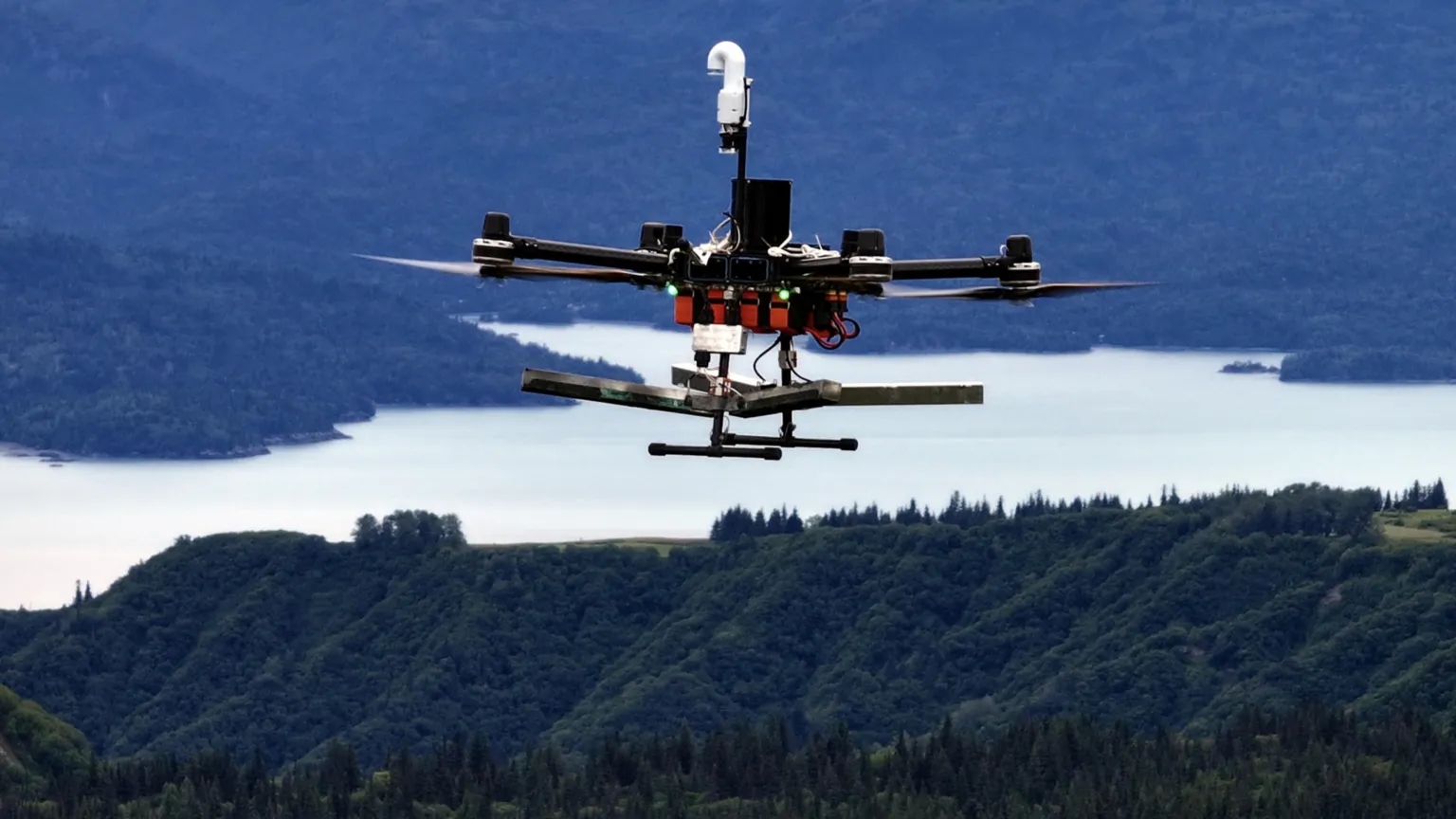


Alaska: Thousands of residents in Homer, Alaska, were unaware that clouds above them were being seeded with a silver compound during an experiment conducted by weather-modification start-up Rainmaker in August.
The California-based company used drones to release silver iodide into clouds in an attempt to encourage precipitation. Rainmaker said the operation generated 19 million US gallons of water in the sky over three hours.
The experiment has renewed attention on cloud seeding, a weather-modification technique that has been studied for more than 80 years. The technology does not create clouds or produce rain from clear skies. Instead, it attempts to accelerate processes that already occur naturally inside suitable clouds.
As water security becomes a growing concern in many parts of the world, companies are looking at new ways to make cloud seeding more targeted and potentially more effective. But questions about its environmental impact, reliability and the extent to which it can actually increase rainfall remain.
How cloud seeding works
Cloud seeding involves introducing substances into clouds to encourage the formation of ice crystals or water droplets.
Silver iodide is one of the most widely used seeding agents because its crystalline structure can help provide a surface around which supercooled water droplets can freeze.
When conditions are suitable, the newly formed ice crystals grow inside the cloud. They can eventually become heavy enough to fall towards the ground as snow or rain, depending on temperatures below the cloud.
The process therefore does not manufacture water from nothing. It attempts to enhance precipitation from clouds that already contain the necessary moisture.
This is one of the fundamental limitations of cloud seeding: without suitable clouds and atmospheric conditions, there is little that a seeding operation can accomplish.
Rainmaker turns to drones
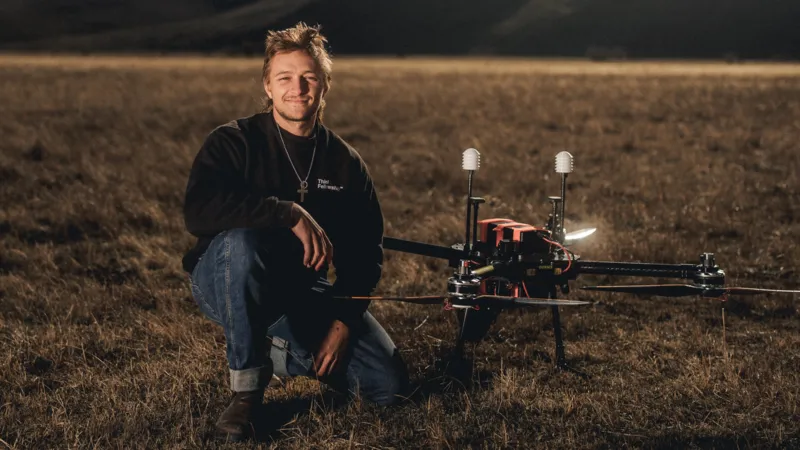
Rainmaker is among a new generation of companies trying to modernise an industry that has traditionally relied heavily on aircraft and ground-based generators.
Founder and CEO Augustus Doricko says the company’s drones fly into clouds carrying silver iodide flares.
When the flares are activated, the seeding material is released into the cold cloud environment. The particles can remain suspended and interact with supercooled water, helping ice crystals form.
The company operates in several US states, including Idaho, Utah and Colorado, and has also worked in the Middle East.
Doricko has pointed to Jordan as an example of a region where water scarcity creates strong demand for technologies that could potentially increase precipitation.
However, the company’s operations depend on the presence of suitable clouds. Cloud seeding cannot simply be switched on whenever a region needs rain.
Alaska experiment raises questions
The Rainmaker experiment in Homer has also highlighted concerns about transparency and environmental monitoring.
Cooper Freeman, Alaska director of the Center for Biological Diversity, questioned whether local residents were adequately informed about the operation.
He also raised concerns about the potential environmental effects of silver iodide and whether sufficient monitoring had been carried out after the material was released.
The questions are part of a broader debate surrounding weather modification. While silver iodide has been used for decades in cloud-seeding programmes, the environmental consequences of repeated or large-scale deployment remain an area of interest for researchers and regulators.
Rainmaker, meanwhile, maintains that the quantities of silver iodide used in its operations are extremely small relative to the area over which they are dispersed.
Rainmaker says silver levels are extremely low
Doricko has defended the company’s use of silver iodide, saying Rainmaker releases about 20 grams of the compound during a flight and distributes it across thousands of square kilometres.
He argues that the resulting concentration at ground level is measured in parts per quadrillion, which he says is far below relevant regulatory thresholds.
The claim illustrates the central argument made by cloud-seeding companies: the amount of silver iodide released is small compared with the enormous volume of atmosphere involved.
Nevertheless, environmental questions cannot be answered solely by calculating the quantity released. Researchers also need to consider where the material goes, how often operations take place and whether repeated use could produce measurable concentrations in soil, water or ecosystems.
These questions become increasingly important as cloud seeding expands from small experimental programmes to commercial operations.
Cloud seeding has an 80-year history
The modern history of cloud seeding dates back to 1946, when researchers at the General Electric Research Laboratory experimented with dry ice as a seeding agent.
A year later, scientists found that silver iodide could be more effective because its structure was well suited to encouraging ice formation in cold clouds.
The discovery led to decades of experiments in different parts of the world.
Governments and research organisations have used cloud seeding for purposes ranging from increasing snowfall in mountain watersheds to attempting to enhance rainfall in drought-prone regions.
Despite the long history, the technology has never become a reliable method of producing large amounts of additional rainfall on demand.
The effectiveness depends heavily on atmospheric conditions, cloud type, temperature, moisture and other factors.
Cloud seeding produces modest gains
Jon Meyer, an assistant state climatologist with the Utah Climate Center, estimates that cloud seeding can produce an additional 5% to 10% of precipitation under suitable conditions.
That figure illustrates both the potential and the limitation of the technology.
Even if a seeding operation works as intended, the additional water may be relatively small compared with the overall water needs of a city, state or country.
Rainmaker’s reported production of 19 million US gallons may sound substantial in isolation, but spread over a large area it represents only a very small increase in rainfall.
The technology is therefore better viewed as a potential supplement to water supplies rather than a replacement for conservation, groundwater management, reservoirs or other long-term water strategies.
Research has improved understanding
One of the developments that has encouraged the cloud-seeding industry has been advances in scientific observation.
A landmark study published in 2017 provided evidence that silver iodide could work in the manner predicted by scientists under suitable conditions.
Researchers used radar and precipitation measurements to observe the effects of seeding, providing stronger evidence than some earlier studies that struggled to separate the impact of seeding from natural variations in precipitation.
Such research has helped move cloud seeding from a technology surrounded by considerable uncertainty towards a field where individual mechanisms can be tested more precisely.
But demonstrating that seeding can trigger additional precipitation under specific conditions does not mean every cloud-seeding operation will produce the same result.
Drones could make seeding more targeted
Meyer believes drones could provide a new approach to cloud seeding because they can potentially be directed towards specific cloud formations.
Traditional aircraft can cover large areas, but drones could offer greater flexibility in selecting where and when seeding material is released.
That could become particularly useful when atmospheric conditions vary significantly across a region.
The use of drones could also allow companies to conduct operations without putting pilots aboard aircraft, although the technology brings its own regulatory and operational challenges.
For the industry, the attraction lies in making an old technology more precise rather than simply increasing the amount of material released.
New materials could replace silver iodide
The evolution of cloud seeding is not limited to the vehicles used to disperse materials.
Companies are also investigating alternative substances that could potentially improve the efficiency or environmental profile of the process.
San Francisco-based Recast Systems, for example, is experimenting with a protein made from amino acids found in soil.
CEO Olivia Li says the material is biodegradable and can nucleate ice more efficiently than silver iodide. The material is still undergoing testing, including research at Texas A&M University.

Recast continues to use silver iodide in some of its current cloud-seeding operations while studying the alternative material.
If such compounds prove effective at scale, they could eventually provide the industry with additional options beyond traditional silver-based seeding.
More than 50 countries explore weather modification
Cloud seeding is no longer limited to a handful of experimental programmes.
More than 50 countries are developing or operating weather-modification programmes, reflecting growing interest in technologies that could potentially supplement water supplies.
The interest is being driven partly by increasing pressure on freshwater resources.
United Nations Secretary-General António Guterres warned in July that the world is using freshwater faster than it can be replenished. Reports on global river conditions have also highlighted the severity of recent water shortages.
For countries facing prolonged drought or highly variable rainfall, even a modest increase in precipitation can appear attractive.
However, cloud seeding cannot address the underlying causes of water scarcity, including excessive consumption, groundwater depletion, poor water management and climate-related changes in rainfall patterns.
Cloud seeding cannot solve water shortages alone
The biggest challenge for the industry may therefore be managing expectations.
Cloud seeding works only when suitable clouds are available, and the increase in precipitation is generally modest even under favourable conditions.
It cannot create rain from a clear sky, end a drought on its own or guarantee a specific amount of water.
Its most realistic role may be as one tool within a much larger water-management strategy.
That could include conservation, recycling, improved irrigation, groundwater protection and better management of reservoirs and watersheds.
The technology may become more useful as drones, weather forecasting, atmospheric modelling and new seeding materials improve.
The future of rainmaking
The next phase of cloud seeding is likely to involve a combination of established science and newer technology.
Drones could make operations more targeted, while advances in atmospheric modelling could help identify clouds most likely to respond to seeding. Alternative materials could potentially reduce reliance on silver iodide if they prove safe and effective.
At the same time, environmental monitoring and independent assessment will remain important as commercial operations expand.
For companies such as Rainmaker, the opportunity lies in making cloud seeding more precise and scalable. For scientists, the challenge is determining exactly when the technology works, how much additional precipitation it produces and what its long-term consequences may be.
Cloud seeding may ultimately become a useful tool in regions facing water stress, but it is unlikely to be a substitute for fundamental water conservation.
The emerging race to make rain is therefore less about creating storms from nothing and more about finding ways to give nature a small push when the atmospheric conditions are already right.