







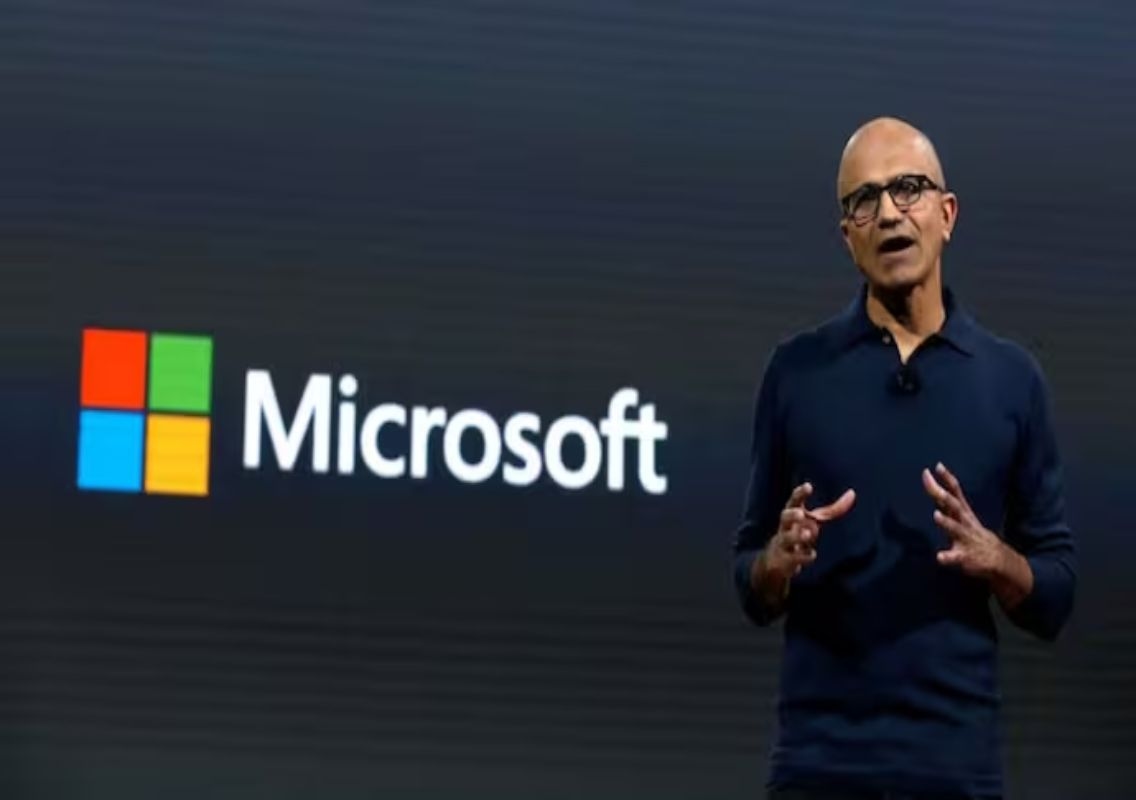


Seattle: Microsoft CEO Satya Nadella has said that the traditional era of operating systems and applications is coming to an end, as artificial intelligence agents emerge as the primary interface between humans and computers. Speaking at the company’s Build 2026 developer conference, Nadella outlined a significant transformation in how technology will be designed and used in the coming years.
According to Nadella, computing is undergoing a fundamental platform shift, moving away from app-centric and device-driven ecosystems towards an agent-first model. In this new paradigm, AI agents will no longer remain confined within applications but will operate across software, devices and workflows, enabling more seamless and intuitive user experiences.
The announcement came alongside the unveiling of Project Solara, a new chip-to-cloud platform developed by Microsoft in collaboration with Qualcomm. The platform is aimed at powering next-generation devices designed specifically for this emerging agent-first world.
Project Solara aims to redefine computing architecture
Microsoft described Project Solara as a comprehensive platform that integrates hardware, software and cloud capabilities through its Azure ecosystem. Built in partnership with Qualcomm, the platform is designed to support advanced AI-driven experiences across multiple devices and environments.
The company said Solara represents a new computing architecture where artificial intelligence agents act as both the primary unit of programming and the main interface for users. Instead of interacting with individual applications, users will increasingly rely on AI agents that can perform tasks across multiple platforms simultaneously.
This chip-to-cloud approach is expected to enable devices that are more adaptive, responsive and capable of handling complex workflows without requiring manual navigation between apps.
From apps to agents: A new interaction model
Microsoft outlined a three-stage evolution of artificial intelligence integration. In the first stage, AI functions as an assistant alongside applications, similar to current chatbots and copilots. The second stage embeds AI directly within applications, making it central to their functionality.
The third and most transformative stage, which Solara aims to enable, involves AI operating independently of individual apps. In this model, agents coordinate tasks across different applications, services and devices while maintaining context and continuity.
This shift could fundamentally change how users interact with technology. Instead of opening multiple apps and performing tasks manually, users would simply instruct AI agents using natural language, and the agents would execute the required actions across systems.
Just-in-time interfaces to simplify user experience
A key innovation introduced with Project Solara is the concept of “just-in-time UI”. Microsoft explained that this approach allows AI agents to dynamically generate user interfaces based on the context, device type and mode of interaction.
Rather than developers designing fixed interfaces for different screens and devices, AI agents would adapt the experience in real time. This includes responding to voice, touch, vision and other multimodal inputs, making interactions more fluid and personalised.
The company believes this could significantly reduce development complexity and enable the creation of entirely new device categories without the need for traditional app-based interfaces.
Multi-agent ecosystem to define the future
Microsoft also emphasised that the future of computing will not revolve around a single AI assistant. Instead, it envisions a multi-agent ecosystem where several specialised agents collaborate to complete tasks.
To support this vision, the company is developing systems such as an agent dispatcher and an agent task manager. These technologies are designed to identify the most suitable agent for a given task and coordinate their actions efficiently.
This approach reflects a shift towards open and interoperable AI systems, where multiple agents can work together across platforms rather than being confined within a single application or service.
Industry implications and future outlook
The move towards agent-first computing could have far-reaching implications for the technology industry. Developers may need to rethink how software is built, focusing more on creating intelligent, interoperable agents rather than standalone applications.
For users, the transition promises a more intuitive and streamlined digital experience, where technology adapts to their needs rather than requiring them to navigate complex interfaces.
However, the shift also raises questions around data privacy, security and the reliability of autonomous systems. As AI agents take on more responsibility, ensuring transparency and control will become increasingly important.
Conclusion
Microsoft’s vision of an agent-driven future marks a significant departure from decades of app-centric computing. With Project Solara, the company is positioning itself at the forefront of this transformation, aiming to redefine how humans interact with machines.
While the transition may take time, Nadella’s announcement signals the beginning of a new era in computing, where artificial intelligence agents could become the central pillar of digital interaction.