


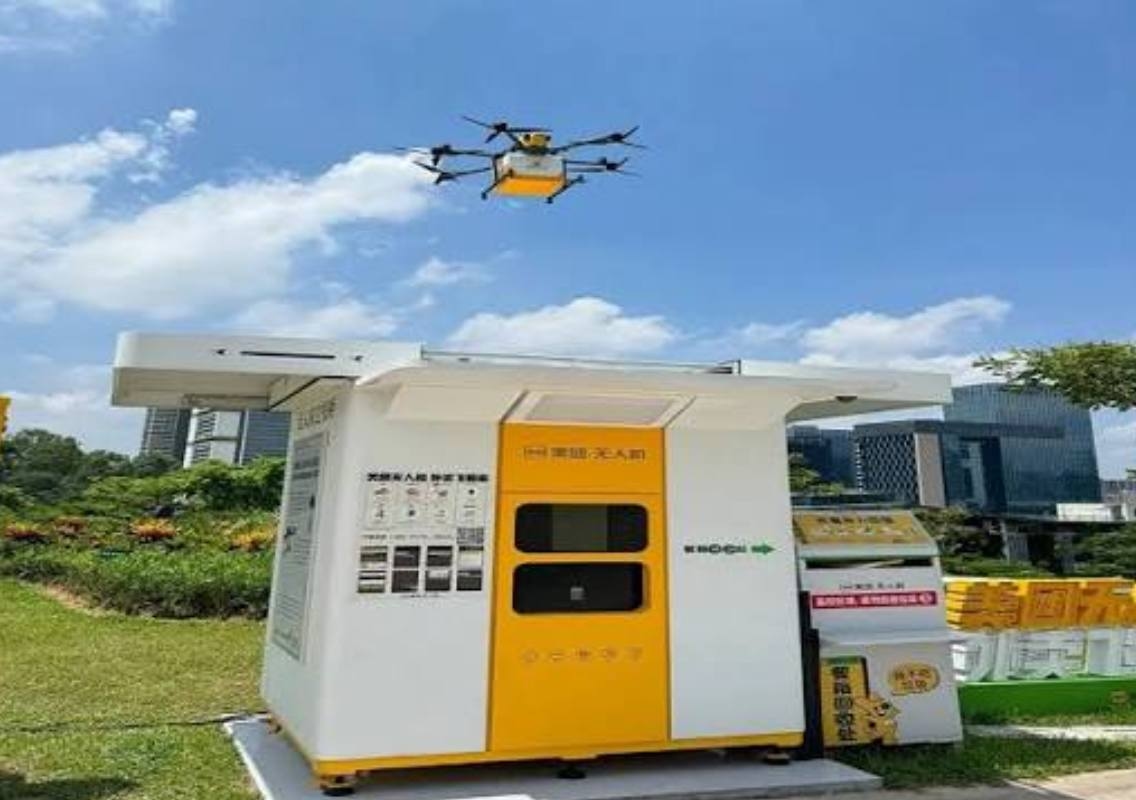


Shenzhen: Tourists visiting China’s southern technology hub of Shenzhen are increasingly turning to drones for food, coffee and bubble tea deliveries, as the city prepares to host world leaders at next week’s Asia-Pacific Economic Cooperation (APEC) summit.
A steady hum from drones flying across popular tourist areas has become part of the city’s urban soundscape. Visitors can scan QR codes, place orders and receive takeaways at parks and scenic locations without having to find a conventional delivery outlet or wait for a delivery rider.
The service reflects China’s growing use of commercial drones for everyday logistics. Supported by a large manufacturing ecosystem, government backing and expanding delivery networks, the country has emerged as one of the world’s most advanced markets for drone-based deliveries.
However, the convenience will be temporarily unavailable in Shenzhen during the APEC summit period. Food delivery company Meituan has suspended its drone operations in the city for 10 days from November 11 at the request of regulators.
Tourists experience drone-based food deliveries
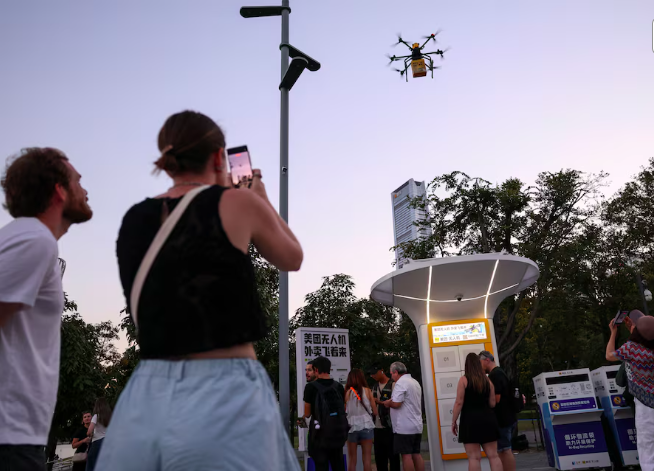
For visitors unfamiliar with the technology, receiving food and drinks through drones has become an unusual tourist experience.
Southeast Asian visitor Liew Kee Ho described the service as novel, saying he had never seen drones delivering milk tea or food in Malaysia.
He said experiences that people have not encountered before naturally feel exciting, particularly when they involve technology being used in everyday situations.
The service allows customers to order refreshments through QR codes placed at designated locations. Instead of relying on delivery personnel to locate customers in crowded parks or tourist attractions, the drone follows an established route to a designated collection point.
This arrangement is particularly useful in large public spaces where conventional delivery riders may find it difficult to identify customers or reach the exact location of an order.
Another tourist, Qin Pei, said drone deliveries were useful in parks because food delivery drivers often struggled to locate customers in such areas.
The 40-year-old also pointed to China’s extreme summer heat, suggesting that automated delivery systems could make more sense in such conditions.
The comments illustrate how drone logistics are being positioned not merely as a technological novelty but as a practical alternative for specific delivery requirements.
China expands its low-altitude economy
China’s expanding drone delivery network is part of a broader push to develop what the government calls the low-altitude economy.
The term generally refers to economic activities conducted in airspace extending to approximately 1,000 metres above the ground. It includes commercial drone operations, logistics, transportation and other aviation-related services.
The country has been investing in this sector through manufacturing capacity, regulatory support and the development of commercial applications.
Civil aviation authorities said 3.29 million drones had been registered in China by the end of 2025.
Annual drone flight hours increased by nearly 70 per cent to 45.3 million, reflecting the rapid expansion of drone activity across the country.
The growing number of registered devices and flight hours highlights the scale of China’s commercial drone ecosystem. It also indicates the increasing role of unmanned aircraft in activities that traditionally depended on road-based transport.
Drone delivery services are particularly suited to locations where conventional vehicles face access difficulties or where a designated aerial route can reduce the time and effort required to complete deliveries.
Meituan operates regular delivery routes
Among the companies expanding commercial drone logistics in China is Meituan, one of the country’s major food delivery platforms.
The company has established regular drone delivery routes in several locations, including Beijing, Shanghai and Shenzhen.
Its operations have also extended to tourist destinations such as the Great Wall, demonstrating how drone delivery networks are being adapted for places beyond conventional urban neighbourhoods.
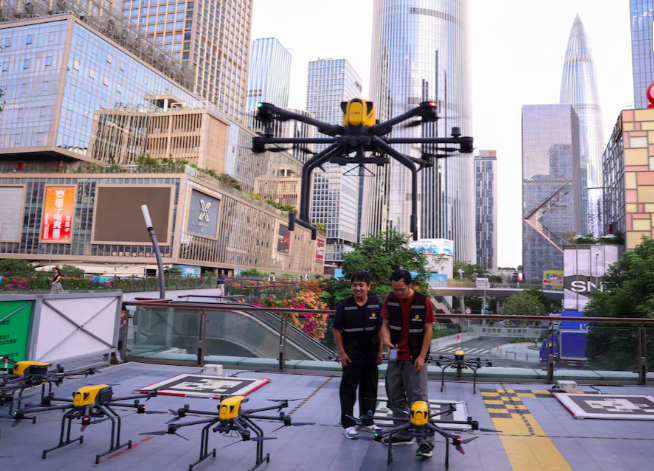
The use of established routes allows operators to serve designated collection points rather than attempting unrestricted deliveries to every customer.
This approach can make drone operations more manageable in busy urban environments and popular tourist destinations.
For customers, the system offers an alternative way to receive food and beverages without depending entirely on delivery riders navigating crowded streets or large public spaces.
For companies, it provides an opportunity to test automated logistics in locations where aerial delivery may offer practical advantages.
China’s expanding manufacturing base and government support for the low-altitude economy have helped create conditions for wider commercial deployment. Such operations remain relatively uncommon in many other countries, where regulatory, infrastructure and operational requirements can limit large-scale adoption.
APEC summit brings temporary suspension
Despite Shenzhen’s growing drone delivery network, visitors attending the city during the APEC summit will have to do without the service for a short period.
Meituan said it had suspended drone deliveries in Shenzhen for 10 days beginning November 11, following a request from regulators.
The company has not announced a date for resuming operations in the city.
The suspension is limited to Shenzhen, and Meituan’s drone delivery routes in other cities remain unaffected.
The temporary restriction comes as the city prepares to welcome international leaders and delegates for the APEC summit next week.
With major international gatherings involving extensive security arrangements, restrictions on certain aerial activities can become part of the preparations. However, the reported announcement from Meituan did not provide further details about the specific regulatory requirements behind the suspension.
The pause highlights the need to balance the expansion of commercial drone services with the management of airspace during major public events.
Drone deliveries point to changing urban logistics
Shenzhen’s experience offers a glimpse into how unmanned aircraft are becoming part of everyday commercial activity in China.
What once appeared to be an experimental technology is increasingly being used to deliver ordinary purchases, including coffee, milk tea and takeaway meals.
The service also demonstrates how technology companies are adapting delivery systems to the needs of particular locations. Parks, scenic attractions and crowded tourist areas can present challenges for conventional delivery networks, creating opportunities for aerial alternatives.
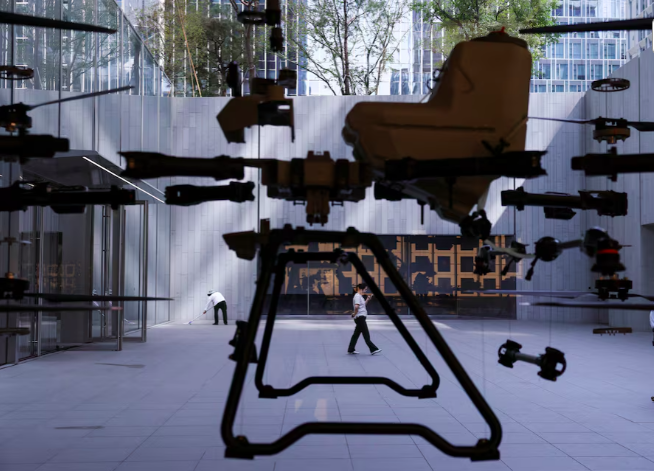
China’s expanding drone fleet and rising flight hours suggest that the low-altitude economy is becoming an increasingly important part of its technology and logistics landscape.
For now, visitors in Shenzhen will have to wait for Meituan’s drone deliveries to resume after the temporary suspension. But the city’s growing network offers a clear example of how commercial drones are moving beyond demonstrations and becoming part of daily life.