


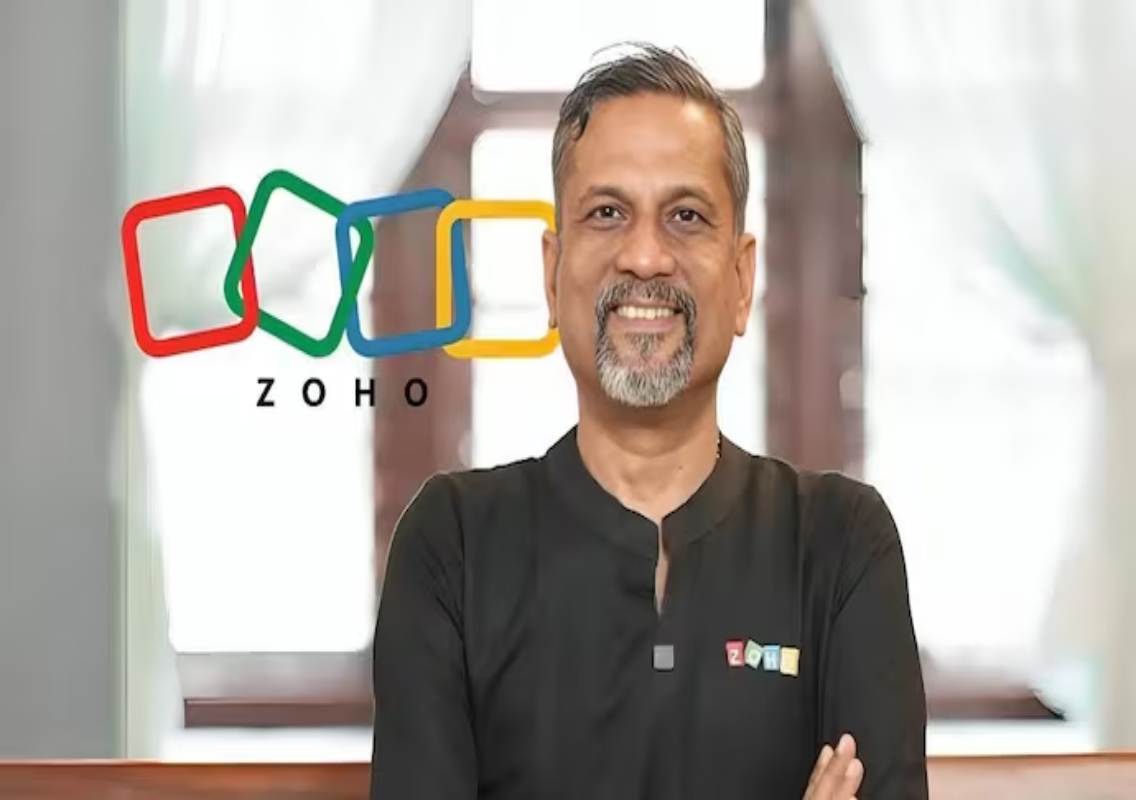


New Delhi: Zoho founder Sridhar Vembu has responded to Elon Musk’s criticism of India’s telecom market, defending Reliance Industries chairman Mukesh Ambani’s role in making mobile data affordable and challenging the SpaceX chief’s claims about competition amid Starlink’s delayed entry into the country.
In a post on X on October 10, Vembu highlighted India’s relatively low mobile data prices, affordable medicines and low-cost digital payment infrastructure. He credited Reliance Jio’s entry into the telecom sector with significantly improving access to mobile internet and argued that India’s startup ecosystem reflects a competitive business environment.
The exchange comes after Musk took sarcastic aim at Ambani over the regulatory process facing Starlink, SpaceX’s satellite internet service. Musk questioned whether India’s business environment was allowing fair competition and suggested that influential business interests could be affecting the company’s entry into the market.
Vembu disputed that portrayal, arguing that India’s digital economy has delivered benefits to consumers through lower prices and wider access to services.
Vembu credits Jio for affordable mobile data
Vembu’s response focused on the transformation of India’s mobile internet market following Jio’s launch in 2016. The telecom operator introduced aggressively priced data plans and voice services, intensifying competition among established players and changing how millions of Indians accessed the internet.
In his post, Vembu said mobile data was sufficiently affordable that he often relied on his phone’s internet connection while travelling in India rather than connecting his computer to local Wi-Fi networks. He also pointed to the widespread use of dual-SIM smartphones and large mobile data plans as examples of how accessible mobile connectivity had become.
Vembu credited Ambani’s decision to launch Jio with helping bring down data prices. His argument was that competition in the telecom sector had produced tangible benefits for consumers, rather than demonstrating that India’s market was closed to competition.
India has developed a large mobile internet user base, supported by inexpensive data packages and widespread smartphone adoption. However, data affordability alone does not settle the broader question of whether every telecom segment faces the same competitive conditions. Satellite internet and conventional mobile services operate using different technologies and regulatory frameworks.
Vembu’s comments were therefore a defence of the impact of Jio’s entry and India’s broader digital development, rather than a direct resolution of the regulatory dispute surrounding Starlink.
Musk’s ‘Prime Minister Ambani’ remark sparks debate
Musk’s criticism intensified after he sarcastically referred to Ambani as “Prime Minister Ambani” while questioning the delay in Starlink’s Indian launch.
The SpaceX chief has argued that satellite internet could expand connectivity in areas where conventional networks are difficult or expensive to deploy. Such services can potentially support remote communities, schools, businesses and emergency communications.
Musk has also questioned whether established telecom companies have an incentive to resist a new competitor entering the market. His remarks brought the relationship between large business groups, market competition and government regulation into the centre of the discussion.
However, Musk’s allegations that Indian business interests were obstructing Starlink’s entry have not been substantiated by publicly presented evidence. The government has rejected the suggestion that India permits monopolies and said satellite operators must comply with the same applicable regulatory framework.
The dispute also reflects the commercial interests involved. Reliance Jio is a major player in India’s telecommunications industry, while Starlink is seeking access to a large market where demand for reliable internet connectivity remains significant.
Vembu turns the argument towards Tesla and SpaceX
Vembu also broadened his response beyond telecom services. He pointed to India’s affordable medicines and digital payments system, including the Unified Payments Interface (UPI), as examples of services that have become widely accessible.
He argued that India’s economic model had encouraged competition and allowed ordinary consumers to benefit from lower costs. Vembu also referred to the growth of startups and government support for technology development, including efforts to develop lower-cost rockets.
In drawing a comparison with the United States, Vembu argued that Tesla faces protection from Chinese electric vehicle competition in its home market, which he said keeps vehicle prices higher than they might otherwise be. He used this comparison to challenge Musk’s criticism of India’s business environment.
These points represent Vembu’s assessment of the two countries’ economic policies and markets. The comparison involves different industries, regulatory approaches and competitive conditions, so it does not by itself establish whether either country offers a more competitive environment across all sectors.
His central argument, however, was clear: India’s low-cost digital services and growing startup ecosystem should be considered when evaluating claims that its economy prevents competition.
Government says Starlink must meet security requirements
The regulatory question remains central to Starlink’s proposed entry into India. According to Reuters, Union Communications Minister Jyotiraditya Scindia rejected Musk’s suggestion that Ambani was preventing the satellite internet service from launching.
The government has said Starlink and other satellite communication operators must satisfy the applicable security requirements and complete the necessary regulatory steps before commercial services can begin. These include requirements related to security compliance and spectrum allocation.
Starlink is not the only company seeking to operate in India’s satellite communications market. Other players include Eutelsat OneWeb and Jio Satellite Communications. Their services are subject to regulatory and technical conditions that differ in some respects from those governing conventional mobile networks.
Satellite internet can be particularly useful in remote and underserved locations, but authorities must also address issues involving network security, lawful access, interference management and the operation of communications infrastructure within national borders.
The government’s position is that regulatory clearances must be completed before services are launched. That position differs from Musk’s suggestion that the delay reflects pressure from powerful domestic competitors.
Starlink’s India plans remain under scrutiny
India represents a potentially important market for satellite internet providers because of its size, varied geography and demand for connectivity beyond major urban centres. Satellite services could complement fibre and mobile networks, particularly in locations where building conventional infrastructure is challenging.
At the same time, Starlink’s commercial prospects will depend on more than regulatory approval. Pricing, equipment costs, service availability and competition from established telecom providers will influence its appeal to consumers and businesses.
The exchange between Musk and Vembu has brought these issues into public debate, but the two sides are addressing different aspects of the market. Musk has focused on Starlink’s delayed entry and the need for competition, while Vembu has highlighted the consumer benefits associated with India’s low-cost digital services and Jio’s expansion.
For now, the regulatory process remains the key hurdle. Starlink will need to complete the applicable approvals before beginning commercial operations in India, while claims of unfair interference by competitors remain disputed.
The debate ultimately raises a broader question for India’s digital economy: how to encourage new technologies and greater consumer choice while ensuring that every operator meets the country’s regulatory and security requirements.