







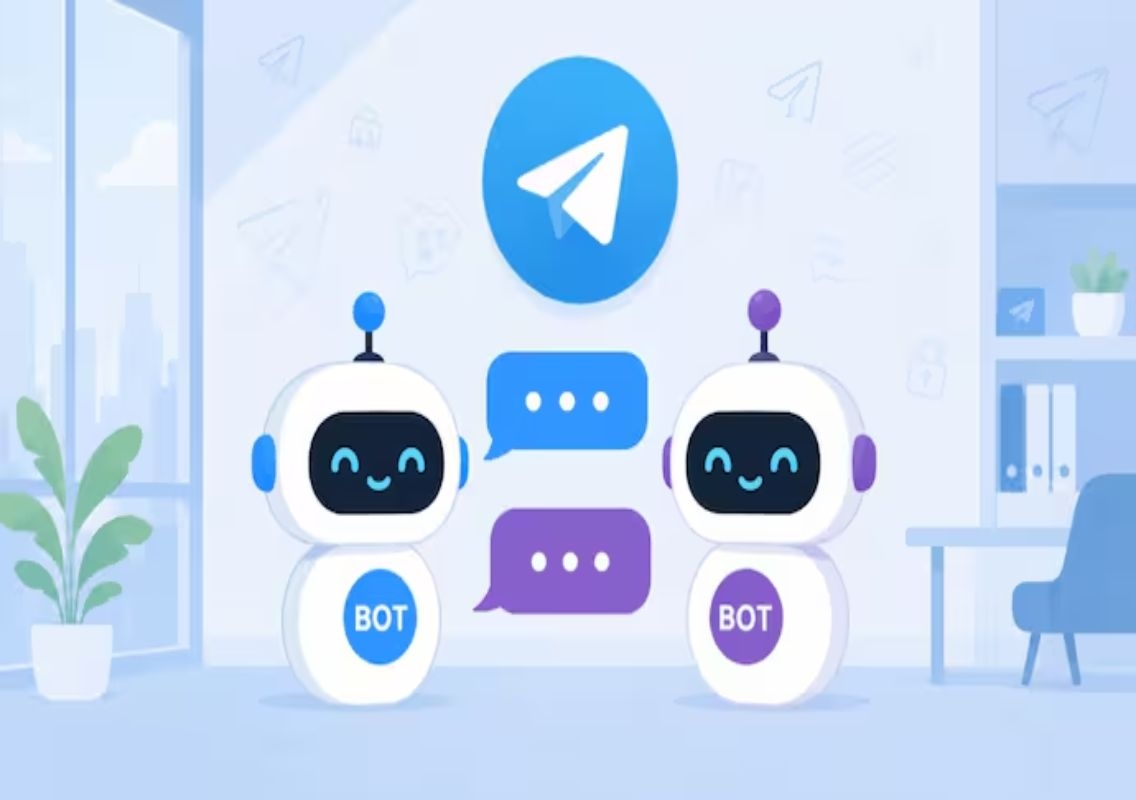


New Delhi: Messaging platform Telegram has introduced a new feature that allows bots to communicate directly with each other without human intervention, signalling a major step towards autonomous AI-driven workflows. The update, announced by CEO Pavel Durov, is part of a broader push to expand artificial intelligence capabilities within the platform.
The feature enables what Telegram calls “bot-to-bot communication”, where automated programs can exchange messages, complete tasks and collaborate independently. According to Durov, the move responds to growing demand from AI developers seeking more flexible and interconnected systems.
How bot-to-bot communication works
The functionality is included in a Telegram update released on May 7. With this update, bots are no longer limited to interacting with human users. Instead, they can respond to messages from other bots, provided both have enabled the Bot-to-Bot Communication Mode.
Once activated, bots can exchange information in real time, opening up new possibilities for automation. Telegram claims this makes it the only platform where multiple AI systems can interact freely while still giving users control over their experience.
This development builds on earlier trends in AI ecosystems, where interoperability between different tools and services has become increasingly important.
New possibilities for automation
Telegram says the feature could significantly enhance how automated systems perform tasks. For instance, one bot could generate content or code, while another reviews it and provides feedback, all within a chat environment.
Such workflows could operate in group chats or private conversations without requiring continuous human oversight. This opens the door for more advanced use cases, including:
- Automated customer service systems
- Task management and scheduling bots
- Multi-step workflows involving multiple AI agents
- Real-time collaboration between specialised bots
In another example, a bot could use a second bot as a tool — such as booking reservations, processing queries or performing backend operations — effectively creating a network of interconnected services.
Comparison with AI-only platforms
Earlier this year, a platform called Moltbook gained attention for hosting an entirely AI-generated social experience, where bots created and interacted with all content while humans remained passive viewers.
While Telegram’s update is not aimed at creating a fully AI-run social network, it introduces a similar concept of autonomous interaction. However, the focus here is on functionality and productivity rather than content generation alone.
Chat automation for users
In addition to bot-to-bot communication, Telegram has rolled out a Chat Automation feature that allows users to delegate conversations to bots.
Users can connect their accounts to a bot and choose specific chats where automated replies will be enabled. This could be useful for handling routine queries, managing business communications or maintaining responsiveness when users are unavailable.
The feature provides flexibility, allowing users to decide which conversations are automated and which remain personal.
Introduction of guest bots
Another key addition is the Guest Bots feature. This allows bots to be mentioned in any chat — private or group — even if they are not part of that conversation.
By tagging a bot using its username, users can prompt it to respond within the chat. These bots can perform tasks such as answering questions, fact-checking information, generating content or assisting with various activities.
Telegram has clarified that guest bots have limited access. They can only view and respond to the specific message in which they are mentioned, and cannot access the full conversation or identify participants. This restriction is intended to address privacy concerns.
Privacy and control remain key
As AI capabilities expand, privacy and user control remain central to Telegram’s approach. The platform emphasises that users retain full control over how bots interact within their chats.
By limiting bot access and requiring explicit activation of features such as Bot-to-Bot Communication Mode and Chat Automation, Telegram aims to balance innovation with security.
Conclusion
Telegram’s introduction of bot-to-bot communication represents a significant evolution in how AI systems can operate within messaging platforms. By enabling autonomous interaction between bots, the company is laying the groundwork for more complex and efficient digital workflows.
While still in its early stages, the feature could transform how individuals and businesses use messaging apps, shifting them from simple communication tools to powerful automation platforms. As AI adoption grows, such innovations may play a key role in shaping the future of digital interaction.