







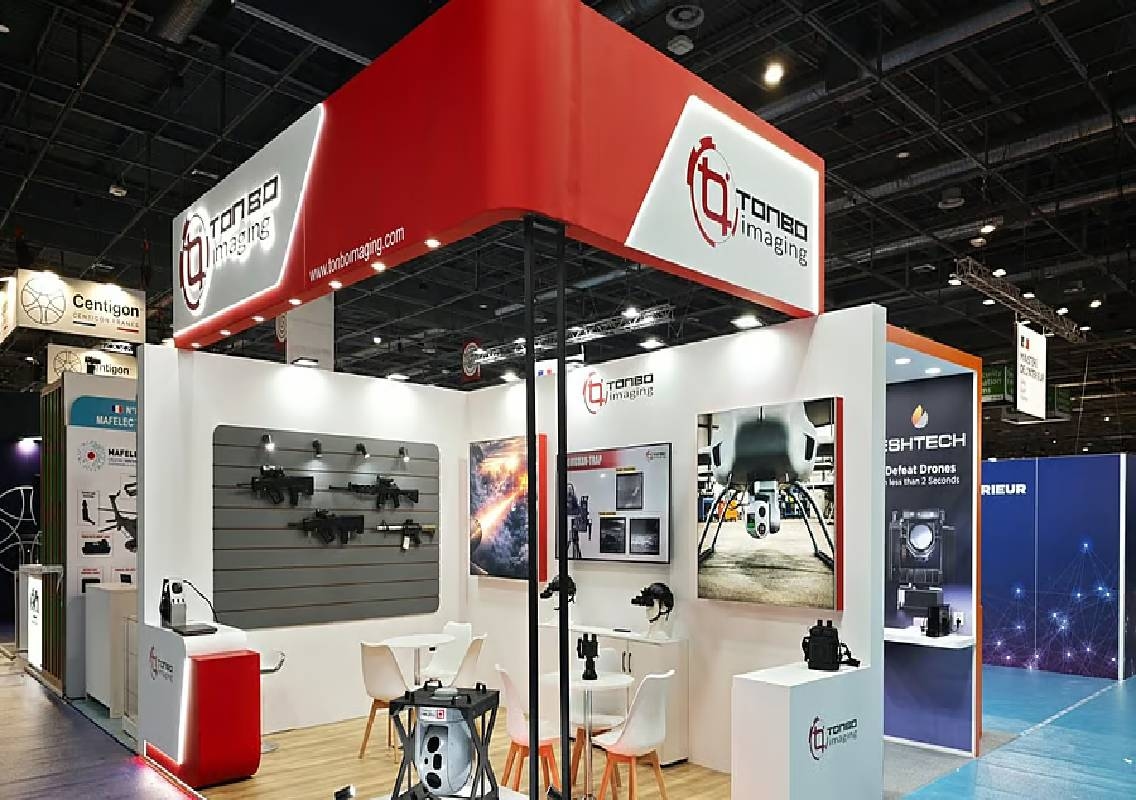


Bengaluru: Tonbo Imaging’s proposed initial public offering has put the spotlight on both the growing ambitions and the structural challenges of India’s private defence technology sector. The Bengaluru-based company, which develops imaging and sensor systems for military and security applications, is preparing to enter the public markets even as its latest financial numbers show a sharp slowdown in revenue and profit.
Tonbo Imaging filed its draft red herring prospectus (DRHP) with the Securities and Exchange Board of India (SEBI) in August 2026. The IPO is particularly significant because it offers investors a closer look at a home-grown defence technology company operating in areas such as thermal imaging, electro-optics, weapon sights, missile seekers and sensor systems.
However, the company’s latest financial performance also highlights a key challenge for India’s defence-tech ecosystem: developing sophisticated indigenous technology is only one part of the equation. Defence procurement cycles, dependence on a limited number of customers, export volatility and the difficulty of scaling production can all affect the commercial performance of such companies.
Tonbo Imaging’s financial performance comes under focus
Tonbo Imaging’s FY26 numbers provide an important backdrop to its IPO.
According to its latest DRHP, the company reported revenue from operations of about Rs 362.65 crore in FY26, down from Rs 469.08 crore in FY25. Profit after tax fell to Rs 50.88 crore from Rs 72.76 crore during the same period. EBITDA also declined from Rs 139.07 crore to Rs 104.62 crore.
The decline is notable because Tonbo operates in a sector expected to benefit from India’s push for greater defence self-reliance and indigenous manufacturing.
The company’s experience illustrates that rising government focus on domestic defence production does not automatically translate into steady year-on-year growth for every private-sector technology supplier.
Export volatility adds another layer of risk
One of the most striking aspects of Tonbo’s latest numbers is the change in its revenue mix.
Reports based on the company’s DRHP show that product sales accounted for the bulk of its revenue in FY26. However, exports fell sharply during the year, while domestic sales also came under pressure. Operating revenue declined by around 22.7 per cent year-on-year.
This volatility matters for a company operating in defence technology because orders can be influenced by government procurement decisions, geopolitical developments and the timing of large contracts.
Tonbo has customers across international markets and has worked with defence and security organisations in India and abroad. Its business therefore illustrates the opportunity available to Indian defence-tech companies seeking to build global markets, while also highlighting the unpredictability that can accompany such expansion.
The IPO is also an offer for sale
Another important feature of the proposed IPO is its structure.
The issue is an offer for sale, meaning existing shareholders are looking to sell shares rather than the company raising fresh capital through a new issue. Analysis of the DRHP indicates that up to about 18.09 million equity shares could be offered for sale. Consequently, the proceeds from the sale will primarily go to the selling shareholders rather than directly providing new funds to Tonbo Imaging for expansion.
This distinction is important when assessing the IPO from the perspective of India’s defence-tech ecosystem.
A fresh issue can provide a company with capital for research and development, manufacturing capacity, hiring and international expansion. In an offer-for-sale structure, the listed company does not receive equivalent fresh capital from the shares being sold.
For a technology-intensive defence business, access to long-term capital can be particularly important because product development, testing, qualification and procurement cycles can take years.
Defence procurement remains a difficult market
The wider challenge for private defence companies is that developing a technically advanced product does not necessarily guarantee immediate commercial success.
Defence procurement generally involves lengthy evaluation, testing and approval processes. Companies may spend heavily on research and development before receiving meaningful orders, while procurement schedules can change depending on government requirements and budget priorities.
Tonbo’s DRHP also points to customer concentration as a business risk. According to an analysis of the filing, its top five customers accounted for 86.36 per cent of revenue in FY25. Such concentration can make revenue more vulnerable to changes in individual contracts or procurement programmes.
The company has also disclosed that its bid-to-win ratio declined from 40.91 per cent in FY24 to 31.30 per cent in FY26, indicating the competitive pressures involved in securing defence contracts.
Indigenous technology remains a major opportunity
Despite the challenges, Tonbo’s business also reflects the opportunity emerging in India’s defence sector.
The company develops advanced imaging and sensor technologies designed to improve situational awareness. Its portfolio includes thermal imaging, electro-optical and infrared systems, weapon sights, seekers and other defence applications.
Such technologies are increasingly important across modern military operations, where sensors, real-time data and automated target recognition can play a crucial role.
India’s push towards self-reliance in defence has created a larger market for domestic private-sector companies capable of developing specialised technologies. The government has also increasingly encouraged private companies and startups to participate in defence research, development and manufacturing.
This creates a potentially large opportunity for companies such as Tonbo, but converting that opportunity into predictable revenue remains a challenge.
Why Tonbo’s IPO matters beyond the company
Tonbo Imaging’s proposed listing is significant because public markets can provide greater visibility into the financial performance of India’s emerging defence-tech businesses.
For years, much of India’s defence manufacturing ecosystem was dominated by public-sector enterprises and established industrial groups. A growing number of private companies and startups are now entering specialised areas such as drones, electronics, sensors, artificial intelligence, surveillance and counter-drone systems.
Tonbo’s IPO provides an opportunity to examine whether investors are willing to value these businesses on the basis of their technology and strategic importance, despite the volatility inherent in defence procurement.
At the same time, the company’s recent financial performance suggests that investors will need to look beyond the broader ‘defence’ narrative and examine individual companies’ order books, customer concentration, export exposure, working capital and ability to convert technology into sustainable commercial growth.
A test for India’s defence-tech ambitions
India’s defence-tech ambitions depend not only on increasing domestic production but also on creating companies capable of developing globally competitive products and remaining financially sustainable.
Tonbo Imaging represents both sides of that story. Its technology portfolio and presence in defence imaging demonstrate the capabilities being developed within India’s private sector. Its recent decline in revenue and profit, meanwhile, shows the commercial hurdles that can emerge even in strategically important industries.
The IPO will therefore be watched not only for its valuation and market performance but also for what it says about investor confidence in India’s emerging defence technology sector.
If successful, the listing could strengthen the case for more private defence-tech companies to access public markets. But the company’s financial trajectory also serves as a reminder that India’s defence self-reliance journey will require more than policy support and technological innovation. It will also depend on predictable procurement, diversified customers, export opportunities and the ability of domestic companies to scale advanced products sustainably.